Sails are one of the most expensive components of your boat, so it makes sense that you want to keep them in top condition for as long as possible. But how often should you actually clean your sails to achieve maximum lifespan?
The short answer: regularly, but don’t overdo it
For optimal longevity, you should clean your sails once a year — depending on conditions. If you sail intensively in saltwater, it may be smart to do it more frequently. A thorough seasonal cleaning at the beginning and/or end of the sailing season is essential.
Why regular cleaning matters
Dirty sails are not just an aesthetic problem. Salt, algae, bird droppings and other contamination damage the coating of the sail fabric and dramatically shorten its lifespan. Salt crystals act like sandpaper and damage the fibers. Organic contamination like algae and mold can literally eat into the coating and settle deep in the fabric or under the laminate.
The result? Sails that need to be replaced years earlier than necessary — costing you thousands of euros.
Step-by-step: the optimal cleaning schedule
Step 1: After each sailing trip
Rinse your sails with fresh water to remove salt and surface dirt. This prevents salt crystals from building up. Salt attracts moisture. Moisture attracts dirt and mold, and so on.
Step 2: Weekly inspection
Inspect your sails for stains, wear or early signs of mold. Acting early prevents bigger problems.
Step 3: Deep cleaning once a year
Use a mild fabric cleaner and a soft brush. Work from top to bottom and rinse thoroughly.
Step 4: Seasonal maintenance
At the beginning and/or end of the sailing season, do a complete cleaning, including treatment with UV protection and impregnation.
What NOT to do when cleaning
Avoid these common mistakes that actually damage your sails:
- Do not use aggressive cleaners like bleach or strong acids
- Do not use a high-pressure washer — it damages the coating
- Never store sails while damp — it causes mold and rot
- Do not use hard brushes that can damage the fabric
- Do not let sails dry in full sunlight — UV radiation weakens the fibers
Why this routine works
The frequency is based on how fast harmful substances accumulate. Salt takes a few weeks to penetrate deep into the fibers, while organic contamination begins bonding to the fabric after 10–14 days.
By cleaning in time, you prevent permanent damage and maintain the original performance of your sails.
Bonus tips for optimal sail maintenance
Spring: Start the season with a light cleaning and check the water-repellent coating.
Summer: Be extra alert during warm weather — bacteria and algae grow faster.
Autumn: Before storage, clean thoroughly and be sure the sails are completely dry. Apply a strong impregnation product to reduce mold growth in winter.
Winter: Check stored sails halfway through winter for moisture, and ventilate if needed.
TIP: Take sails out of the sail bag and store them in a cotton duvet cover. It protects and allows ventilation.
Sail cleaning & maintenance
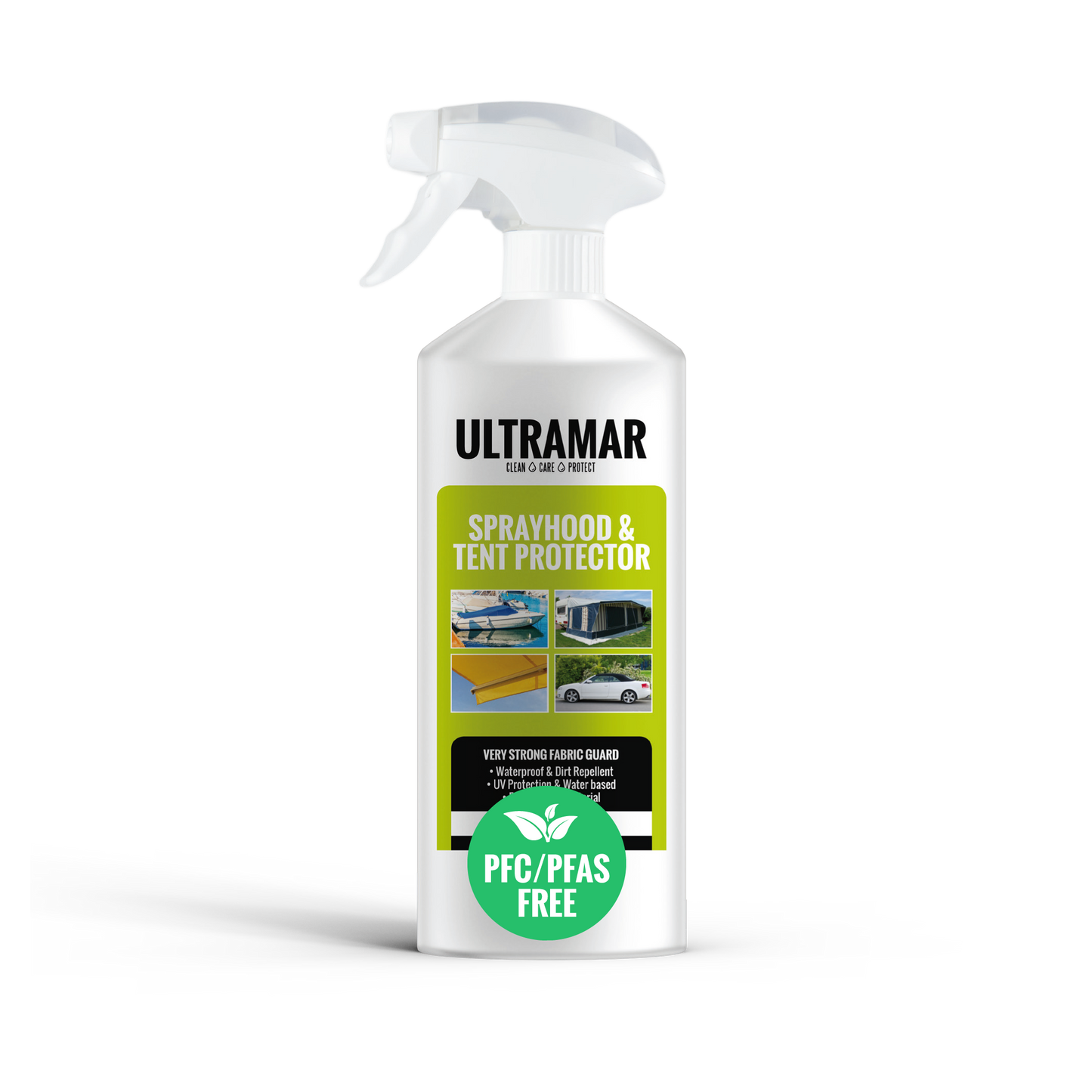
Want to be sure your sails get the best possible care? Ultramar offers professional maintenance products that maximize the lifespan of your sails.
Invest in regular maintenance and your sails will last for years longer. Your wallet will be grateful.