Your boat cover lives outside. That means sun, rain, wind, salt, dust, leaves, bird droppings, hands touching it, and gear rubbing against it. After one season – or a few – you start to see the effects. Sometimes as clear stains. Sometimes as a dull, grey look. And sometimes as color differences between areas that get more or less sun.
The challenge is that “a stain” is a broad term. Some stains sit on the surface. Others are more deeply embedded in the fabric. And discoloration can also be a normal result of weather and use. Below you’ll find 11 common causes, so you can better understand what you’re seeing.
1) Rainwater that carries dirt
Rain is rarely completely clean. It carries dust from the air and washes dirt down from seams, zippers, and edges. This often creates visible streaks. You’ll usually see them below zippers, around window edges, and along curved sections of the cover.
2) Standing or slowly draining water
Where water sits, dirt stays longer. This can cause rings, tide marks, or darker patches. It may be due to a slight dip in the fabric or uneven tension in the cover.
3) Salt and spray
Salt leaves a dull film and can make dirt cling more easily to the surface. When salt water dries in the sun, it often leaves visible marks. The front and sides of the cover are usually most affected.
4) Gradual dirt build-up over time
A boat cover rarely becomes dirty all at once. It’s usually layer upon layer: dust, then rain, then more dust. Over time, the fabric may look grey or faded, even though it is mainly a build-up of surface dirt.
5) Bird droppings and insect marks
These are often the most noticeable stains. They can be light or dark and may appear “set” if left in direct sun for too long. The sooner you remove them, the smaller the chance of visible marks remaining.
6) Leaves, tree sap, and debris from the surroundings
If your boat is moored near trees or along a green shoreline, natural debris is common. Leaves, sap, pollen, and fine dust can create yellowish haze or dark specks across the fabric.
7) Sunscreen, skin oils, and dirty hands
Boat covers are handled regularly — at zippers, snaps, and edges. Sunscreen and skin oils often leave darker, greasy-looking patches. These are usually found in areas that are touched often.
8) Metal parts that leave marks
Zippers, snaps, and fittings can create streaks or small stains, especially when rainwater runs over them. These often appear as thin lines below metal components.
9) Friction and wear
Where the fabric rubs against frames, ropes, or sharp edges, the surface can change. Some areas may become lighter and dull. Others may appear darker because dirt sticks more easily. This can look like discoloration, but it is often a mix of wear and dirt build-up.
10) Color differences from sun exposure
Sunlight does not affect every part of the cover equally. Areas in constant sun may become lighter over time. Shaded sections often stay darker. This can create visible lines or panels of color difference. It is a normal sign of outdoor use.
11) Incorrect or overly aggressive cleaning
Sometimes discoloration is caused by cleaning methods. Scrubbing too hard, using a stiff brush, or applying household cleaners that are not meant for outdoor fabric can make the surface look dull. Using a pressure washer on fabric can also cause lasting damage and uneven color.
What does this mean for you?
When you understand the cause, you can maintain your boat cover more effectively. In most cases, a clear three-step approach works best:
- First clean to remove loose surface dirt.
- Then treat stains if stubborn marks remain.
- Finally protect to restore water-repellency and help prevent new dirt from sticking.
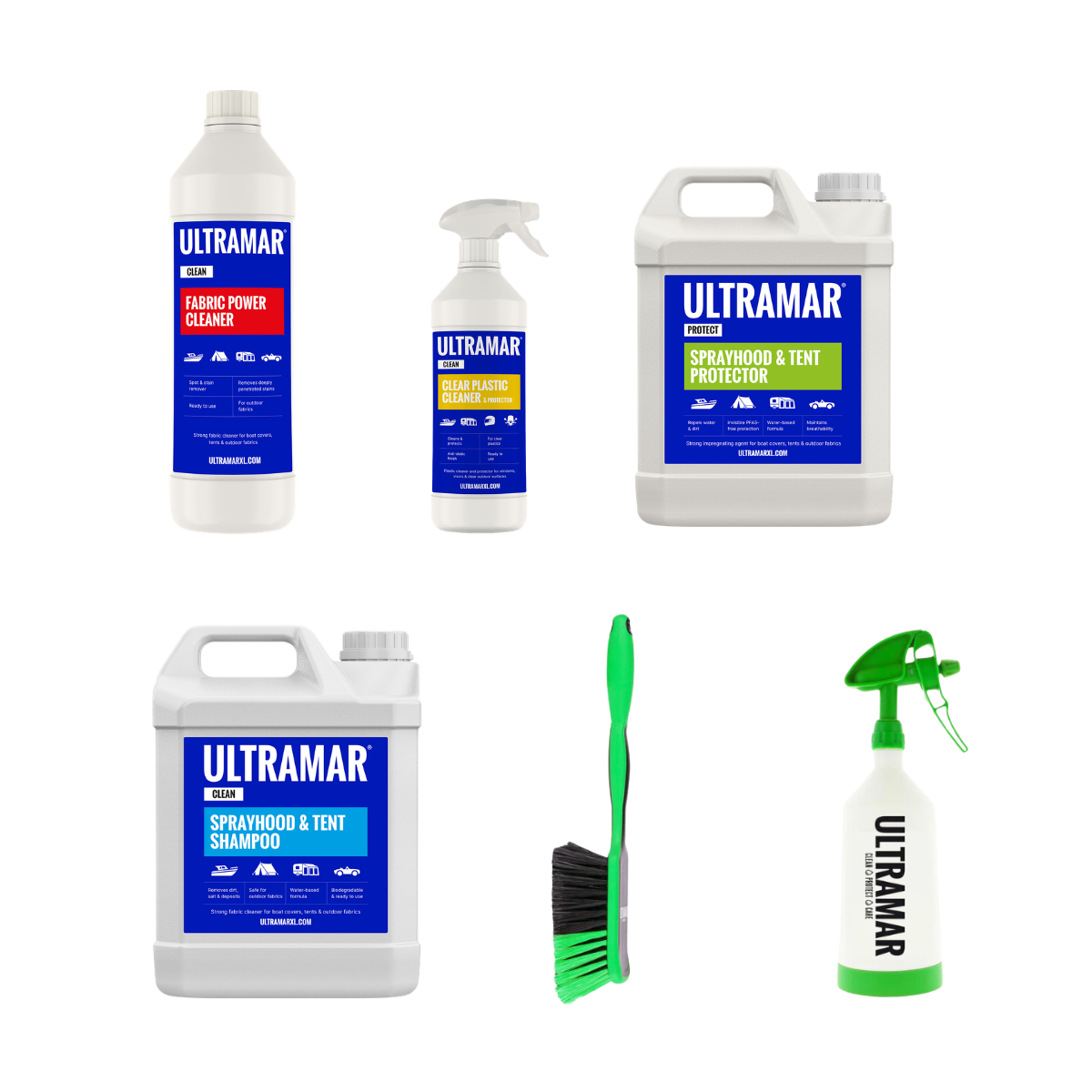
Ultramar helps you do this yourself at home with PFAS-free maintenance products that are easy to use and designed for outdoor fabrics. Always choose the right protector for your material, as synthetic fabrics require a different type of protection than cotton or canvas.