You wet your boat cover, grab a brush, use something “strong enough to clean it” — and after an hour of scrubbing it looks… slightly better. But not really clean. Sometimes it even seems to get dirty again faster. Sound familiar?
In most cases, the problem is not your effort. It is the approach.
A boat cover is not a hard surface. It is an outdoor fabric that needs to repel water, stay flexible, and handle sun and weather. If you treat it like a deck or patio, you rarely get the result you expect.
Why “just cleaning it” is usually not enough
Dirt on a boat cover does not only sit on top of the fabric. Over time, contamination builds up in layers:
- surface dirt
- deeply embedded stains
- loss of water repellency
This often leads to situations like:
- The cover looks clean when wet, but stains reappear after drying.
- The main dirt is gone, yet a dull grey haze remains.
- After cleaning, the fabric absorbs water more quickly.
- The material feels dry or rough and looks faded.
Different types of dirt require different steps. Skipping one usually affects the final result.
The 5 most common mistakes
1) Trying to do everything in one step
One product. One round of scrubbing. Done. It sounds efficient. But outdoor fabrics require a structured approach. Cleaning, stain removal, and protection are separate steps — each with a clear purpose.
2) Using household cleaners
General-purpose cleaners may give a quick visible effect. However, they are not designed for boat covers. They can reduce the fabric’s original water-repellent performance. The result may look good short term, but maintenance becomes harder later.
3) Scrubbing too hard
Heavy scrubbing feels effective. But too much force can roughen the surface of the fabric. A rough surface holds on to dirt more easily, making future cleaning more difficult.
4) Stopping too early
When the worst dirt is gone, it is tempting to stop. But deeply embedded stains or discoloration may still remain. If you apply protection over that, you lock in an uneven appearance.
5) Skipping protection
A boat cover should be water-repellent. When that protection weakens, moisture penetrates faster and dirt attaches more easily. Protection is not an optional extra — it is part of proper maintenance.
Important: only apply protection when the fabric is fully clean and dry. Otherwise, the result may be uneven.
A clearer way to approach boat cover maintenance
The most reliable method follows three separate steps. Each step solves a specific problem.
Step 1: Cleaning
Remove surface dirt and prepare the fabric. This creates a clean base for further treatment.
Step 2: Targeted stain removal
Some areas need extra attention. For example deeply embedded stains, stubborn contamination, or difficult-to-remove discoloration. Treat these spots directly instead of applying heavy treatment everywhere.
Step 3: Protection
Restore the water-repellent performance of the fabric. This helps prevent rapid re-soiling and keeps the cover easier to maintain over time.
Where Ultramar fits in
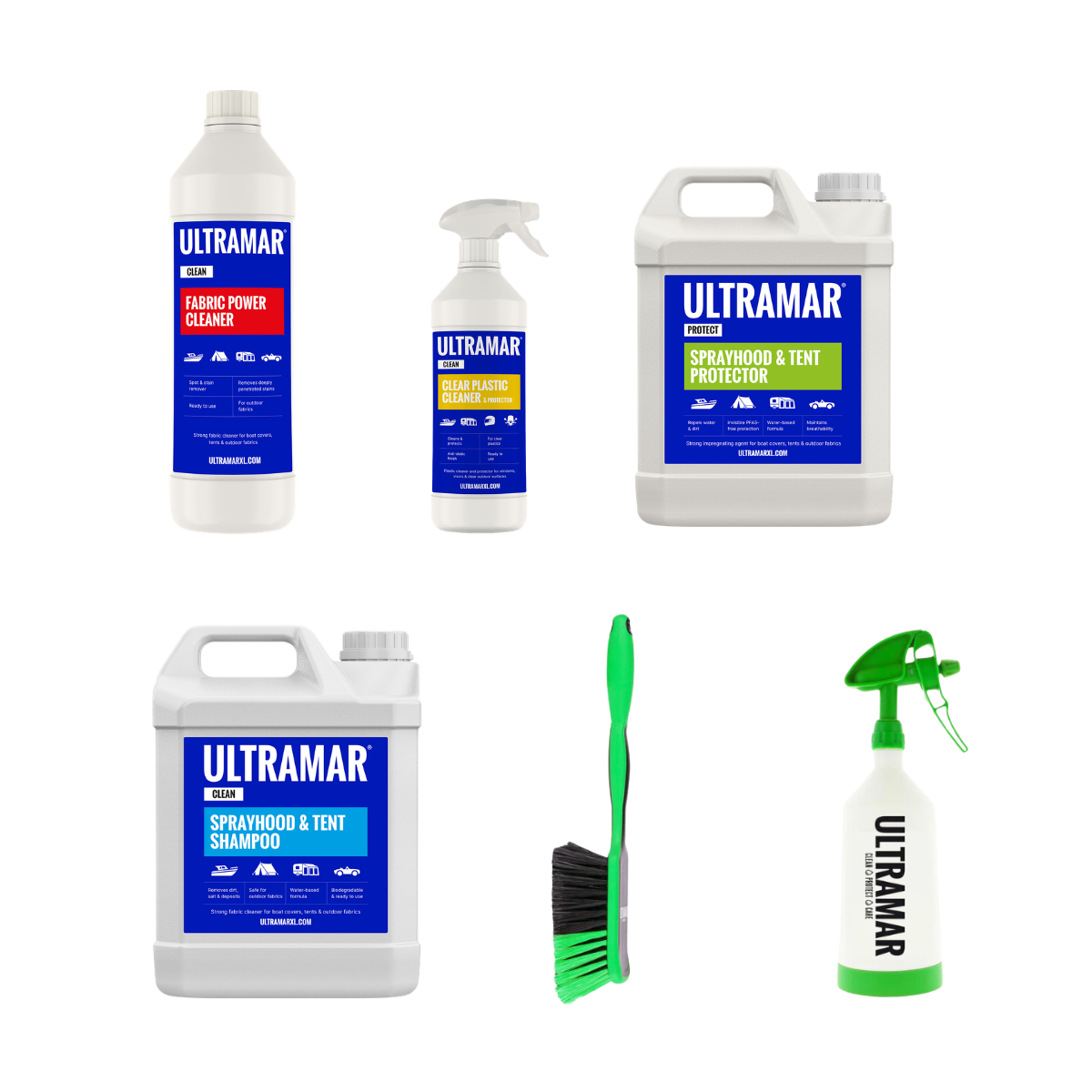
If you prefer a clear and consumer-friendly solution, Ultramar follows this exact three-step logic. The products are designed for home use and suitable for outdoor fabrics.
- Cleaning: Ultramar Sprayhood & Tent Shampoo
- Stain removal: Ultramar Power Cleaner (for deeply embedded stains and stubborn contamination)
- Protection: Ultramar Sprayhood & Tent Protector (for synthetic boat covers)
Ultramar maintenance products are PFAS-free. That means they are a safer choice for people, pets and the environment, while still providing reliable protection for outdoor fabrics.
Why “like new” is not always realistic
Outdoor fabrics naturally change over time due to sun exposure and weather. You can significantly improve their appearance and performance, but you cannot always reverse years of wear. The realistic goal is a clean, even-looking, water-repellent cover that stays in good condition longer.
What should you keep in mind?
- Work in clear steps instead of combining everything at once.
- Clean first, treat stubborn spots second, protect last.
- Always apply protection to a clean and dry fabric.
- Use products designed for outdoor fabric and for home use.
If you want to handle everything properly in one go, a maintenance bundle can be practical. It combines the correct products and often offers a price advantage compared to buying separately. Do not be too economical with product use. Applying enough product ensures even coverage and consistent protection. Having some product left is useful for touch-ups or future maintenance.