Your tent fabric takes a lot. Rain, sun, dust, tree sap, bird droppings, sand, mud—outdoors comes with all of it. And yet, for many people, tent care feels like one thing: “just clean it.”
But cleaning and protecting are two different steps. They don’t do the same job. And when you mix them up, you often get disappointing results: marks that seem to come back, fabric that gets dirty faster, or water that no longer beads up.
What does “cleaning” mean for tent fabric?
Cleaning is meant to remove loose dirt and general build-up. Think dust, a dull film from outdoor exposure, mud streaks, greasy hand marks, and the “grey layer” that slowly forms over time.
After a good clean, your tent usually looks fresher and feels less sticky or stiff. But cleaning does something else that many people overlook:
Cleaning reveals what’s really going on. Once the surface is clean, you can see which areas need extra attention and whether the fabric is still water-repellent.
What does “protecting” mean for tent fabric?
Protecting is not about removing dirt. Protecting is about restoring water repellency and helping new dirt stick less quickly.
Think of protection like a rain jacket for your tent fabric. A rain jacket works best when it’s clean. If you put it on over a sweater covered in mud, everything stays damp, dirty, and uneven. That’s exactly why protecting should never replace cleaning.
Why cleaning isn’t the same as protecting
- Cleaning = removing dirt and build-up.
- Protecting = bringing back water repellency and helping the fabric stay nicer for longer.
So you can have a tent that looks “pretty clean” but still absorbs water. And you can also have fabric where water still beads up, but it looks dull and tired because of built-up grime. Two different issues.
The biggest misconceptions (and why things often go wrong)
Misconception 1: “If it’s clean, I’m done.”
Clean doesn’t automatically mean protected. If the water-repellent performance has worn down, water can still soak into the fabric. That can make your tent get wet faster, stay damp longer, and show new dirt sooner.
Misconception 2: “I’ll just protect it, and it will look clean.”
Protection is not a cleaner. If you protect over dirt or stains, you’re basically sealing the problem in. The result can look patchy, apply unevenly, or not last as long.
Misconception 3: “More force is better.”
With tent fabric, heavy scrubbing or going in too aggressively often backfires. Tent fabric is made for outdoor use, but it’s still a textile. Calm, step-by-step care usually gives the best outcome.
Where does stain removal fit in?
There’s another step people often forget: stain removal. Not every discolouration disappears with normal cleaning. Some marks sit deeper in the fabric—think deeply embedded stains, stubborn contamination, or difficult-to-remove discolouration.
That’s why tent care works best as three separate steps:
- Cleaning (remove general dirt)
- Stain removal (only where needed, targeted on stubborn areas)
- Protection (restore water repellency)
The order matters. You get a more even finish, and the protection typically performs better and lasts longer.
How do you know what your tent fabric needs?
- Water soaks in instead of beading up → protection is likely needed.
- The fabric looks dull or feels sticky → cleaning is step 1.
- Visible marks remain after cleaning → targeted stain removal can help.
Tip: test with a small splash of water on a clean, dry area. If the water immediately “disappears” into the fabric, it’s time to think about protection.
And Ultramar?
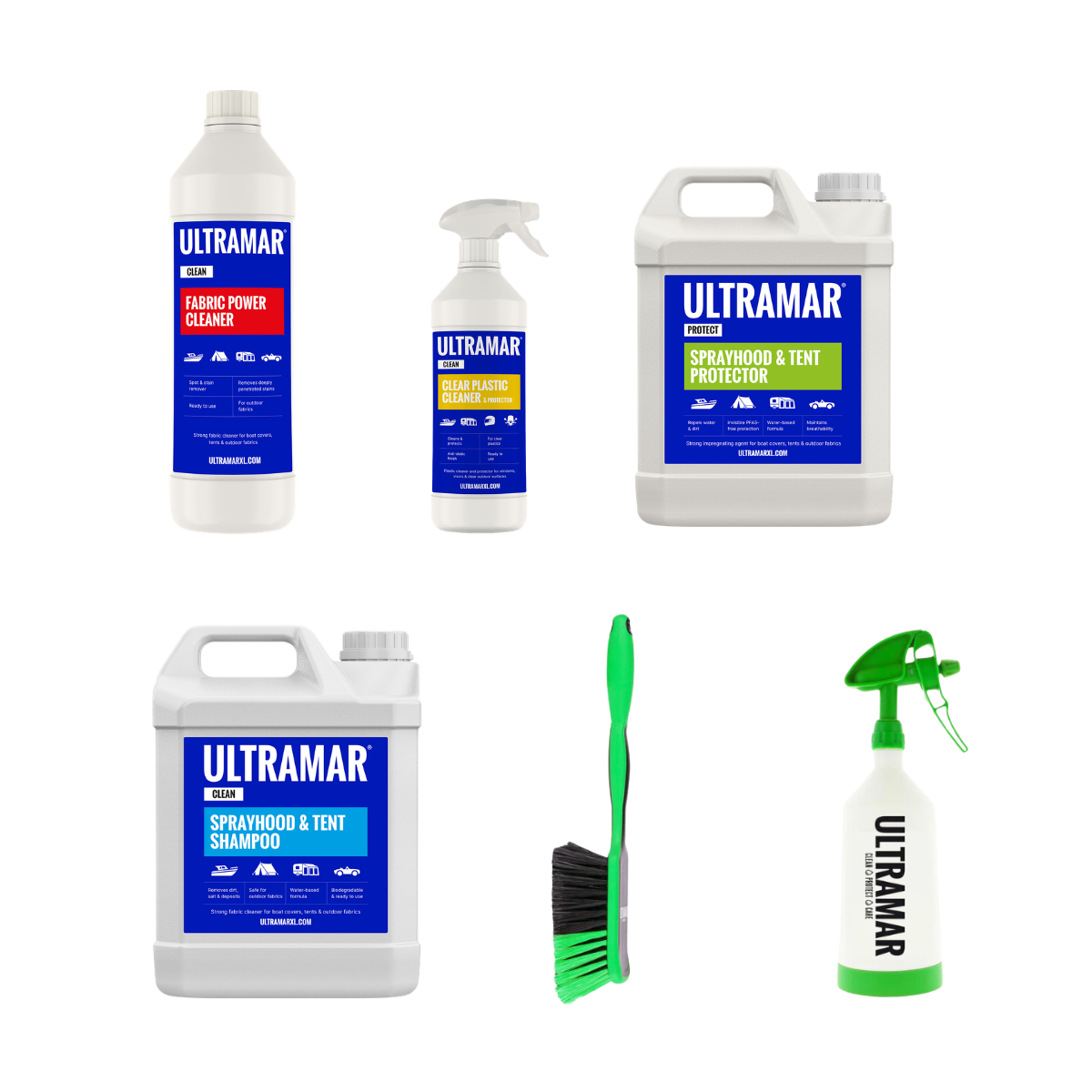
Ultramar helps consumers maintain tent fabric and other outdoor fabrics themselves, using a clear three-step system: cleaning, stain removal, protection. Ultramar maintenance products are PFAS-free and made for easy home use.
- For cleaning, people often use a product like Sprayhood & Tent Shampoo.
- For tough, deeply embedded areas, there is a stain remover like Power Cleaner (use it targeted, not as an all-over cleaner).
- For protection, choose a protector that matches the material (for example, one for synthetic tent fabrics or one for canvas/cotton).
Important: protection works best on tent fabric that is clean and completely dry.
What does this mean for you?
If your tent fabric no longer looks fresh, start with cleaning. If marks remain afterwards, treat those areas with targeted stain removal. And if water no longer beads up, protection is the step that makes the real difference.
When you see cleaning and protecting as two separate things, you avoid a lot of frustration. You get a better-looking result, and your tent fabric stays cleaner and water-repellent for longer.