A tent may look tough, but the fabric and its finish can be damaged faster than you think. Problems often start with “handy” products you might already have at home. Below is a clear list of what you’re better off not using — and why.
1) A pressure washer
A pressure washer feels quick and powerful, but the hard jet can roughen the fabric, stress seams, and weaken the water-repellent finish. You often notice it later: the fabric gets dirty faster and starts letting water through sooner.
2) Dish soap or all-purpose cleaner
Many household cleaners are made to break down grease and lift dirt. That sounds useful, but on tent fabric it can also reduce the protective finish. Result: the tent looks clean for a moment, but loses water repellency more quickly.
3) Soft soap
Soap can leave a film behind. That film can attract dirt, so your tent turns dull faster and needs cleaning more often than necessary.
4) Abrasives and scouring pads
Scouring pads, abrasive powders, and “magic” sponges can work on hard surfaces, but on tent fabric they may damage the fibres. The fabric can become duller, rougher, and harder to keep clean.
5) Bleach and harsh cleaners
These products can cause discolouration and weaken the fabric. They may also affect stitching and zips. That’s a shame, because those details often decide whether a tent stays reliable.
6) Solvents and strong degreasers
Products meant for heavy-duty dirt or glue residues are usually too aggressive for tent fabric. They can affect the surface so water no longer beads up nicely, but instead soaks in faster.
7) Water that’s too hot
Hot water seems logical for dirt, but on tent materials it can change the finish and the feel of the fabric. Lukewarm water is usually safer and works well with a suitable tent cleaner.
8) “All-in-one” solutions
Products that claim to clean and protect at the same time often skip important steps. With tent care, the order matters: clean first, treat stains only where needed, and only then protect again. If you mix steps, you’re more likely to lock in dirt and the protection may not bond evenly.
9) Too much force and too little patience
Scrubbing too hard, leaving products on too long, or repeating on the same spot can create patchy results. It’s better to work calmly, use soft tools (like a soft brush), and match the product to the step.
So what does make sense?
For tent fabric, a simple and safe approach works best. Ultramar follows a clear care order you can do at home:
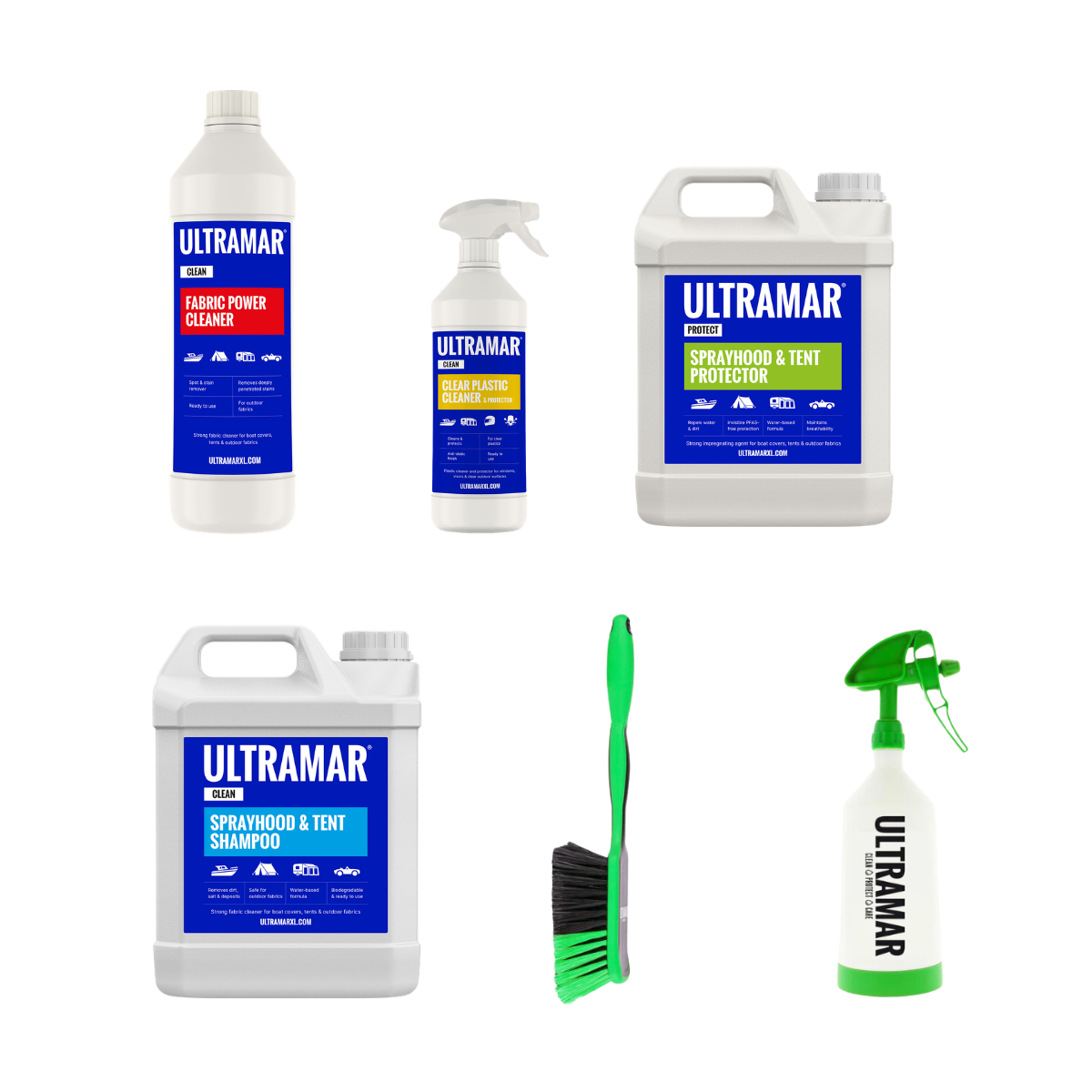
- Step 1: Cleaning – remove loose dirt and general contamination with a tent shampoo (for example Ultramar Sprayhood & Tent Shampoo).
- Step 2: Stain removal – only where needed, for deeply embedded stains and stubborn contamination (for example Ultramar Power Cleaner).
- Step 3: Protection – once the fabric is clean and dry, restore water repellency with a PFAS-free protector that matches the material (for example Ultramar Sprayhood & Tent Protector for synthetic tent fabrics or Ultramar Canvas & Cotton Protector for cotton/canvas).
What does this mean for you?
- Know your tent fabric. Synthetic fabrics (like polyester) need different protection than cotton/canvas.
- Protection is not a cleaner. Always protect only when the fabric is clean and dry, otherwise it bonds less evenly.
- Don’t be too economical with product use. Too little can lead to uneven protection. An even layer matters. Having extra product is useful for touch-ups and your next maintenance round.
- For current pricing and availability you can check the Ultramar website, Bol.com, or an official Ultramar dealer.