Your boat cover works hard. Not just during storms or heavy rain, but every single day. Sun, wind, rain, dust, bird droppings, splashing water, opening and closing the cover — all of this slowly affects the fabric.
That is why maintaining your boat cover is not a one-time task. It is not something you do once and forget about. It is ongoing care. When you keep up with it, your cover stays clean, water-repellent and in good condition for much longer.
Wear Happens Slowly
Most problems do not appear overnight. They build up over time:
- Dirt settles into the fabric and becomes harder to remove.
- Water repellency slowly reduces due to weather and use.
- Stains sink deeper into the material if left untreated.
- The fabric stays wet longer and can start to look dull or tired.
You often notice it only when rain no longer beads on the surface or when cleaning takes more effort than before.
“It Still Looks Fine” Can Be Misleading
Your boat cover may still look acceptable. But appearance and performance are not the same thing.
Signs that maintenance is needed:
- Water no longer forms droplets but spreads across the surface.
- The fabric remains damp for a long time after rain.
- Dirt sticks more easily than before.
- You need to scrub harder to get it clean.
These are early warning signs that protection is wearing off.
Rinsing Is Not the Same as Maintaining
Rinsing your boat cover with water removes loose dirt. That is useful for quick upkeep. But it does not replace proper maintenance.
Good maintenance follows a clear logic:
- Cleaning removes general surface dirt and prepares the fabric.
- Stain removal targets deeply embedded stains or stubborn contamination that normal cleaning cannot remove.
- Protection restores water repellency and helps reduce future dirt build-up.
If you skip a step, the result will not last as long. Protection does not bond well to dirty fabric. And without renewed protection, the material becomes dirty again more quickly.
Why Protection Naturally Wears Off
Outdoor fabrics move, stretch and fold. They get wet and dry again. They are exposed to sunlight and temperature changes. This natural use slowly reduces the water-repellent layer.
This does not mean your boat cover is worn out. It simply means the protection needs to be refreshed from time to time.
A Practical Approach You Can Do Yourself
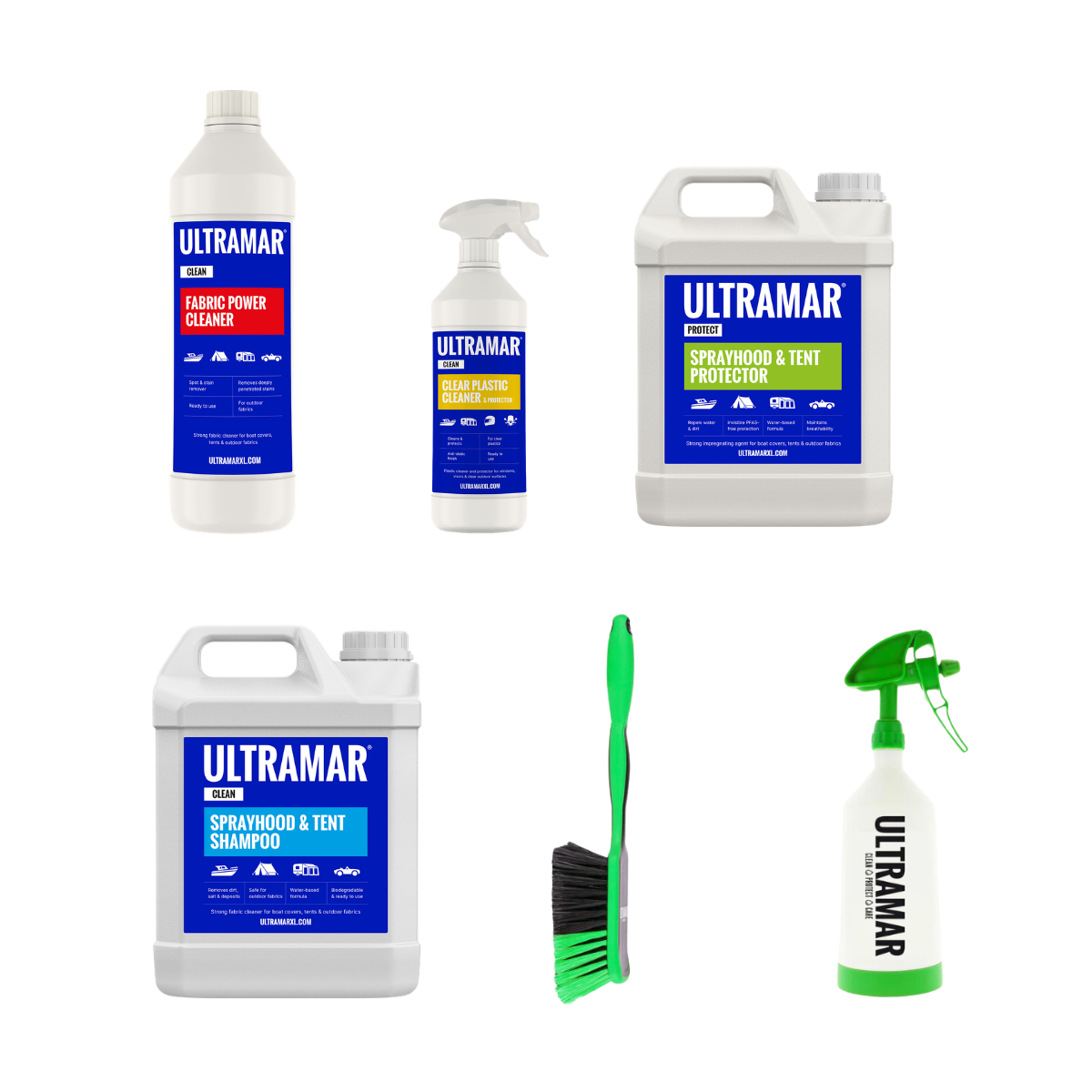
Ultramar is designed for people who want to maintain their boat cover themselves. The products are easy to use at home and follow a proven three-step maintenance process: cleaning, targeted stain removal, and protection.
All Ultramar maintenance products are PFAS-free. This makes them suitable for use around your boat, driveway, garden or marina. PFAS-free does not mean less effective. It means you can maintain your outdoor fabric with care for people, pets and the environment.
The same step-by-step system is used by both consumers and specialists — not because specialist knowledge is required, but because the process works.
What Does This Mean for You?
See boat cover maintenance as regular care, not as a one-time project. By cleaning in time, removing stubborn stains when needed, and restoring protection, you keep your boat cover water-repellent and looking good season after season.
Small, regular maintenance prevents bigger problems later — and helps extend the life of your outdoor fabric.