Your tent feels strong. The fabric is tight. And still, it can suddenly seem like the material is aging faster than you thought. That’s frustrating—especially if you don’t even use the tent that often.
Here’s the helpful part: tent fabric usually doesn’t wear out because of one big mistake. It’s almost always lots of small things that add up. A bit of sun. A bit of rubbing. A few times packed away damp. And before you know it, the fabric looks duller, feels less “firm,” or becomes less water-repellent.
Wear is often invisible (until it suddenly feels late)
Tent fabric ages step by step. You often only notice once the tent starts behaving differently. For example:
- the fabric “wets out” faster in rain
- some areas stay darker longer after a shower
- the tent looks less fresh, even after cleaning
- certain spots feel stiffer—or, in other places, softer and weaker
This doesn’t automatically mean your tent is “done.” But it is a sign the fabric may need extra care.
The biggest reasons tent fabric wears out quickly
1) Sun and heat: slow, but constant
UV light and heat are quiet troublemakers. They work every day, even when the fabric still looks fine. The roof and the sunny side take the most impact. A tent that sits in full sun for two weeks often ages faster than a tent used for the same time in mixed weather.
2) Rubbing in the wrong places
Tent fabric always moves a little. In the wind it rubs against poles, zipper flaps, seams, or attachment points. And during setup you might pull just a bit too hard on a corner or strap. Over time, that can create thin, vulnerable areas.
Transport can add rubbing too: if the fabric is tightly packed with sand or dust trapped inside, every movement creates tiny abrasion—like very fine sandpaper.
3) Dirt that stays behind (and settles in)
A lot of dirt isn’t obvious. Fine dust, soot, oils from hands, cooking residue, and tree deposits can cling to the fabric. This makes the surface feel “rougher,” so new dirt sticks faster. And the more dirt and friction, the faster the fabric can wear.
4) Packing away wet, or packing too soon
After a wet night you often just want to pack up and go. Totally understandable. But when fabric stays damp for a long time, it’s under more stress. It can feel sticky, hold onto dirt more easily, and you’re more likely to end up with stubborn discoloration that becomes difficult to remove later.
5) Cleaning too aggressively
Many people think: “Just scrub hard and it’ll look new again.” With tent fabric, it often works the other way around. Stiff brushes, heavy scrubbing in one spot, or cleaning too intensely too often can actually speed up wear.
Why “it looked clean” isn’t the same as “it’s ready for protection”
A tent can look okay while dirt is still embedded in the fabric. You often notice that only when it rains again: water soaks in faster in certain spots, or you see marks that only show up when the fabric is wet.
In simple terms: if dirt stays in the fabric, a protective layer can’t work evenly. Water-repellency becomes patchy sooner. And that can feel like your tent got worse “all at once,” even though the process started earlier.
Common misunderstandings
- “My tent is new, so I don’t need to do anything yet.” New fabric can last a long time, but good care early on is one of the best ways to slow down wear.
- “If it’s still waterproof, everything is fine.” Waterproof and water-repellent are not the same. A fabric can still keep water out, while getting wet on the surface quickly and attracting dirt more easily.
- “A quick rinse is enough.” Rinsing removes loose dirt, but not everything that settles in. Regular proper cleaning helps prevent buildup.
What does this mean for you?
If you want your tent fabric to stay nice for longer, it helps to look beyond “is it clean?” and also ask: “is the fabric still protected?” and “is there stubborn dirt that needs attention first?”
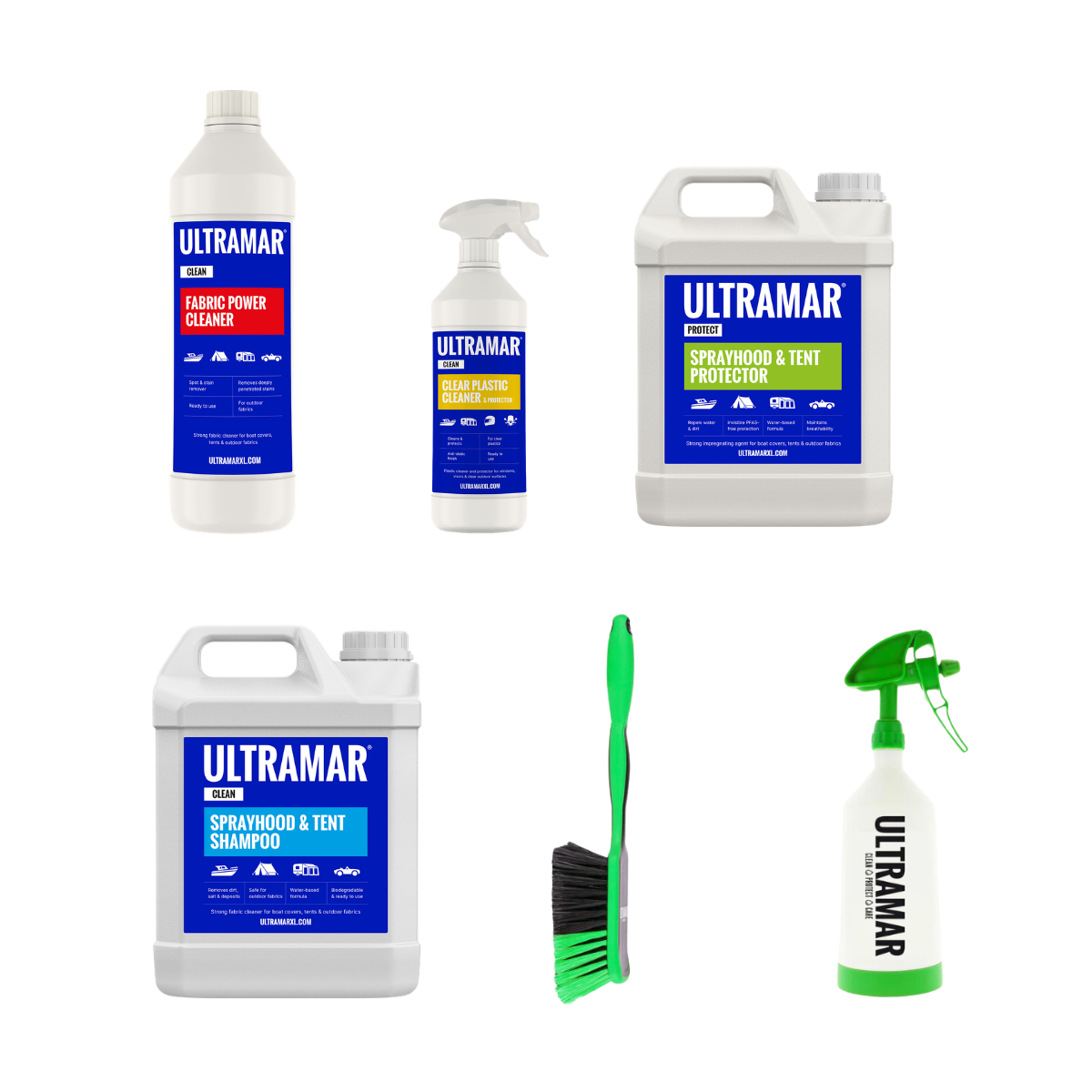
In maintenance, a clear order works best: first cleaning, then separate stain removal for stubborn marks, and only then protection so the fabric becomes water-repellent again. Ultramar makes PFAS-free maintenance products that fit this approach and are easy to use at home, without specialist tools.
For current prices and availability, you can check the Ultramar website, Bol.com, or one of the official Ultramar dealers.