Your tent can feel like “just fabric.” You unpack it, set it up, use it, roll it away, and only think about it again on the next trip. That’s exactly why tent maintenance is often underestimated. Not because people don’t want to do it, but because you usually notice the problem only when it’s already there: the fabric looks dull, it stays dirty faster, or water no longer beads up the way it used to.
The good news: tent maintenance doesn’t have to be complicated. Once you understand what weather, dirt, and normal use do to tent fabric, care becomes logical. And most importantly: you can do it yourself at home.
A tent takes more wear than you think
On a campsite you don’t always see it, but your tent is working all day. Sun and heat during the day, cooling down and condensation at night. In between: wind, dust, sand, tree sap, smoke from cooking, and anything that rubs against the fabric or lands on it.
Then there’s real-life timing. Your tent is often wet at the exact moment you have the least time. You pack up in the rain, roll it quickly, or store it at home “just for now” and plan to air it out later. That’s not laziness. That’s camping. The downside is simple: dirt and moisture that stay in the fabric can settle in. And once it settles, cleaning becomes harder than it needs to be.
The biggest misunderstanding: “It still looks fine”
Many tents still look okay while they already perform less well. Maintenance is not only about appearance. It’s also about how the material behaves:
- Water repellency: if water no longer beads up and instead slowly soaks in, protection is often reduced.
- Dirt build-up: if dust and grime stick faster, the tent becomes harder to keep clean.
- Lifespan: dirt that builds up and stays too long can make the fabric wear out faster.
The tricky part is that this happens gradually. You only notice it when you start thinking: “Why does it get dirty so quickly this year?” or “Why doesn’t it dry like it used to?”
Why “just hosing it down” often disappoints
When your tent looks dirty, the instinct is understandable: rinse it and you’re done. In practice, that often works only partly. Loose dirt comes off, but deeper contamination remains. That’s when you’re left with a grey film or stubborn discoloration.
Also, water alone doesn’t reset the fabric. It doesn’t always remove the layer that makes the tent look dull. And it doesn’t restore water repellency. So even if the tent looks cleaner, the result can still feel disappointing.
Maintenance isn’t one step. It’s three logical steps
A lot of frustration comes from mixing steps or skipping one. But tent maintenance is actually very straightforward when you split it into three parts. Ultramar always follows the same order:
- Cleaning – you remove loose dirt and general contamination.
- Stain removal – you treat only the areas with deeply embedded stains, stubborn contamination, or difficult-to-remove discoloration.
- Protection – you restore water repellency and help new dirt stick less quickly.
It sounds simple, but that’s exactly why it works: protection performs best when the fabric is truly clean. And stain treatment makes more sense after loose dirt is gone. If you reverse the order, you can end up with uneven results and protection that doesn’t last as long.
Why material matters (and why people forget it)
Not every tent is the same. Some are fully synthetic (like polyester). Others are mixed fabrics (like polycotton). And then there are parts that aren’t fabric at all, like clear windows.
If you use one approach “for everything,” it often goes wrong. Not because you’re doing something strange, but because different materials need different care. This matters most when you protect the fabric: what works for one type of tent cloth isn’t automatically meant for every material.
The silent problem: postponing
Underestimating tent care is often not about motivation. It’s about timing. Many people think: “I’ll do it later.” Later becomes after the holiday, after the weekend, after the next trip. Until you open the tent and realize you now have much more work than you would have had earlier.
A simple rule helps: the longer you wait, the more dirt can settle into the fabric. And the harder it becomes to get the tent looking fresh again.
Where Ultramar fits in naturally
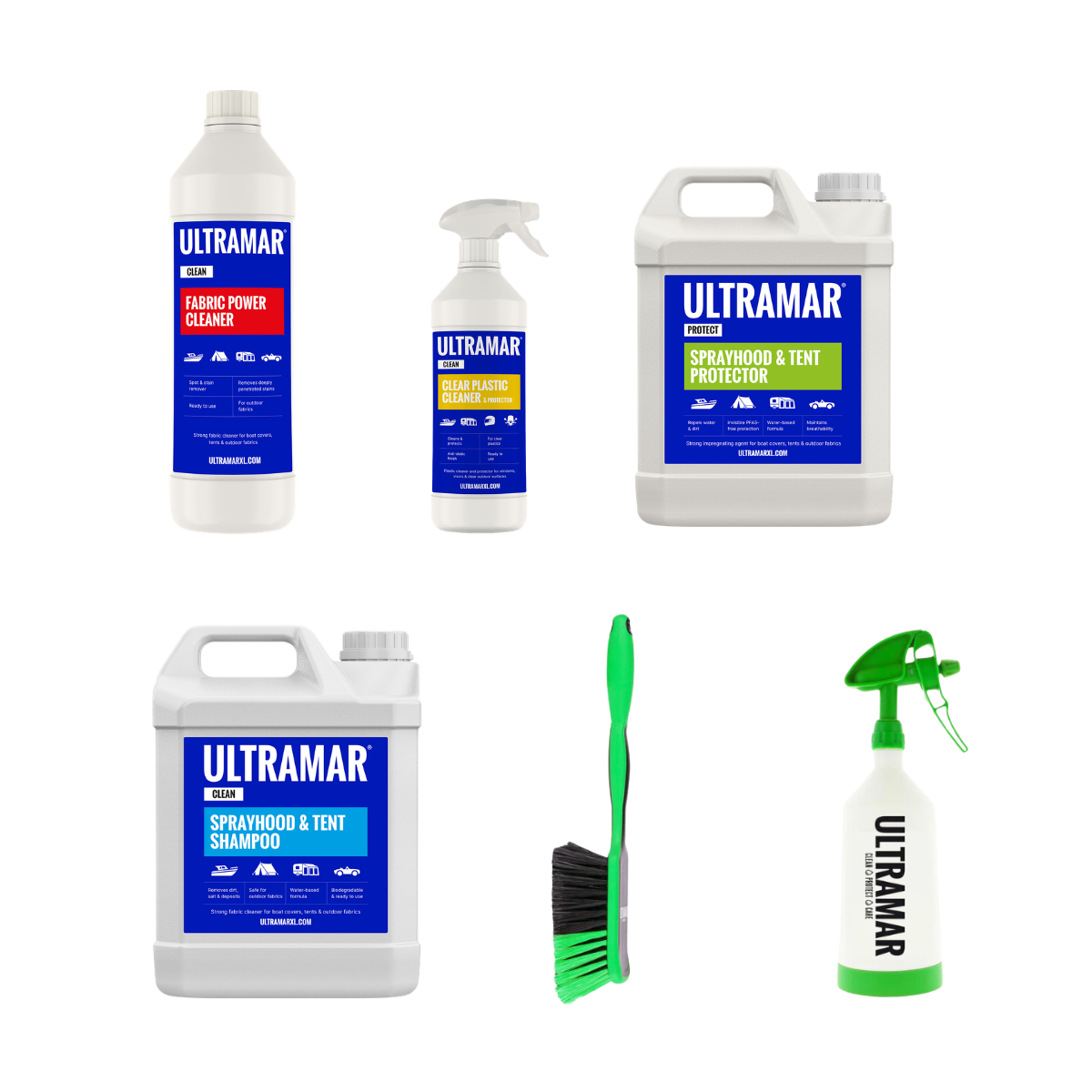
If you want to maintain your tent yourself, it helps to use products made for outdoor fabrics and for home use. That’s exactly what Ultramar is for: you can clean your tent fabric, deal with problem spots, and then protect it again with PFAS-free maintenance products that are easy to use at home.
The key is to keep the steps in the right order. Ultramar always follows the same logic:
- Sprayhood & Tent Shampoo for cleaning
- Power Cleaner for deeply embedded stains, stubborn contamination, and difficult-to-remove discoloration (use locally where needed)
- Sprayhood & Tent Protector to protect synthetic fabrics, or Canvas & Cotton Protector for natural fabrics like cotton/canvas
And if your tent has clear windows: that’s not fabric. Treat those parts separately with a product meant for plastic windows, not with a fabric protector.
PFAS-free: practical for home use
When you work on a driveway, in a garden, or on a campsite, you want products that suit normal, everyday use. Ultramar maintenance products are PFAS-free. That means a safer choice for people, pets, and the environment, without needing to compromise on a good, long-lasting result.
What does this mean for you?
If you often postpone tent maintenance or underestimate it, keep these points in mind:
- Don’t see it as “just cleaning,” but as cleaning + stain removal + protection.
- Don’t wait until the tent looks really bad. Water repellency and dirt build-up often change before appearance does.
- Use products that match your material (synthetic fabric, cotton/canvas, or plastic windows).
- Don’t be too economical with product. Even coverage gives the most consistent protection.
For current prices and availability, you can check the Ultramar website, Bol.com, or an official Ultramar dealer.