You pack your tent away at the end of the season. Months later you head out again. Then it happens: the first rain shower and the tent suddenly seems to “leak”. That feels unfair, because it worked fine last year.
The good news: in many cases your tent isn’t suddenly ruined. What you’re seeing is often a mix of storage effects, folds, leftover dirt, and a protective layer that no longer works as well. Water stops beading and rolling off. It sits on the fabric longer, and it can push through more easily.
A tent can “leak” without a hole
A lot of “leaks” are not caused by a tear. They happen because the fabric has become less water-repellent. Water stays on the surface, slowly soaks in, or gets pushed through when the fabric is under pressure (for example along fold lines).
You’ll often notice:
- drops that don’t bead up and roll off anymore
- dark patches that slowly spread
- a damp inside after rain, without visible damage
- wet areas along creases or spots where the fabric is pulled tight
What storage can do to your tent fabric
1) Creases and pressure lines are weak spots
During storage, a tent is usually packed tightly. That creates pressure and friction on the same fold lines for months. Later, rainwater tends to sit on those lines. The fabric has to handle more stress there, so water can push through sooner.
2) Packing away a tent that isn’t clean is a common cause of stains and problems
If you don’t pack your tent away clean, small bits of dirt and residue stay in and on the fabric. There’s also a high chance that organisms such as mould spores are present on the cloth. During months in storage, they can get the perfect chance to grow if conditions are damp.
That’s why many people see, when they unpack their tent for the new season:
- typical weather stains
- mould in the fabric
And it’s not just cosmetic. Dirt and long-lasting damp spots make it easier for the fabric to lose its water-repellent behaviour.
3) Storing a tent in a plastic bag often makes things worse
Many tents go back into a plastic storage bag. It’s convenient, but plastic doesn’t breathe. A little leftover moisture, temperature changes, and trapped air can lead to condensation inside the bag.
Usually better:
- Store your tent in something breathable, like a cotton duvet cover.
- Keep it in a dry, well-ventilated place, for example a dry attic.
- Don’t stuff it tight. Looser storage is kinder to the fabric.
4) A box in a caravan, shed, or garage is a classic trap
Many people leave the tent all winter in a storage box in the caravan or in a shed. Those places often have big swings in temperature and humidity. That can create condensation, even if the tent seemed dry when you packed it away.
Condensation during storage means moisture sits against the fabric for long periods. That’s one of the fastest routes to reduced performance in rain.
Why you notice it right after winter
Your first trip after storage is often the moment everything comes together:
- the fabric has been folded for a long time
- the protection is weaker than you expected
- stains and damp patches are more visible
- the tent suddenly has to deal with real rain and wind again
So it feels like the tent became leaky overnight. Usually it’s the result of several small things adding up.
What helps prevent this
The safest approach is to think in clear, separate steps. Don’t combine them and don’t rush them.
- Cleaning – to remove surface dirt and build-up
- Stain removal – only where needed, for deeply embedded dirt and stubborn discolouration
- Protection – to rebuild water-repellent performance
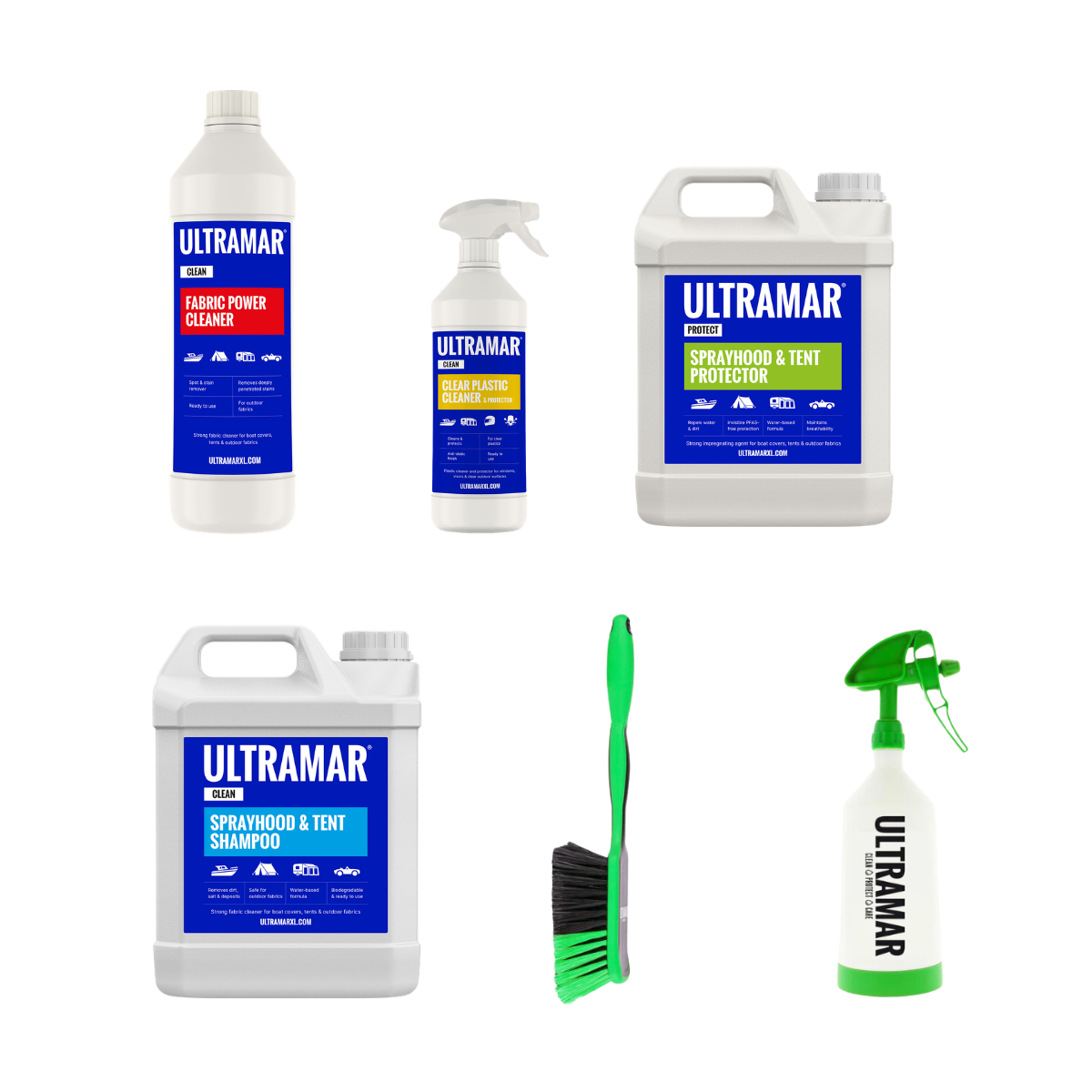
For tent fabrics, Ultramar fits this logic: Ultramar maintenance products are designed for home use and follow this proven three-step process. Ultramar maintenance products are PFAS-free, which makes them a more comfortable choice to use around your home, campsite, kids and pets.
A simple rule of thumb for storage
- Before storage: clean your tent and let it dry completely. Ideally, add protection before storage so the fabric goes into the winter with extra water-repellent help.
- After storage: unpack early, let it air out, rinse or lightly clean with water if needed, and add a fresh layer of protection so you start the new season properly protected.
What should you watch for?
If water no longer beads and rolls off, if crease lines get wet faster, or if you see stains and damp spots after storage, treat that as a sign your tent needs maintenance. Cleaning before storage, breathable storage, and timely protection often makes the difference between stress in the first rain and comfortably dry camping.