A boat cover looks tough. It sits outside, deals with wind, rain and sun, and does its job year after year. Yet when it comes to cleaning, things often go wrong. Not because you don’t care, but because many mistakes feel logical.
This article helps you recognise those pitfalls. Not as a step-by-step guide, but to build awareness. Cleaning a boat cover doesn’t have to be complicated — as long as you know what to avoid.
1. Thinking that “just cleaning” is enough
Many boat owners clean their cover and stop there. It looks good again, so why do more?
What you don’t see is that cleaning only removes dirt. It does not restore water repellency. Without additional protection, the fabric absorbs water faster and new dirt sticks more easily.
The result: your boat cover gets dirty again sooner and starts to look worn more quickly.
2. Wanting to do everything at once
Cleaning, treating stains and protecting in one go. It sounds efficient, but in practice it often works against you.
Each step has its own purpose:
- Cleaning removes surface dirt
- Stain removal targets stubborn contamination
- Protection helps water and dirt adhere less easily
When you combine steps, something gets skipped. The result may look fine at first, but it won’t last as long.
3. Being too economical with product
“I’ll use a bit less so it lasts longer.” That sounds sensible, but with boat covers it often has the opposite effect.
An unevenly treated cover develops areas that absorb water faster or hold onto dirt. Especially when applying protection, using enough product is important for an even result.
Using too little often means starting all over again sooner.
4. Not distinguishing between materials
Not all boat covers are the same. Some are made from synthetic fabrics, others from cotton or canvas. Yet they are often treated in exactly the same way.
That’s a common mistake. Different materials need different types of protection. What works well on one fabric is not automatically suitable for another.
Ignoring this leads to faster wear or disappointing results.
5. Waiting until it looks really bad
Many people delay maintenance until the cover looks clearly neglected. Only then do they start cleaning or thinking about protection.
But maintenance works best when you do it in time. Regular cleaning and reapplying protection helps keep the fabric in good condition and extends its lifespan.
It takes less effort than trying to fix long-term neglect.
Why these mistakes are so common
These mistakes don’t come from a lack of care. They happen because boat covers look robust and maintenance is often reduced to “just hosing it down”.
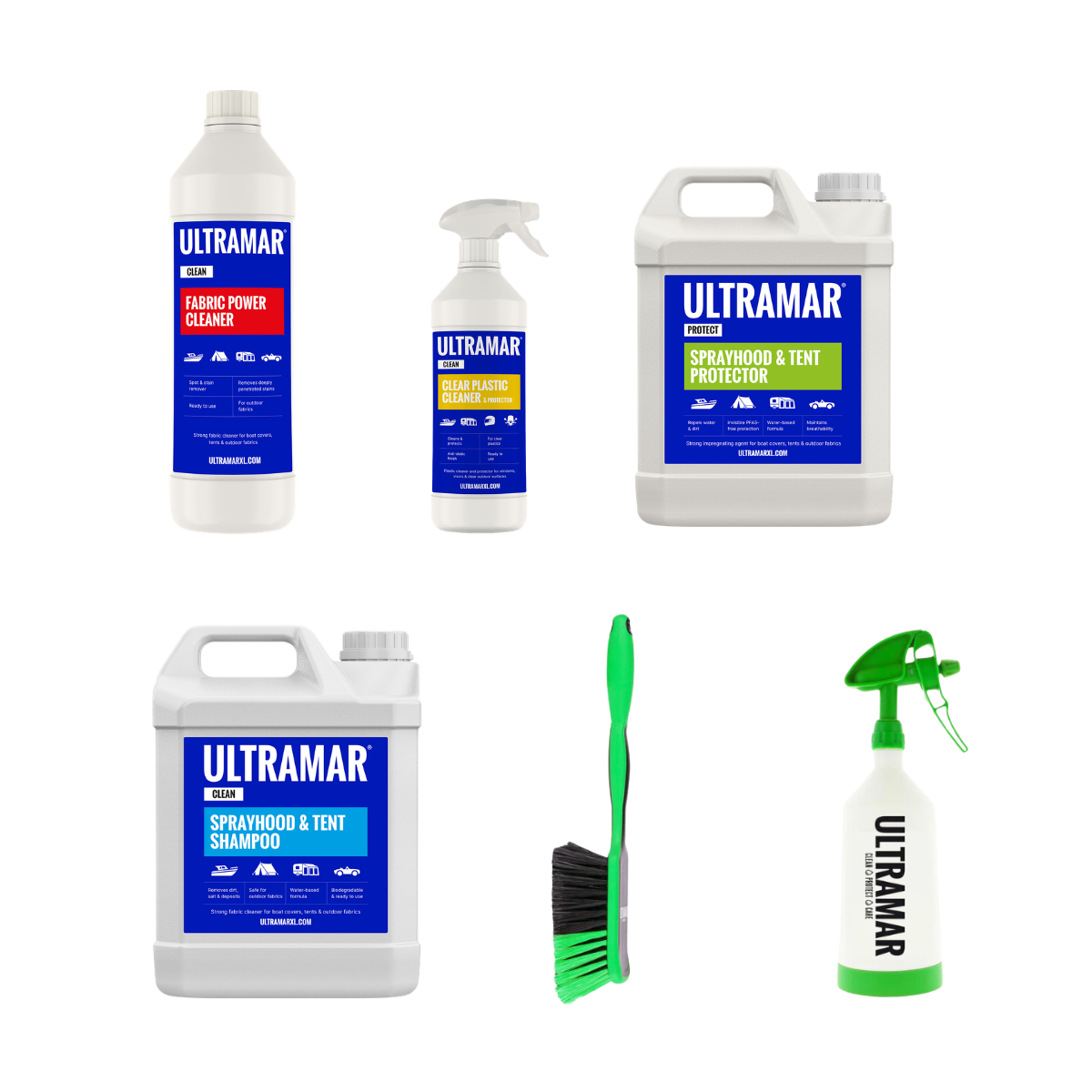
Brands like Ultramar address this by making maintenance clear and suitable for home use. No complicated explanations, just straightforward products for cleaning, stain removal and protection — PFAS-free and designed to be used by consumers themselves.
Not because maintenance is difficult, but because it needs to be clear.
What does this mean for you?
When cleaning your boat cover, don’t just think about how it looks today, but how you want it to look one or two seasons from now.
If you know which mistakes to avoid, you naturally make better choices — without extra hassle.