A tent always looks fresh in the shop. But after a few trips you notice it fast: dust, stains, dull patches, and a fabric that no longer beads water as well. Then it’s tempting to “quickly” clean it with whatever you have at home. That’s exactly where many things go wrong.
Cleaning tent fabric doesn’t have to be difficult, but it does need a smart approach. Below are 5 common mistakes that can put unnecessary stress on the fabric or leave you with disappointing results. With a few simple choices, you avoid frustration and keep your tent looking good for longer.
1) Scrubbing too hard because you want it done fast
A stain won’t budge right away? Then you naturally press harder and scrub longer. It makes sense, but it often works against you.
- What goes wrong: Hard scrubbing can roughen the surface of the fabric. That can make dirt stick more easily and leave the fabric looking dull sooner.
- What to do instead: Work calmly with a soft brush or sponge. Let the cleaner do the work, not force.
2) Treating “cleaning” and “stain removal” as the same thing
Many people use one product (or one approach) for everything. But tent fabric often has two kinds of issues: general surface dirt and stubborn, deeper stains.
- What goes wrong: You keep cleaning and cleaning, while what you really need is a targeted stain treatment.
- What to do instead: Think in two separate steps: first cleaning (for overall dirt), then stain removal only where it’s needed.
3) Using a “strong product” over the entire fabric
If you see a stubborn discolouration, it’s tempting to use a stronger product on the whole tent. It sounds efficient, but it usually isn’t the best choice.
- What goes wrong: You treat large areas when only a few spots actually need it. That uses more product and can be unnecessarily harsh for the fabric.
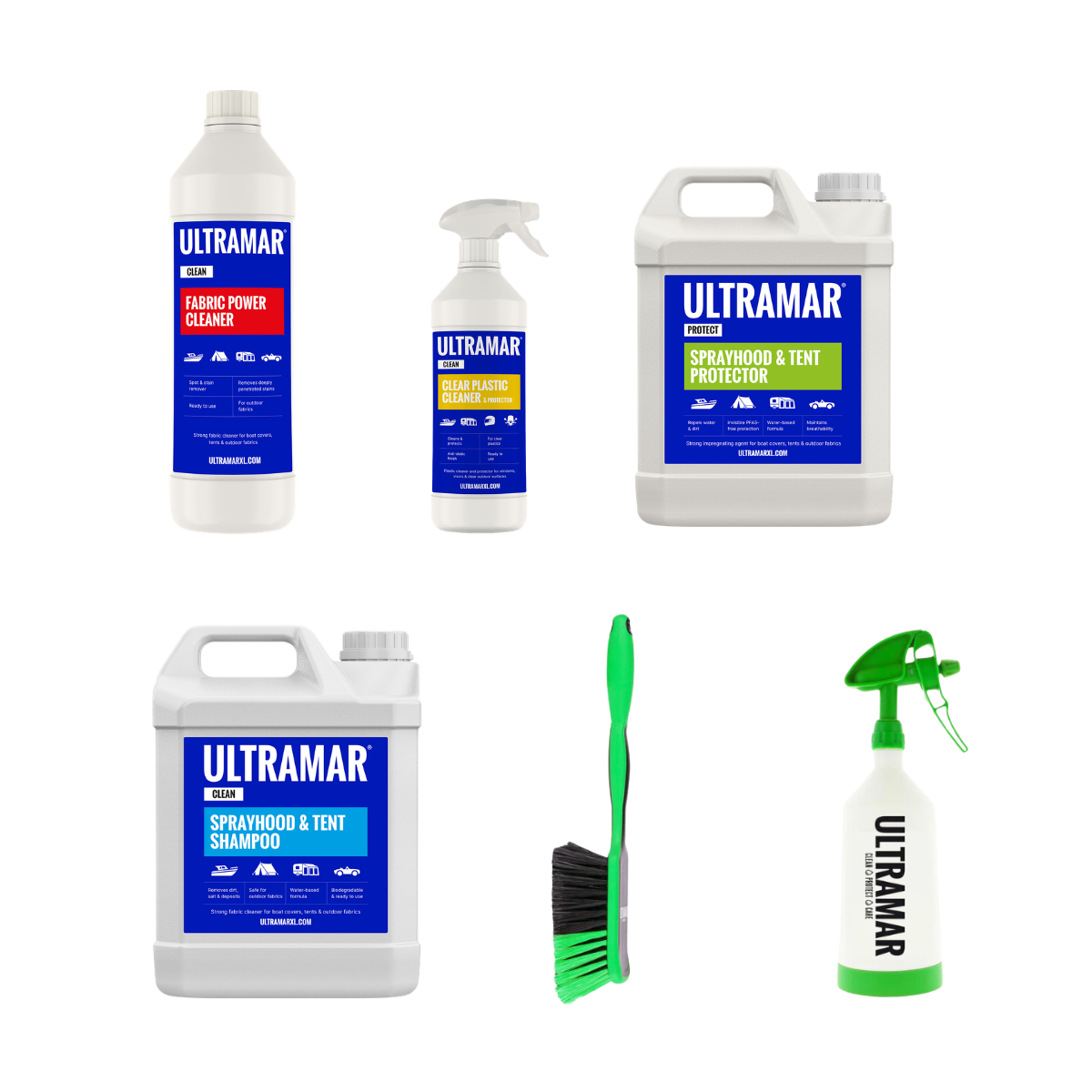
- What to do instead: Use a stain remover only locally, on areas with deeply embedded stains, stubborn contamination, or difficult-to-remove discolouration. With Ultramar, that role fits Power Cleaner: targeted use, not as an all-over cleaner.
4) Skipping protection (or protecting too early)
After cleaning, the fabric often looks better. Then you think: done. Or you think: protect it right away, even if the fabric isn’t fully dry yet.
- What goes wrong when you skip it: Fabric that no longer repels water well gets dirty faster and stays damp longer. That means you’ll need to clean again sooner.
- What goes wrong when you protect too early: Protection works best on clean, dry fabric. If the fabric is still damp or still contains dirt, the result is often patchy.
- What to do instead: Think in three clear steps: Cleaning, then stain removal where needed, and only then protection to restore water repellency.
5) Not considering the material of your tent fabric
Not all tent fabric is the same. Some tents are mostly synthetic, others are more cotton or canvas-like. That difference matters when you’re choosing protection.
- What goes wrong: You use protection that doesn’t match the fabric type. Then the result can disappoint, or the finish may look uneven.
- What to do instead: Always check what your tent fabric is made of. Ultramar therefore distinguishes protection by material: Sprayhood & Tent Protector for synthetic outdoor fabrics and Canvas & Cotton Protector for natural fabrics like cotton and canvas.
One extra misunderstanding: “PFAS-free probably works less well”
Sometimes people assume PFAS-free protection must be weaker. It doesn’t have to be. Ultramar maintenance products are PFAS-free. That’s a safer choice for people, pets and the environment, and it’s suitable for home use. What matters most is still the basics: the right order and enough product for even coverage.
What does this mean for you?
If you take away one thing: don’t treat tent fabric like a “quick wipe-down job”. With a calm approach and the right order, your results will be noticeably better.
- Clean the whole fabric first.
- Remove stains afterwards, only where needed.
- Protect when the fabric is clean and dry, using a product that fits your material.
This way your tent stays looking better for longer, water beads more easily, and you won’t have to start over as often.