Your tent goes through a lot. Sun, rain, dust, wind, folding, storing, and setting it up again. When it is new, rain usually beads up neatly on the fabric and rolls off. Over time, that protection can slowly wear down. And you often notice it when you are already at the campsite.
If you recognize one or more of the signs below, it may be time to give your tent fabric proper maintenance. Not with quick fixes, but with a clear approach: first clean, then treat stubborn stains, and only then restore protection.
1) Rain no longer beads up but soaks into the fabric
This is the most obvious sign. Instead of droplets sitting on the surface, you see darker patches forming. The fabric looks like it is absorbing water. That does not automatically mean your tent is leaking. But it does mean the water-repellent layer is weakening.
A common mistake is applying new protection on dirty fabric. Protection works best on a clean, dry surface. If the fabric is still dirty, the result is often uneven and less durable.
2) The fabric stays wet for a long time
A well-protected tent usually dries faster. When water can roll off easily, less moisture remains in the fabric. If protection has worn off, water lingers on the surface and the material feels damp for longer.
This becomes frustrating when packing up in the morning. You roll up a wet tent and later notice it looks dull and tired. That is often a sign that maintenance has been postponed for too long.
3) Dirt sticks more easily and the tent looks dull
When protection decreases, dirt adheres more quickly. Dust, sand, leaves, and general outdoor contamination settle into the fabric. Your tent may start to look grey or worn, even with normal use.
It is important to understand: protection does not replace cleaning. If the fabric already looks dull, you need to clean it first. Only when the material is clean and dry can you properly restore water repellency.
4) Streaks, stains, or dull patches remain after cleaning
Sometimes you clean your tent carefully, but certain areas remain visible. These are often deeply embedded stains or difficult-to-remove discoloration. The surface can look uneven as a result.
In that case, it helps to use a dedicated stain remover after the main cleaning step. Targeted treatment improves the final result and ensures the protective layer can be applied evenly.
5) During heavy rain, the fabric feels less “sealed”
This sign is subtle. In strong rain, the fabric darkens more quickly, water sits on the surface longer, and the material appears less water-repellent. Your tent does not have to leak for this to happen. It usually means the protective function has reduced.
Why does this happen?
Protection wears off through normal use. UV exposure, friction from folding, dirt acting as abrasion, and simply time all play a role. This is completely normal. The good news is that in many cases, water repellency can be restored with the right maintenance steps.
The logical order: clean, treat stains, protect
If you want a reliable result, follow these three steps:
- Cleaning: Remove surface dirt and general contamination.
- Stain removal: Treat deeply embedded stains or stubborn contamination that remain after cleaning.
- Protection: Restore water repellency and help reduce future dirt adhesion.
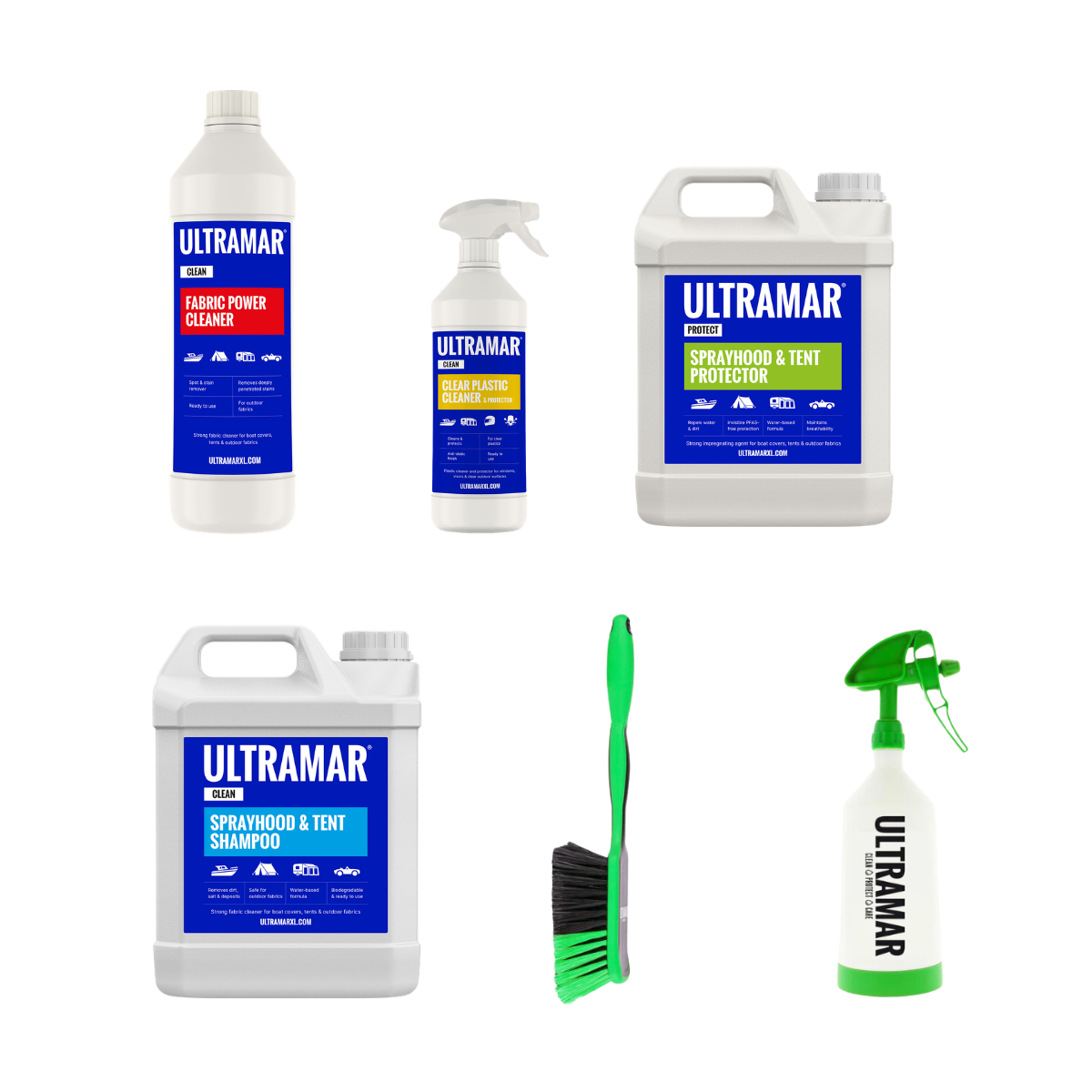
Ultramar works with this proven three-step system. For cleaning, you can use Ultramar Sprayhood & Tent Shampoo. For deeply embedded stains or difficult discoloration, apply Ultramar Power Cleaner as a targeted treatment. After the fabric is clean and dry, restore protection with the correct product for your material: a protector for synthetic fabrics or a protector for canvas and cotton.
Ultramar maintenance products are PFAS-free. This means they are safer for people, pets, and the environment, and suitable for home use, without reducing performance.
What does this mean for you?
- Notice one sign? Plan maintenance before your next trip.
- Notice several signs? Start with proper cleaning, not just protection.
- Not sure about your tent material? Check the label or manufacturer information. The right protector depends on the fabric type.
For current prices and availability, you can visit the Ultramar website, Bol.com, or one of the official Ultramar dealers.