A tent is supposed to keep you dry. Still, you can wake up to damp patches, dripping walls, or a clammy sleeping bag after a rainy night. That doesn’t automatically mean your tent is “done.” In many cases there’s a clear reason — and a clear next step to check.
1) The water-repellent protection has worn off
Many tent fabrics start out water-repellent, so rain beads up and rolls away. Over time, sun, rubbing, dirt, and frequent packing can reduce that protection. The fabric may still look fine, but it can begin to take on water.
A common sign: rain no longer beads. It spreads out, and the fabric looks darker where it gets wet.
2) Dirt holds water on the fabric
Dirt doesn’t just look bad — it can act like a sponge. Dust, sand, greasy marks from hands, and general outdoor buildup keep water sitting on the fabric longer. The longer water stays in one place, the more chance moisture has to work its way through, especially on tight or high-contact areas.
That’s why cleaning is about function, not just appearance.
3) Condensation is mistaken for a leak
Not every drop comes from outside. Inside a closed tent, moisture builds up from breathing and damp gear. On cool nights, with little wind or poor ventilation, that moisture can settle on the inside of the fabric. You’ll see wet walls or droplets that run down.
A quick check: is the moisture mainly on the inside, without one clear “entry point”? Then condensation is often the cause.
4) Seams and stitching points take the most stress
The highest tension is around seams, corners, and attachment points for guy lines. Those areas move and flex more, so water resistance can weaken sooner there. After lots of use, seams can also stop sitting as tightly as they once did.
If dampness appears mostly along a seam or in a corner, that’s a strong clue.
5) The tent isn’t pitched tight, so water can pool
A loose pitch can let water collect. A small sag in the roof fabric is enough for rain to sit in one spot. That puts pressure on the fabric for a long time. Even a good fabric can eventually let moisture through under constant pooling.
It helps to check:
- Is the fabric tight everywhere?
- Are the guy lines evenly set and retightened?
- Can water run off without forming puddles?
6) Small wear spots from rubbing, folding, or pressure points
Tents get folded, rolled, packed, and carried again and again. Add rubbing against poles, contact with branches, or repeated creases in the same place, and small weak spots can develop. You might only notice them in heavy rain.
Pay extra attention to areas that are always folded the same way or where the fabric presses and rubs.
What should you watch for?
If your tent seems to leak, a simple way to narrow it down is: what material is it, where exactly is the moisture appearing, and is it really rain or could it be condensation. Those three questions usually get you to the cause faster.
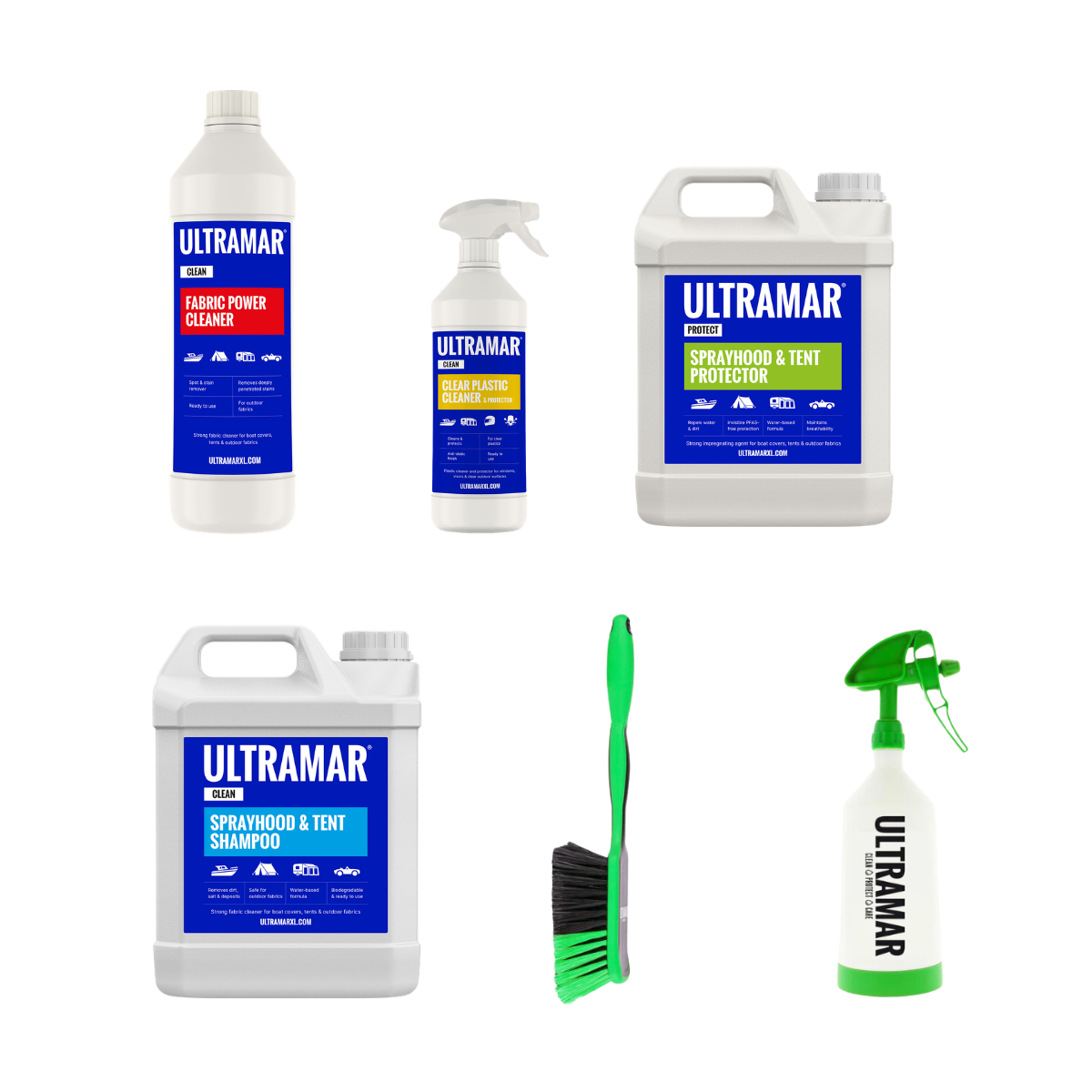
For many tents, a fixed care order gives the best result: first clean (remove buildup), then treat stains (only where needed), and only then protect so the fabric becomes water-repellent again. Ultramar offers PFAS-free maintenance products you can use at home, built around this proven three-step approach for outdoor fabrics.
For current prices and availability, you can check the Ultramar website, Bol.com, or one of the official Ultramar dealers.