A boat cover lives outdoors. Sun, rain, wind, salt, and everyday use all leave marks over time. Sometimes you suddenly notice stains. Sometimes the fabric slowly turns dull or fades. That’s frustrating, especially when the cover is still in good shape otherwise.
Below are 7 common causes of stains and discoloration. Not to worry you, but to help you recognize what’s going on. When you understand the cause, it’s easier to maintain your cover in a smart, realistic way.
1) UV and sunlight
Sunlight is one of the biggest causes of fading. It usually happens slowly: colors become lighter, dark tones look more grey, and the fabric can start to look “dry” or tired. You’ll often see it first on areas that always face the sun, like the top of the cover or edges without shade.
Good to know: fading from sun isn’t usually a single “stain” you can wipe away. It’s a gradual change in the material from long-term exposure.
2) Rain that carries dirt
Rainwater is rarely perfectly clean. It can pick up dust, fine sand, and soot particles. If that water dries slowly on your cover, the dirt stays behind. You may see grey patches or streaks, especially where water pools or runs down the same path again and again.
3) Salt and spray
Do you boat on the sea or in brackish areas? Then salt ends up on the fabric. Salt can dry into a dull haze. After that, dirt tends to stick more easily, which can lead to darker spots or a generally grey look. Spray along the edges can also create a recurring dirty line.
4) Bird droppings, insects, and tree sap
Some contamination is simply more stubborn than everyday grime. Bird droppings, insect residue, and tree sap can leave visible marks quickly. If they sit too long, they can become harder to remove and the area may look darker or more yellow than the surrounding fabric.
Tip: these spots are usually easiest to deal with when you tackle them early, before they work deeper into the fabric.
5) Friction and contact points
Think of areas you touch or rub often: near zippers, snaps, lines, frames, grab points, or where the cover rests against rails or hardware. Friction can “rub in” dirt and sometimes causes shiny, dull, or darker zones. It may look like the fabric is aging faster there, but it’s often simply a high-use area.
6) Water that sits (folds and low spots)
If a boat cover isn’t tight, low spots form where water can sit. Dirt collects there, and when it dries you can get edges, rings, or streaks. You’ll often recognize this because the marks follow the shape of a fold, seam, or dip.
This is one reason fit and tension matter so much: a well-fitted cover tends to stay cleaner with less effort.
7) Waiting too long with maintenance
Most boat covers don’t get dirty “all at once”. It builds up. If you wait too long, contamination becomes more stubborn. Then a quick clean often isn’t enough, and you’re more likely to be left with visible areas that look different from the rest.
Regular maintenance isn’t complicated, but it makes a real difference in how long your cover keeps a clean, even look.
What does this mean for you?
- Look at the pattern: streaks under seams often point to runoff; dull areas on top often point to sun and weather.
- Handle fresh stains sooner: the shorter they sit, the easier they usually are to remove.
- Think in steps: for boat covers, the most logical approach is three separate steps: clean first, then treat stains, then protect again so the fabric stays water-repellent.
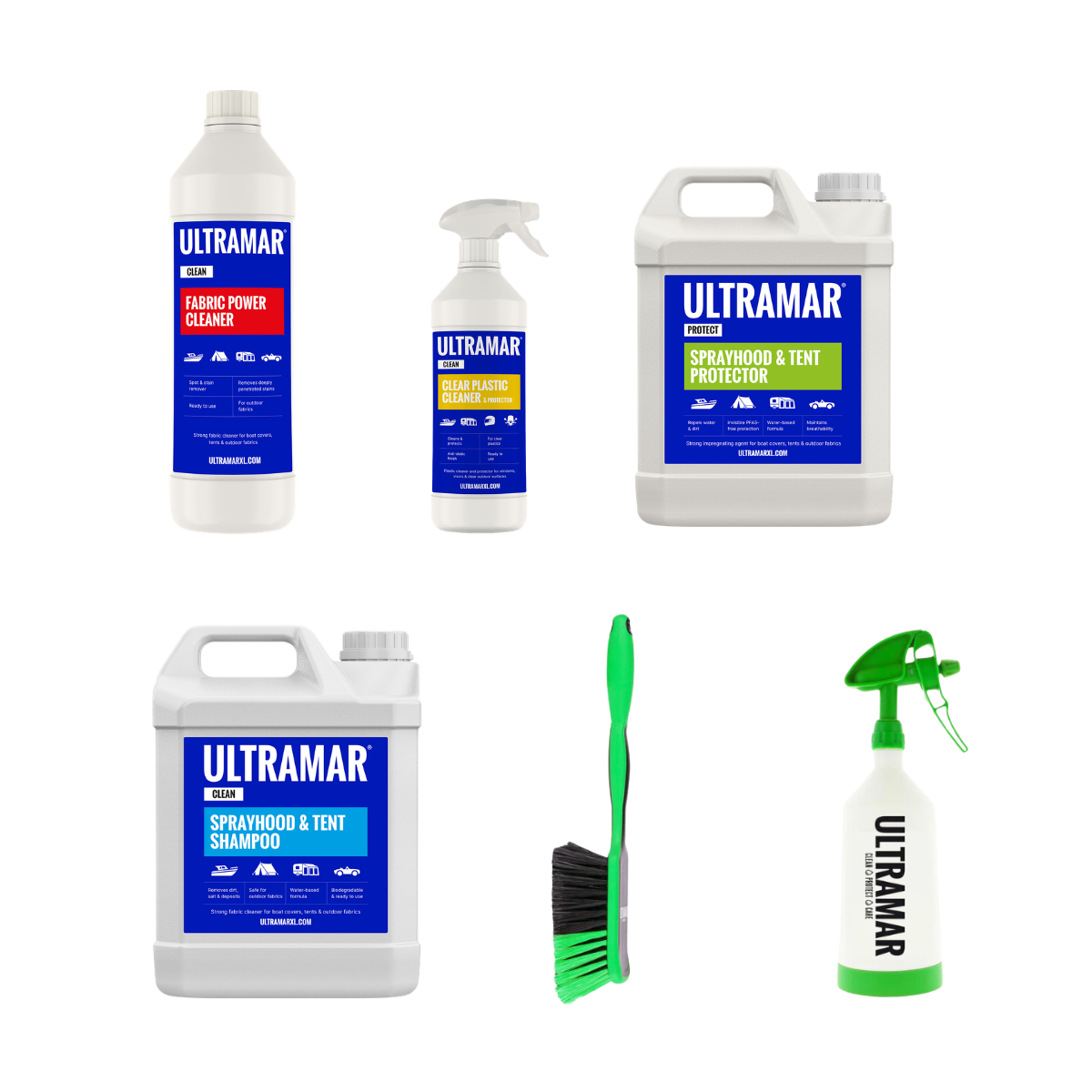
- Choose products made for home use: Ultramar supports this with PFAS-free maintenance products that are easy to apply yourself.
For current prices and availability, you can check the Ultramar website, Bol.com, or one of the official Ultramar dealers.