Your tent lives outdoors. It gets sun, rain, wind, and everything that comes with it. So it’s normal to see stains after a few trips. Sometimes it’s simply “camping life”. But often you can spot the cause. That matters, because a stain that keeps coming back usually has a clear reason.
Below are 7 common causes of stains on tent fabric. No complicated theory. Just familiar situations you’ve probably seen yourself.
1) Splashing sand and mud
The most common one. A rain shower, wet grass, or a muddy path next to your tent is enough. You’ll usually see it along the bottom edge and on the groundsheet. If mud dries and you rub it off later, you often push dirt deeper into the fabric. That can make the stain more stubborn.
2) Drips from trees and sticky sap
Camping under trees is great for shade, but less great for your tent. Drips from leaves and branches can leave dark spots. Sap can leave sticky marks that catch more dirt. The tricky part is that you often notice it only after it has been there for a while.
3) Grease and food stains
A quick snack in the porch, a spilled pan, hands with sunscreen, or a splash of sauce: grease sticks easily to tent fabric. At first it may hardly show, but after a few days, or after the next rainfall, it can look darker.
4) Bird droppings and insect marks
A tent is basically a big “landing area”. Bird droppings, and also insect marks (especially if you use a light in the porch) can leave clear stains. If it dries in the sun, it becomes harder to remove neatly.
5) Condensation, moisture, and dirt from the inside
Not every stain comes from outside. Condensation on the inside can carry dirt particles and leave streaks, especially near vents and seams. Wet clothing or a damp sleeping bag touching the fabric can also leave marks. Often it’s a mix of moisture and built-up dirt.
6) Discolouration from sun and weather
Some “stains” are not caused by a single spill, but by slow discolouration over time. For example, if your tent is often pitched with the same side facing the sun, or if an awning stays outside for months. You may see colour differences, dull areas, or an uneven look. This is most visible on large, flat panels.
7) Residue from the wrong cleaning products
This happens more often than you might think. A product that isn’t meant for outdoor fabric can leave residue that attracts dirt or causes streaks. Not rinsing well enough can also leave visible marks once the fabric gets wet again. It can look like “new stains”, while it’s actually leftover residue.
Why the cause matters
When you know where a stain comes from, you make better choices. Surface dirt calls for normal cleaning. Deep, stubborn marks often need a targeted approach. And sun-and-weather discolouration is different from a fresh mud stain.
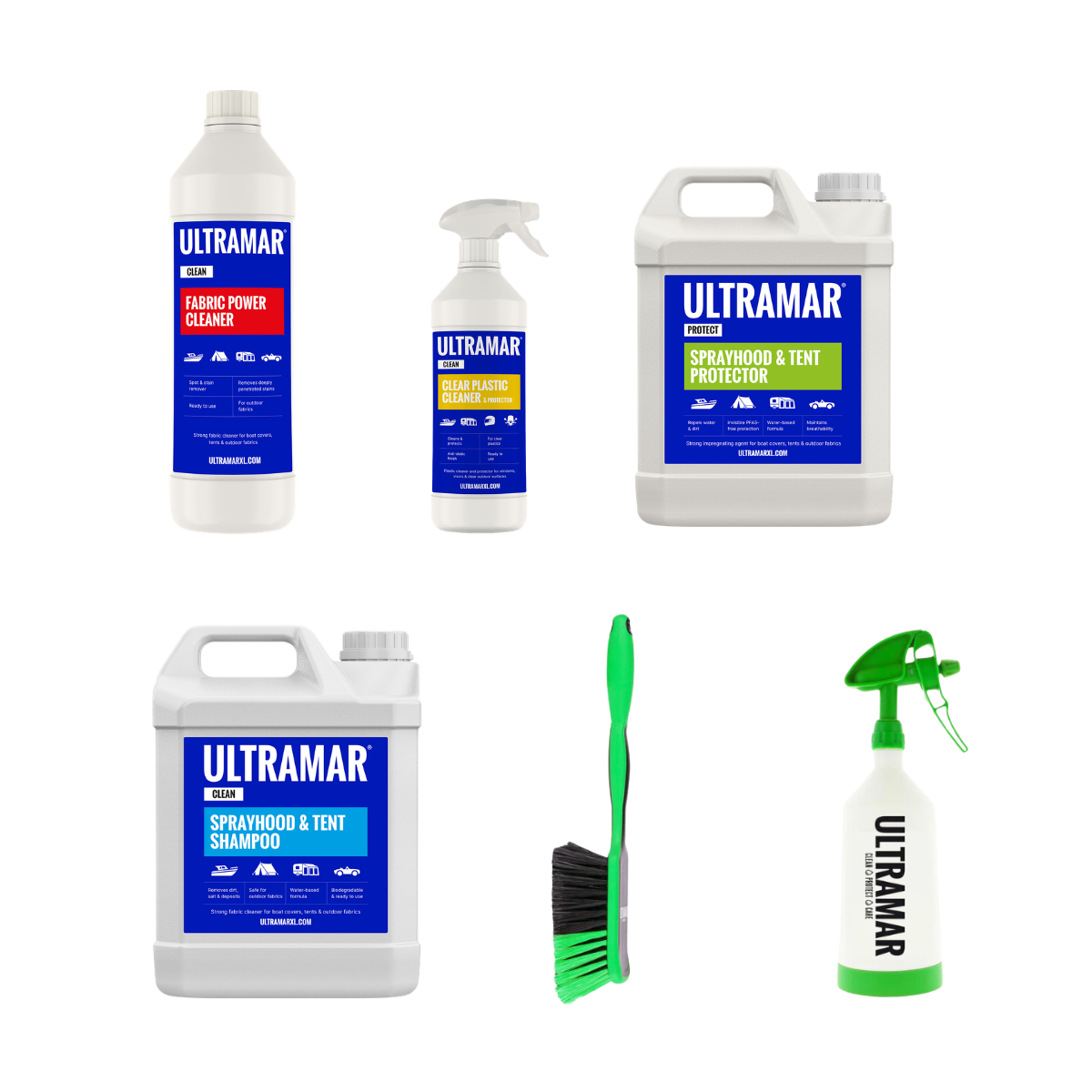
For tent fabric, maintenance usually makes the most sense in three steps: Cleaning, then Stain Removal only if needed, and finally Protection so the fabric stays water-repellent and picks up less dirt. Ultramar is a brand that offers PFAS-free maintenance products for exactly these steps, designed for easy home use.
What does this mean for you?
- Check where the stain is. Along the bottom it’s often splashed dirt. On the roof it’s more likely tree drips or bird droppings.
- Don’t wait too long. The longer dirt sits in the fabric, the harder it is to remove cleanly.
- Use suitable products. The wrong products, or not rinsing well, can cause new streaks and marks.
- Think about protection. A water-repellent tent absorbs less dirt and stays looking good for longer.