Boat cover, tender cushions and bimini top maintenance: the right approach for every material
On and around your boat, you'll find a wide range of materials: fabric boat covers, PVC covers, fabric tender cushions, and bimini tops made from acrylic or polyester. Each material requires a different approach. Knowing the difference helps you clean more effectively and avoid unnecessary damage. This article helps you choose the right method for your situation.
What do you want to achieve, and what is your situation?
Before you start, it helps to establish two things: what material are you dealing with, and what condition is it in? Is it just surface dirt, or are there stubborn stains? These two questions determine which steps you need and which product to use.
What materials will you encounter on a boat?
Boat fabrics can broadly be divided into four groups:
- Synthetic fabrics (polyester, acrylic, Sunbrella): used for bimini tops, fabric boat covers and soft cushion covers. Durable, weather-resistant and easy to clean.
- PVC or coated canvas: used for many boat covers and foldable boat hoods. Has a smooth, glossy surface that requires a different approach than fabric.
- Foam cushions with fabric covers: tender cushions have a foam core with a fabric or faux leather exterior. The exterior determines the cleaning method.
- Plastic windows (transparent PVC or polycarbonate): sometimes found in bimini tops or boat covers. Never treat these with fabric cleaner.
How do you identify your material?
Feel the surface. Fabric has a woven texture and a matte appearance. PVC feels smooth and supple, with a glossy coating on the top side. Acrylic (such as Sunbrella) has a tightly woven structure and springs back slightly when pressed. Not sure? Check the documentation for your boat or cushion, or look up the brand.
Your options side by side: when to use what
Fabric boat cover or bimini top (polyester, acrylic, Sunbrella)
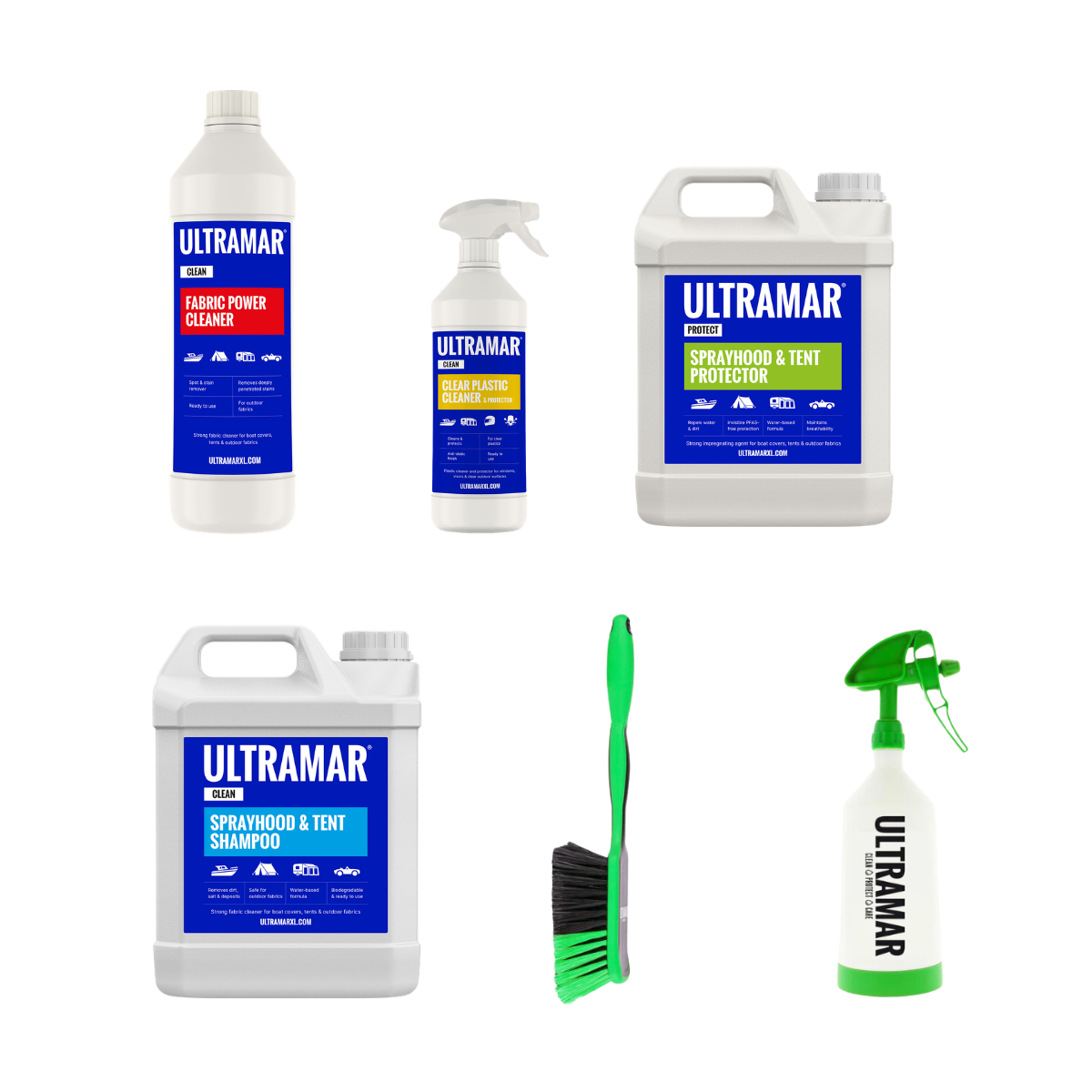
For synthetic fabrics, use a mild cleaner specifically designed for outdoor textiles. Sprayhood & Tent Shampoo is ideal for this purpose. Dilute the shampoo with water, work it in with a soft brush and rinse thoroughly. This removes salt, dust and surface dirt without damaging the fabric.
Are there deep-set stains in the fabric, such as dark discolouration or ingrained dirt that remains visible after cleaning? Then use Fabric Power Cleaner to target those specific areas. Apply it directly to the stain, leave it to work for at least 15 minutes, then rinse thoroughly. Do not apply it over the entire surface — only use it where needed.
PVC boat cover
A PVC boat cover has a coated surface. This makes it less absorbent than fabric, but also more sensitive to abrasion. Avoid hard brushes or abrasive products. Sprayhood & Tent Shampoo can also be used here for general surface dirt. Work gently using a soft cloth or sponge rather than a hard brush, and rinse thoroughly with clean water.
Note: PVC does not need a water repellent treatment the way a fabric cover does. The coating is already water-resistant by nature. Do not apply a Protector to PVC.
Tender cushions with fabric covers
Tender cushions are often exposed directly to sun and rain. For fabric covers, start with Sprayhood & Tent Shampoo. Use a diluted solution and a soft brush. Make sure the cushion dries completely afterwards — ideally standing upright so moisture can escape. Storing cushions wet or covering them while they are still damp is a common mistake.
Are there stubborn stains on the fabric that remain after cleaning? You can apply Fabric Power Cleaner to those specific spots, just as you would with a bimini top.
Plastic windows in your bimini top or boat cover
Transparent windows are a different matter entirely. Never use fabric shampoo or fabric impregnation products on them. For dull or yellowed windows, Clear Plastic Cleaner & Protector is the right choice. That product falls outside the scope of this article, but it's important to know that the product selection is different here.
Recommendation by situation
- Light surface dirt only (salt, dust, bird droppings): use Sprayhood & Tent Shampoo on fabric or PVC. No further steps required.
- Deep-set stains on fabric (bimini top, cushions, fabric boat cover): clean first with Sprayhood & Tent Shampoo, then apply Fabric Power Cleaner directly to the stains.
- PVC boat cover: Sprayhood & Tent Shampoo only, with a soft cloth — no impregnation product.
- Fabric cushions that have been stored wet: clean thoroughly and allow to dry completely before covering or storing.
- Dull or yellowed plastic windows: use a different product — not the fabric cleaner.
What should you watch out for?
A few important points apply to all materials:
- Always rinse thoroughly after using any cleaning product. Residue left behind will actually attract new dirt.
- Allow everything to dry completely before covering or storing. Storing items while still damp increases the risk of discolouration.
- When in doubt, always test a cleaning product on a small, inconspicuous area first.
- Do not use a pressure washer on fabric. The pressure can damage the fibres or reduce water repellency.
Common mistakes
- Using the same approach for fabric and PVC. Each material requires its own method.
- Applying Fabric Power Cleaner over the entire surface instead of targeting specific stains.
- Not leaving the product on long enough. Give Fabric Power Cleaner time to work — at least 15 minutes.
- Covering cushions while they are still damp.
- Applying fabric impregnation products to PVC or plastic windows. This is ineffective and can cause damage.
Frequently asked questions
Can I use the same shampoo for my bimini top and my PVC boat cover?
Yes, Sprayhood & Tent Shampoo works on both synthetic fabrics and PVC. When using it on PVC, opt for a soft cloth or sponge rather than a brush.
Do I always need to apply a protector after cleaning?
That depends on the material. Fabric boat covers, bimini tops and cushion covers can be treated with a water repellent product after cleaning. For PVC and plastic windows, this is unnecessary or even inadvisable. This article focuses on Sprayhood & Tent Shampoo and Fabric Power Cleaner; for the protection step, refer to the article on impregnation.
How often should I clean my boat cover?
That depends on how often you sail and how the boat is stored. During the sailing season, cleaning every few months helps prevent dirt from becoming ingrained. A thorough clean at the start and end of the season is often worthwhile.
Can I use Fabric Power Cleaner on tender cushions?
Yes, as long as the cover is made of fabric. Apply the product directly to the stain, allow it to soak in, then rinse thoroughly. Do not use it on faux leather or vinyl covers.
What should I do if my Sunbrella bimini top still has stains after cleaning?
Sunbrella is a tightly woven fabric that can hold dirt stubbornly. Start by cleaning with Sprayhood & Tent Shampoo. If discolouration remains afterwards, apply Fabric Power Cleaner directly to those areas. Allow the product to soak in thoroughly before rinsing.
Want to know which water repellent product is right for your fabric boat cover or bimini top after cleaning? Use the guide to choosing the right protection product as your next step.