Cleaning a Boat Hood at Home: Salt Residue, Vinegar and Pressure Washers
You can clean your boat hood effectively with a mild cleaner, water and a soft brush — whether you're working on the boat or at home on the driveway. Salt residue comes off with lukewarm water and the right shampoo. Vinegar and pressure washers are best avoided: they damage the fabric or break down the water-repellent finish. In this guide you'll find out what works, what doesn't, and how to avoid the most common mistakes.
What do you need to clean your boat hood?
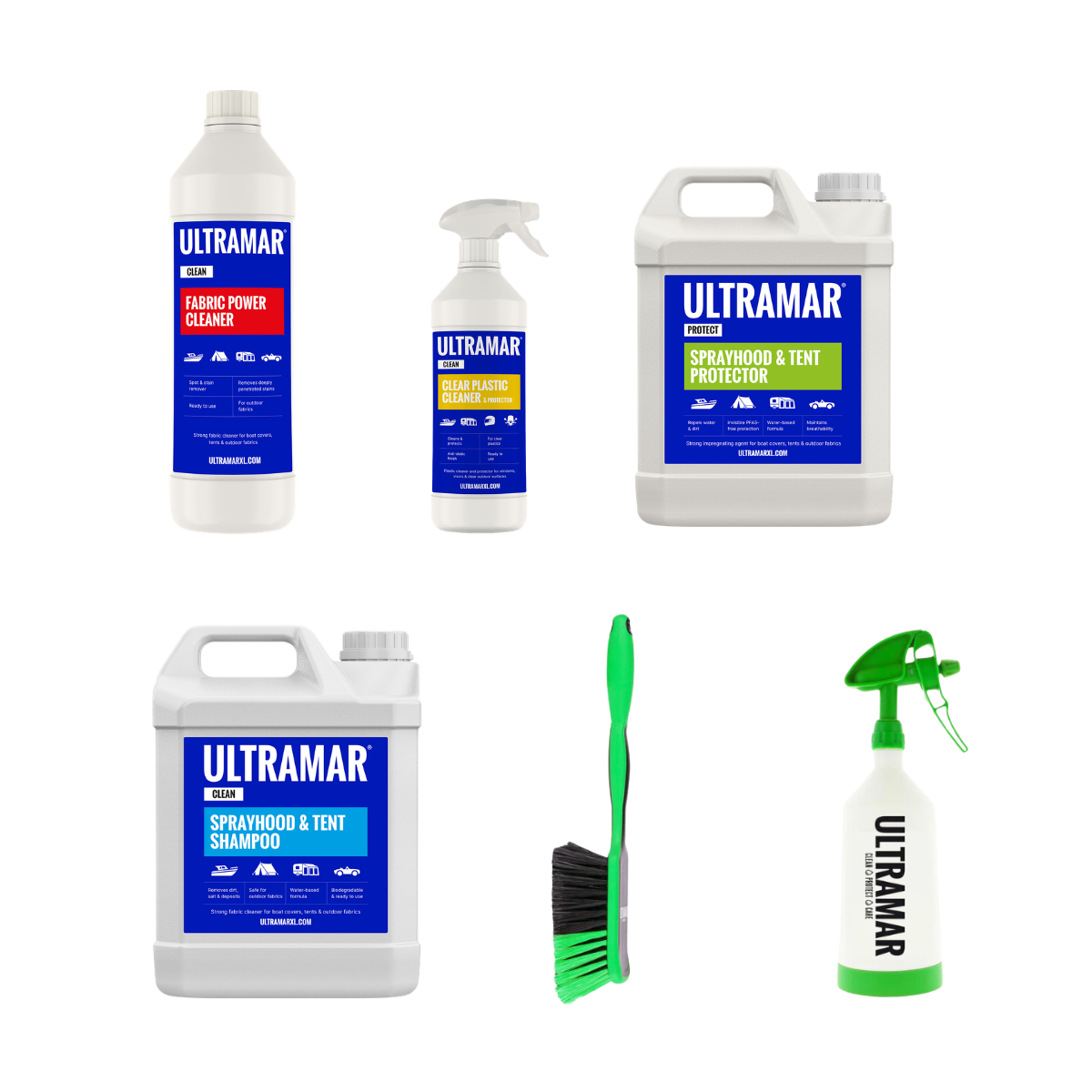
You don't need much for a thorough clean. A bucket of lukewarm water, a soft brush or sponge, and a cleaner specifically designed for outdoor fabric. The Sprayhood & Tent Shampoo is suitable for polyester and acrylic canvas — the most common materials used for boat hoods. If your hood has plastic windows, keep a separate product on hand for those: the Clear Plastic Cleaner & Protector. Never use a fabric cleaner on plastic windows.
- Bucket of lukewarm water
- Soft brush or sponge
- Sprayhood & Tent Shampoo (for the fabric)
- Clear Plastic Cleaner & Protector (for plastic windows)
- Garden hose or tap for rinsing
- Optional: Fabric Power Cleaner for stubborn stains
Step by step: how do you clean your boat hood?
- Start by rinsing with lukewarm water. Remove loose dirt, sand and salt. This prevents you from scratching the material while scrubbing.
- Apply the Sprayhood & Tent Shampoo. Dilute the shampoo in a bucket of water or apply it directly to the fabric. Work with a soft brush in the direction of the fibres, not in circles. Pay attention to seams and folds — that's where salt and dirt tend to accumulate.
- Leave it to soak briefly, then rinse thoroughly. Rinse with clean water until no soapy film remains. Soap residue attracts dirt and gradually damages the fabric.
- Got stubborn stains? After cleaning, apply the Fabric Power Cleaner directly to the affected area. Leave it to work for at least fifteen minutes, then rinse well. Use this product only on the stain, not across the entire surface.
- Clean plastic windows separately. Use the Clear Plastic Cleaner & Protector for dull or yellowed windows. This product cleans and protects in one step. Apply it with a soft cloth and never wipe dry fabric across plastic — it causes scratches.
- Allow the hood to dry completely. Hang or mount the hood so that air can circulate around it. Folding it while the fabric is still damp can lead to discolouration.
How do I remove salt residue from my boat hood?
Salt residue is one of the most common problems with boat hoods. Salt attracts moisture, penetrates deep into the fibres and accelerates wear. Fortunately, it's straightforward to remove. First rinse the hood with lukewarm water to loosen the salt. Then apply the Sprayhood & Tent Shampoo and work through the fabric thoroughly with a soft brush. Rinse well afterwards. Repeat this after every trip if you sail in salt water, or at least a few times each season.
Can I clean my boat hood with vinegar?
We advise against it. Vinegar is acidic and can damage the coating and fibres of outdoor fabric. You risk breaking down the water-repellent finish without it being immediately visible. After a few applications with vinegar, the hood may start to let water through more quickly. Always use a product specifically designed for this type of material to avoid unnecessary strain on the fabric.
Can I clean my boat hood with a pressure washer?
It's best not to use a pressure washer on your boat hood. The pressure is too high for outdoor fabric: fibres can loosen, seams can be damaged, and the water-repellent treatment is broken down much faster. A garden hose with a normal flow is more than sufficient for rinsing. The cleaning action comes from the shampoo and the brush, not from water pressure.
How do I clean my boat hood while it's still mounted on the boat?
That's perfectly possible. No special equipment is needed. Apply the Sprayhood & Tent Shampoo with a brush or sponge, work it through the fabric and rinse with a garden hose or a bucket of clean water. Take care not to let soapy water run into the boat. Work in sections if needed so the cleaner doesn't dry out before you rinse. Stubborn stains can then be treated directly with the Fabric Power Cleaner. Plastic windows can also be treated on the spot with the Clear Plastic Cleaner & Protector.
What should you watch out for?
- Clean in overcast conditions or in the shade. Sunlight dries the cleaner too quickly, which can cause streaks.
- Always use lukewarm water, never hot. Heat can damage synthetic fibres.
- Don't let the fabric dry out without rinsing first. Soap residue is harmful over time.
- Never use household cleaning products, laundry detergent or washing-up liquid. These are not formulated for outdoor fabric and can damage the water-repellent finish.
- Always treat plastic windows separately, using a product designed for that purpose.
Common mistakes when cleaning boat hoods
- Not rinsing enough. Soap residue stays in the fibres and attracts dirt. Always rinse thoroughly.
- Folding or storing the hood while it's still damp. This can cause discolouration. Always let the hood dry completely before storing it.
- Using a fabric cleaner on plastic windows. These products are not suitable for plastic and can make the material dull or rough.
- Spreading Fabric Power Cleaner across the entire surface. This product is intended for targeted stain treatment, not as a general cleaner.
- Forgetting to re-protect after cleaning. Cleaning also removes part of the water-repellent treatment. After washing, it's a good idea to re-impregnate the hood.
Frequently asked questions
How often should I clean my boat hood?
In most cases, two to three times per season is sufficient. If you regularly sail in salt water or the hood becomes visibly dirty, you can clean it more often. After every trip in salt water, rinse it off with fresh water.
Can I wash my boat hood in the washing machine?
We advise against it. The spin cycle and the heat can damage the coating and the seams. Hand cleaning gives you more control and is gentler on the material.
Do I always need to re-impregnate after cleaning?
Not necessarily after every wash, but cleaning does reduce the water-repellent performance. When water no longer beads up and rolls off the fabric but starts to soak in, it's time to re-impregnate.
What should I do if the stain won't come out after using the shampoo?
Apply the Fabric Power Cleaner directly to the stain, leave it for at least fifteen minutes and then rinse thoroughly. For very stubborn stains, you can extend the contact time.
Is the Clear Plastic Cleaner & Protector also suitable for yellow or discoloured windows?
Yes, in many cases this product helps reduce dullness and discolouration. It works best on windows that have not yet been mechanically scratched or damaged.
A clean boat hood starts with the right approach: clean thoroughly first, then treat stubborn stains separately, and always handle plastic windows apart. With the Sprayhood & Tent Shampoo, the Fabric Power Cleaner and the Clear Plastic Cleaner & Protector, you have everything you need to maintain your boat hood properly, step by step.