Cleaning Boat Windows Without Scratches: Keeping Them Clear and Preventing UV Yellowing
The clear windows in your boat cover are made of plastic, not glass. That makes them more susceptible to scratches, haze, and UV yellowing than most people expect. With the right approach, you can keep them clear and avoid lasting damage. But the wrong product or a single careless wipe can leave visible marks after just a few cleans.
What Materials Are Boat Windows Made From?
Boat windows are almost always made from transparent plastic. The most common types are PVC and polyurethane (PU). These are soft, flexible materials that keep the window pliable. They let light through and offer reasonable weather resistance, but they are also vulnerable: they scratch easily, turn hazy under UV exposure, and can yellow if left unprotected.
Glass and hard acrylic (plexiglass) do exist, but they are less common in boat covers. If you are unsure what material your windows are made from, apply the precautionary principle: treat them as soft plastic.
How to Identify Your Material
Soft PVC or PU windows flex slightly when you press them with your fingers. They feel a little warmer than glass. If the surface already looks slightly milky or matte, that is a sign the material is ageing or has already been damaged by incorrect cleaning.
Hard acrylic feels stiffer and cooler to the touch. It scratches easily too, but it behaves differently from soft PVC. Not sure which you have? Treat the window as soft plastic. That is always the safest choice.
Why Do Boat Windows Turn Hazy or Yellow?
UV radiation slowly degrades the surface of plastic windows. The material oxidises, causing it to turn cloudy and yellow. This process accelerates when the window has no protective coating. Salt, dirt, and the elements speed it up further.
Incorrect cleaning can also cause damage. Rough cloths or sponges leave microscopic scratches behind. Those scratches scatter light and make the window appear optically cloudier. Harsh cleaning agents, washing-up liquid, or alcohol can attack the material and accelerate yellowing.
What Does That Mean for Cleaning and Protection?
Plastic windows need a different approach from the rest of your boat cover. The fabric cleaner you use on your canopy is not suitable for the windows. The same goes for waterproofing sprays: a fabric protector is designed for textiles and does not belong on plastic. Using one on your windows can attack the material or leave a hazy film behind.
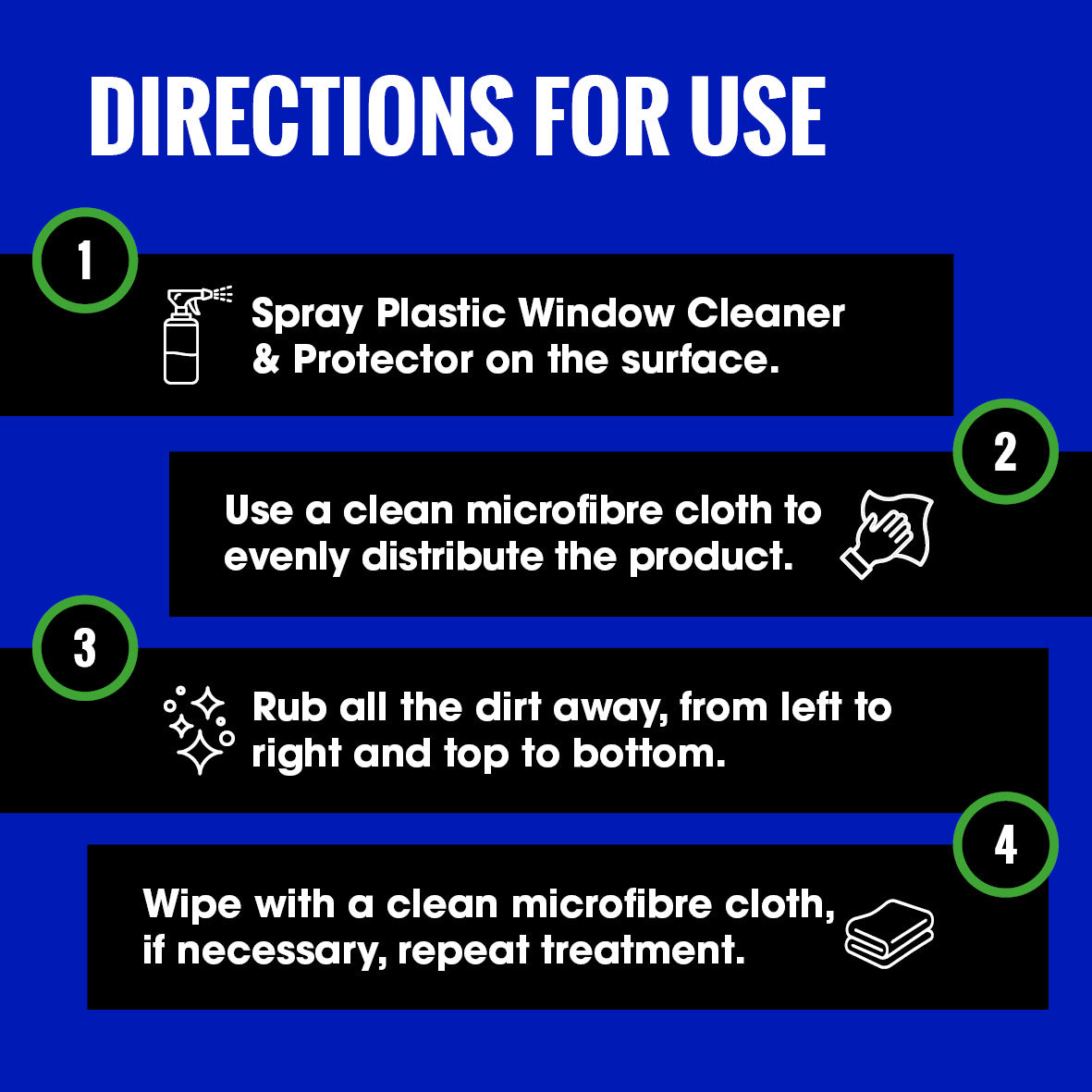
Always clean windows with a soft, clean cloth. Avoid circular movements, as these follow and deepen scratches. Work in straight lines instead. Rinse the window first with clean water to flush away loose dirt before you start wiping. This prevents you from dragging grit across the surface.
Protection serves a dual purpose: it helps repel new dirt and can contribute to slowing UV degradation. A plastic window that is protected regularly stays clear for longer than one that is only cleaned.
Which Product Is Right for Plastic Boat Windows?
For the clear windows of your boat cover, use the Clear Plastic Cleaner & Protector. This product cleans and protects in one step and is developed specifically for transparent plastic. It helps reduce haziness, restores clarity to the surface, and provides protection against UV yellowing.
Never use this product on the fabric parts of your cover. And equally, never use a textile care product on your windows. Each material needs its own dedicated product.
If you have stubborn staining on the plastic in addition to haziness, proceed with care. The Clear Plastic Cleaner & Protector is intended for regular maintenance and mild soiling. With severe yellowing or deep scratches, results may be limited — damage that has penetrated deep into the material cannot always be resolved by cleaning alone.
Frequently Asked Questions About Cleaning Boat Windows
Can I apply waterproofing spray to the windows of my boat cover?
No. Waterproofing sprays are designed for textiles and do not belong on plastic. They can attack the material or leave a dull residue behind. Always use a product specifically made for plastic on your windows.
Can boat windows turn hazy because of the wrong cleaning products?
Yes, they can. Harsh cleaning agents, alcohol, or soap can damage the surface. Rough cloths also leave scratches that make the window appear optically cloudier. Use a soft microfibre cloth and a product suitable for plastic.
How do I restore clarity to hazy boat windows?
Start by rinsing the window thoroughly with water to remove any loose dirt. Then apply the Clear Plastic Cleaner & Protector with a soft cloth, working in straight lines. For light haze or surface soiling, this will often make a noticeable difference. With deeper damage or heavy yellowing, results will depend on the condition of the material.
How often should I clean and protect my boat cover windows?
It depends on use and exposure. As a rule of thumb: clean and protect the windows at the same time you maintain the rest of your cover. After a season spent outdoors, or after prolonged use in sun and salt water, it is always a good moment to do so.
Can I also clean boat windows with Sprayhood & Tent Shampoo?
No. Sprayhood & Tent Shampoo is designed for fabric. Always use the Clear Plastic Cleaner & Protector for transparent windows.
The Clear Plastic Cleaner & Protector is the right choice when you want to clean and protect the windows of your boat cover. It helps reduce haziness and preserve that clear appearance for longer — without the risk that comes with using the wrong product.