The windows in your awning, tent or caravan need extra care. They are made of clear plastic and have a protective layer. Using the wrong method can damage that layer quickly. With the right approach, your windows stay clear, flexible and good-looking.
Why plastic windows are vulnerable
Plastic windows are not glass. Still, they are often treated that way. That causes problems. Clear plastic has a protective layer that helps slow down ageing from sunlight. Aggressive cleaners and the wrong cloths damage this layer.
You often do not see the damage right away. Over time, windows become dull, stiff or sensitive to fine scratches. That is why careful, correct maintenance matters.
Where these tips apply
This approach is suitable for all transparent plastic windows, including those on:
- awnings
- tents made of polyester or cotton
- caravans and campers
- folding trailers and party tents
- boat covers and other plastic windows
How to clean plastic tent windows safely
Step 1 – Remove light dirt
Use lukewarm water and a soft brush or cloth. In many cases, this is enough to remove dust and sand. Work gently and without pressure.
Dry the windows afterwards with a clean, dry cloth. This helps prevent streaks and water spots.
Step 2 – Deal with stubborn dirt
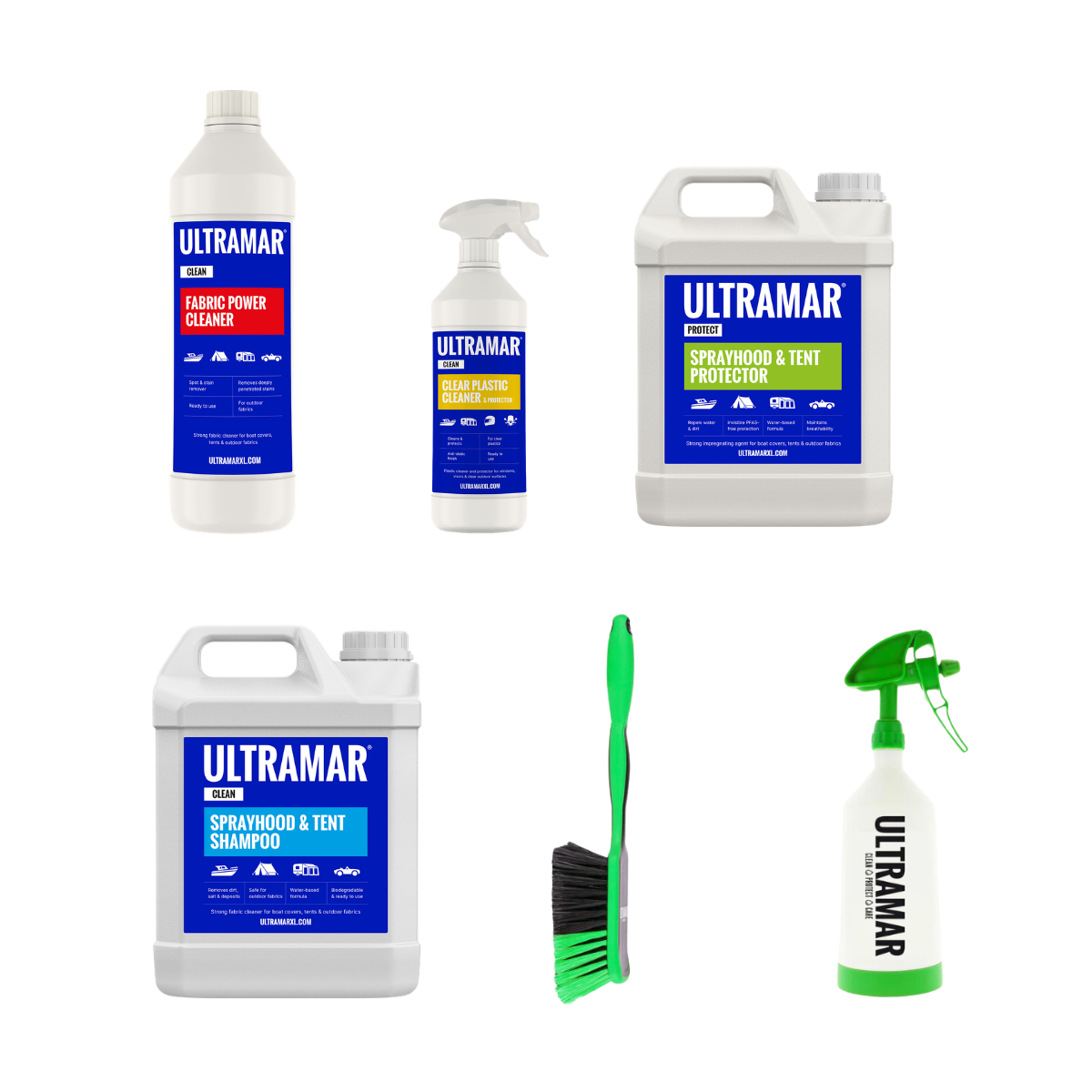
Do stains remain, such as insect marks, greasy fingerprints or residue from water drops? Then use Ultramar Plastic Window Cleaner & Protector.
This product is developed specifically for plastic windows. It cleans safely and leaves a light protective layer behind. This helps keep windows clear and reduces future contamination.
Suitable for difficult-to-remove contamination such as:
- insect residue
- fingerprints
- marks from impregnation spray
- dark surface buildup
- limescale and salt residue
- dullness caused by ageing
How to use Plastic Window Cleaner & Protector
- Spray the product onto the clean, dry window.
- Spread it evenly with a clean microfibre cloth.
- Gently wipe away the dirt.
- Work from top to bottom and from left to right.
- Polish the surface dry with a second clean cloth.
- Repeat if needed.
What you should never do
Many problems come from well-meant but unsuitable products. Never use the following on plastic windows:
- glass cleaners
- vinegar
- dishwashing liquid
- products containing acetone
- abrasive sponges or cloths
These products damage the protective layer and can affect the water-repellent performance of your tent.
How often should you clean plastic windows?
If you use only lukewarm water, you can clean the windows as often as needed. This is safe for the material.
Many campers choose three fixed moments:
- before the camping season starts
- during camping when windows are visibly dirty
- after the season, before storage
Practical care tips for each moment
Before camping
- Clean the windows with lukewarm water.
- Check that everything is still in good condition.
- Make sure windows are clean before protecting the tent fabric.
During camping
- Remove stains straight away using a little lukewarm water.
- Do not let dirt dry in the sun.
- Avoid household cleaners.
After camping
- Remove loose dirt with a soft brush.
- Clean with water and a clean cloth.
- Use Plastic Window Cleaner & Protector for a clear finish.
- Store the tent dry, dark and well ventilated.
What you need
- Lukewarm water
- Soft brush or microfibre cloth
- Ultramar Plastic Window Cleaner & Protector
Do not be too economical with product use. Using enough product ensures an even result. A slightly larger pack is useful for multiple windows and future maintenance.
In short
Plastic windows stay in good condition longest when you clean them calmly and with the right products. Avoid aggressive cleaners, use water for normal dirt and choose a product made specifically for plastic windows when contamination is stubborn.
Ultramar
Ultramar helps consumers clean, maintain and protect tents, awnings, boat covers and plastic windows themselves. Using PFAS-free maintenance products that are easy to use at home and based on a clear, proven maintenance process.