Green soap is often mentioned as a “safe” way to clean a boat cover. It sounds logical. It is mild, does not damage the fabric, and does not cause discoloration. Still, it is not a good choice if you want to maintain your boat cover properly.
If you want your boat cover to stay clean longer, attract less dirt, and remain properly water-repellent, it is better to avoid green soap.
Why green soap is a bad choice for your boat cover
The biggest problem with green soap is not what you see, but what stays behind.
Green soap leaves a greasy residue on the fabric. No matter how well you rinse, there is a good chance that residues remain. You can notice this on your hands too: after washing, they still feel slippery and greasy.
On a boat cover, that is exactly what you do not want.
- Dirt sticks more easily to that greasy layer
- Green staining and weather marks return faster
- The fabric looks dull and dirty again much sooner
That leftover residue also causes another issue.
A boat cover cleaned with green soap is harder to protect afterward. Protective products do not bond well when soap residues are still present in the fabric.
What should a good boat cover cleaner do?
A cleaner for boat covers and outdoor fabrics needs to meet a few clear requirements. Nothing complicated, but very important.
1. No interference with protection
After cleaning, you want to protect the fabric again. A good cleaner leaves no residues that interfere with a protective product. This helps achieve a more even and reliable result.
2. Visible foam
Foam helps you rinse properly. As long as you see foam, you know there is still cleaner in the fabric. This prevents stopping too early and leaving residues behind.
3. Suitable for different fabric types
Boat covers are made from different materials. A good cleaner is safe for commonly used outdoor fabrics and synthetic materials. Not too aggressive, but effective.
The Ultramar 3-step maintenance process
For a durable and predictable result, Ultramar always works in a fixed order. This keeps maintenance clear and manageable at home.
Step 1 – Cleaning
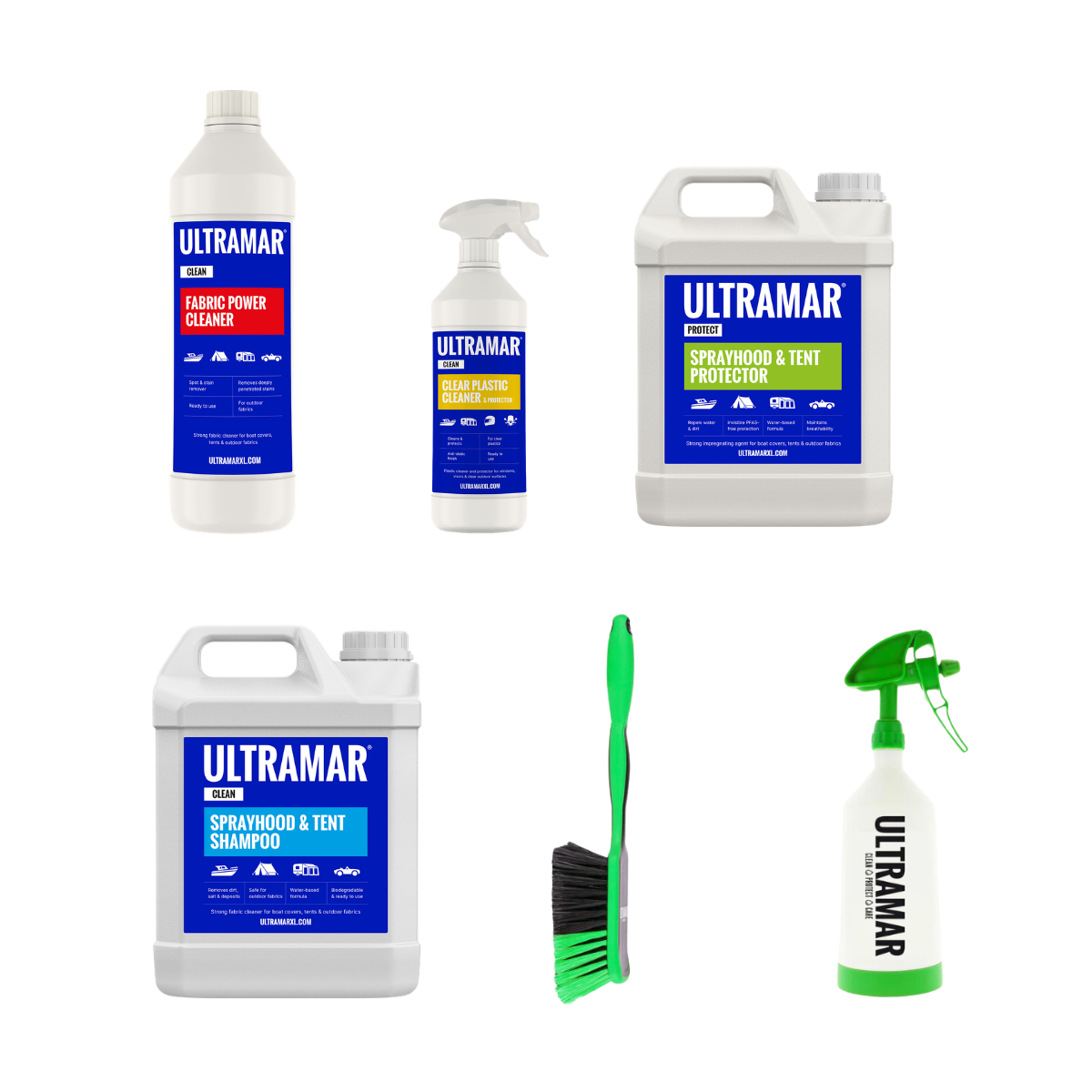
Always start by removing general dirt and surface contamination. Use Sprayhood & Tent Shampoo for this step. It is developed specifically for outdoor fabrics and is easy to use at home.
Step 2 – Stain removal (only where needed)
After cleaning, do you still see deeply embedded stains or stubborn contamination? Then treat only those areas with Power Cleaner. This product does not replace cleaning, but supports it where normal cleaning is not enough.
Step 3 – Protection
Once the fabric is clean and any difficult spots have been treated, it needs protection again. With Sprayhood & Tent Protector, you restore water repellency and help reduce new dirt buildup.
Well-protected fabric gets dirty less quickly. That means less cleaning in the future.
Practical tips for home use
- Do not use household soaps or all-purpose cleaners on your boat cover
- Always clean before applying protection
- Do not skip steps for a “quick fix”
- Use enough product for even coverage
What do you need?
For complete boat cover maintenance, you usually need these products:
- Sprayhood & Tent Shampoo – for general cleaning
- Power Cleaner – for deeply embedded stains and heavy contamination
- Sprayhood & Tent Protector – for water-repellent protection
Ultramar also offers maintenance bundles that combine these products. Bundles are often more cost-effective and make sure you have everything you need.
Do not be too economical with product use. Using too little can lead to uneven results. Choosing a slightly larger size is often more practical and useful for future touch-ups.
Summary
Green soap may seem harmless, but it leaves residues that make your boat cover get dirty faster and reduce the effectiveness of protection. If you want to maintain your boat cover properly, choose products developed specifically for outdoor fabrics.
With the Ultramar 3-step process, maintenance stays clear, practical, and reliable.
Ultramar
Ultramar helps you clean, maintain, and protect your boat cover, tent, convertible roof, and other outdoor fabrics yourself. Using PFAS-free maintenance products that are easy to apply at home and based on a proven three-step maintenance process.