Clear Plastic Cleaner & Protector – Common Mistakes & Warnings
Do you want to clean your plastic windows safely without causing damage? Then it’s important to know what you should not do. Below you’ll find the most common mistakes – and how to avoid them.
Why should you not use a fabric cleaner on plastic windows?
Fabric cleaners are developed for textiles such as cotton or synthetic fabric.
Plastic windows are a completely different material. A cleaner made for fabric can make the surface dull or damage it.
Always determine the material first:
- Fabric (cotton or synthetic) → use the correct fabric cleaner
- Plastic windows → use Clear Plastic Cleaner & Protector
Each material requires its own maintenance product.
Why are household glass cleaners bad for plastic?
Standard glass cleaners are designed for hard glass surfaces.
Plastic windows are softer and more sensitive. Household glass cleaners can dry out the surface or leave it looking dull. They may also cause streaks or haze.
Do not use regular glass cleaner on tent windows, boat windows or convertible roofs with plastic panels.
Can Clear Plastic Cleaner & Protector cause scratches?
The product itself does not cause scratches when used correctly.
Scratches usually occur because of:
- Sand or dirt being rubbed over the surface
- A rough or dirty cloth
- Applying too much pressure while cleaning
Always work gently and without force.
What happens if you use the wrong cloth?
A rough cloth can cause fine scratches.
Paper towels, scouring pads or old towels are not suitable for plastic windows. They can make the surface look dull.
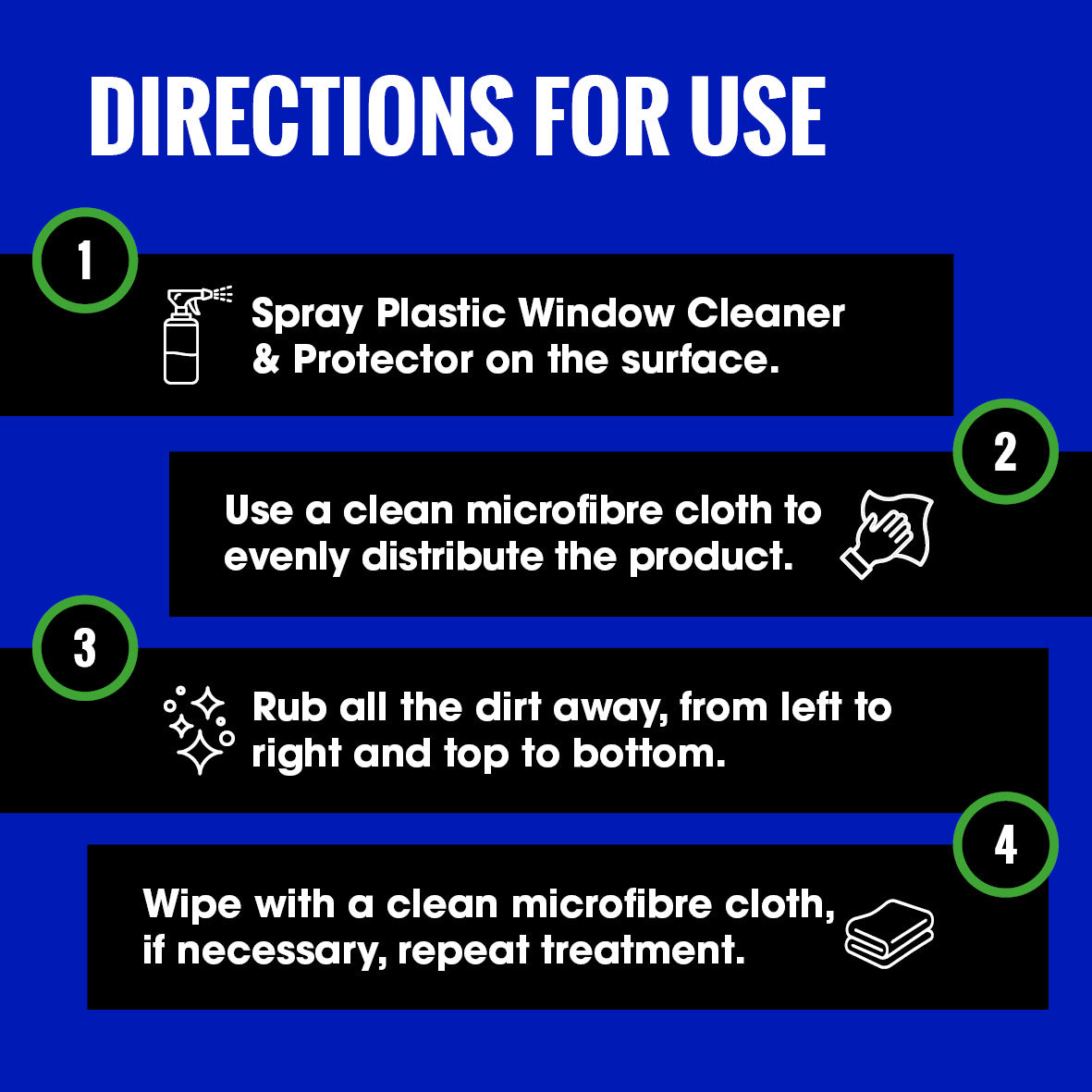
Use a clean, soft microfiber cloth that you keep specifically for plastic surfaces.
Why should you always use clean and soft materials?
Plastic windows are more sensitive than glass.
If sand or dirt is trapped in your cloth, you rub those particles across the surface. Over time, this leads to visible fine scratches.
Always check:
- Is the cloth clean?
- Is the surface free from loose sand or dust?
- Are you working with light pressure?
Careful work keeps your windows clear and in good condition.
How does this fit within the Ultramar maintenance system?
Ultramar always works material-specific:
- Cotton and canvas → clean, remove stains and protect with dedicated products
- Synthetic fabric → clean and restore water repellency
- Plastic windows → clean and protect with Clear Plastic Cleaner & Protector
Never use fabric waterproofing products on plastic windows. This can damage the surface.
For safe and complete maintenance
Are you maintaining a full tent or boat cover? Use the correct Ultramar product for each material.
Ultramar offers maintenance bundles with the right product combinations. Bundles are often more cost-effective than buying products separately.
Use enough product and work carefully. Using too little product or working roughly can affect the result. Keeping an extra bottle on hand is practical for future maintenance.
In short
Do not use fabric cleaners or household glass cleaners on plastic windows. Always work with a clean, soft cloth and use a product that is specifically developed for clear plastic.
Ultramar helps consumers clean, maintain and protect boat covers, tents, convertible roofs, plastic windows and other outdoor materials themselves, using PFAS-free maintenance products that are easy to use at home and based on a proven three-step maintenance process.