A polyester tent is meant to keep rain out. If water starts coming through the fabric or the seams, the water-repellent protection has weakened. The good news is that you can restore this yourself with the right maintenance.
Why a polyester tent can start leaking
When you go camping, your tent is exposed to the elements day and night. Rain, sunlight and dirt all affect the protective layer of the fabric. The polyester itself remains strong, but the water-repellent finish wears down over time. When that happens, water can pass through the fabric or the seams.
This can also happen with new (party) tents. The fabric may be loosely woven, or the seams may let water through. That does not mean the tent is poor quality. It simply means the fabric needs extra protection.
The Ultramar 3-step maintenance process
For reliable, long-lasting results, Ultramar always works with three clear steps. This ensures the protection bonds well and lasts longer.
Step 1 – Cleaning
Always start with a clean tent. Dirt prevents protection from spreading evenly across the fabric. Use a suitable cleaner for tent fabrics and let the material dry completely.
Step 2 – Stain removal (only if needed)
Do you still see stubborn discoloration or deeply embedded contamination after cleaning? Treat these areas separately with a stain remover. This step is not always necessary, but it helps achieve an even final result.
Step 3 – Protection
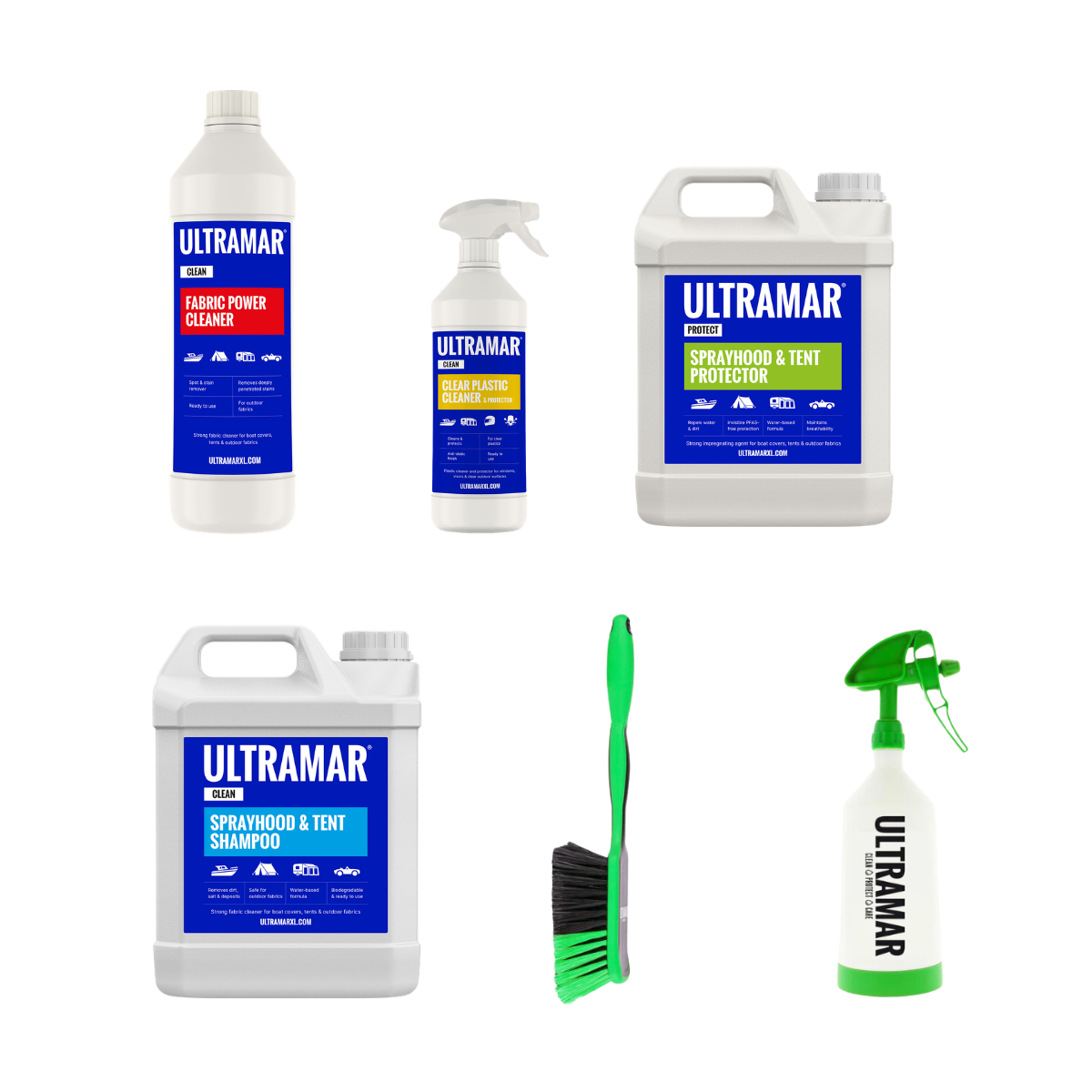
Once the tent fabric is clean and dry, you can restore water repellency with Ultramar Sprayhood & Tent Protector. This product is suitable for polyester and other synthetic outdoor fabrics.
How to apply the protection properly
- Set up the tent fully before you start. Light tension in the fabric opens up tiny pores.
- Apply the Sprayhood & Tent Protector generously and evenly to the dry fabric.
- Spread the product using a spray bottle, brush or soft broom.
- Don’t forget seams, corners and hard-to-reach areas.
- Allow the fabric to dry thoroughly.
Does your tent have windows or transparent panels? Remove any product immediately with a damp cloth. Fabric protection products are not intended for plastic windows.
Condensation or a real leak?
Polyester tents are not breathable. This means condensation can form on the inside during the night. Drops of water inside the tent do not automatically mean it is leaking. Always check whether water is actually coming through the fabric or seams.
Other uses for Sprayhood & Tent Protector
This protector is suitable for many polyester outdoor fabrics, such as:
- awnings and porch tents
- windbreaks
- party tents
- garden cushions
- backpacks and bike bags
- hammocks
What do you need?
- A cleaner for tent fabrics (step 1)
- A stain remover for deeply embedded contamination (step 2, if needed)
- Ultramar Sprayhood & Tent Protector for polyester (step 3)
Ultramar also offers maintenance bundles that combine the right products. These bundles are often more cost-effective than buying products separately. Use enough product for even coverage. Running out halfway can affect the result, and having some left over is useful for future touch-ups.
Summary
A leaking polyester tent is usually the result of reduced protection, not worn-out fabric. By cleaning the tent, treating stubborn contamination where needed, and restoring the protective layer, you make your tent water-repellent again and ready for use.
Ultramar
Ultramar helps you clean, maintain and protect tents, boat covers, convertible roofs and other outdoor fabrics yourself. With PFAS-free maintenance products that are easy to use at home and based on a clear, proven three-step maintenance process.