How to clean an awning: the right way (without ruining the coating)
You can clean a caravan or motorhome awning without damaging the water-repellent layer. It doesn't take much time, but it does require the right approach. Most damage isn't caused by dirt — it's caused by the wrong products or scrubbing too aggressively. In this article, you'll learn how to do it correctly, step by step, including how to tackle seams and green algae.
What do you need to clean your awning?
You don't need much. Make sure you have at least:
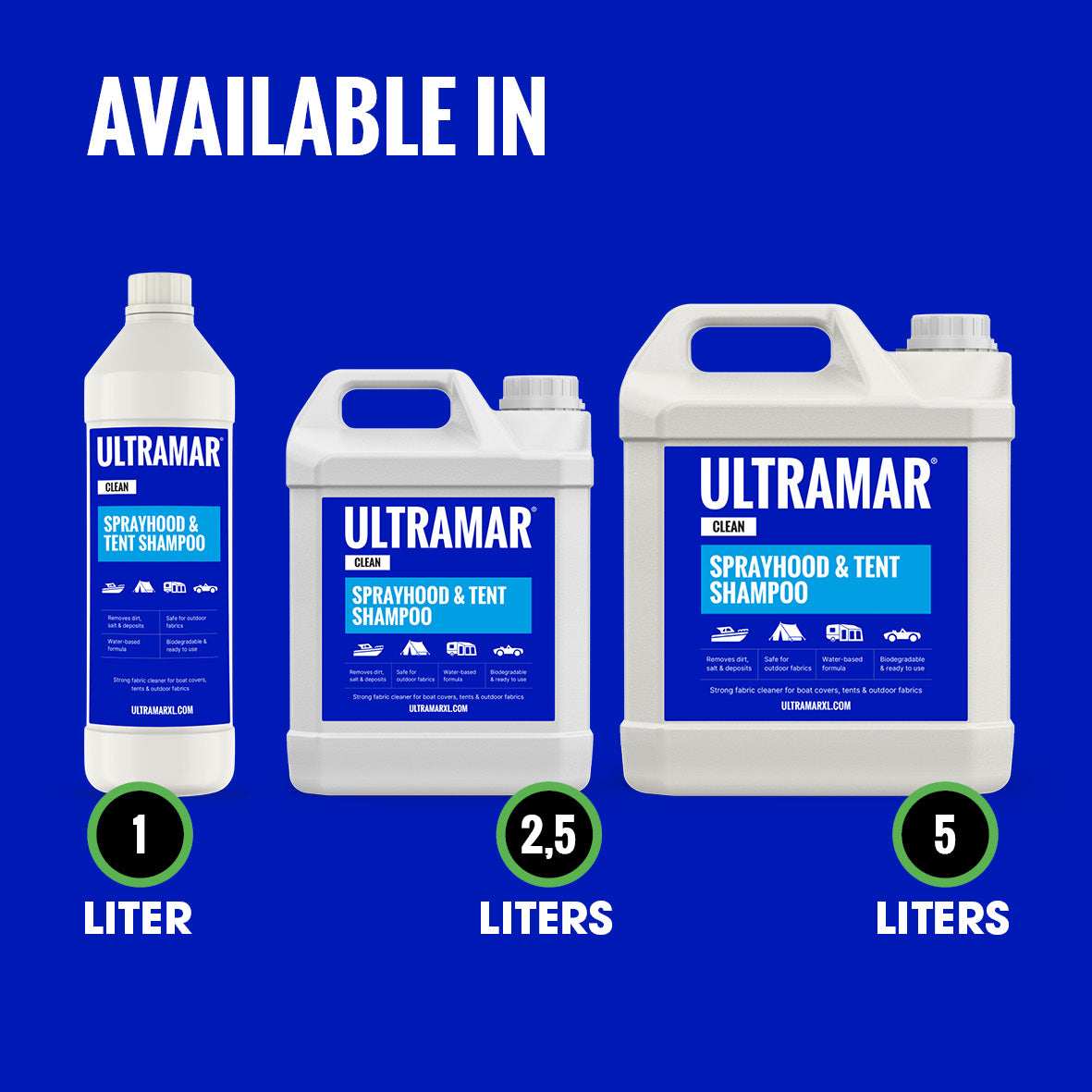
- A mild cleaner suitable for outdoor fabric, such as Sprayhood & Tent Shampoo
- A soft brush or sponge
- A garden hose or bucket of lukewarm water
- Time: let the cleaner soak in before rinsing
Also check that the awning is fully extended before you start. Cleaning a partially rolled-out fabric doesn't work well and can put stress on folds and areas you don't want to strain.
How do you clean a motorhome awning without damaging the water-repellent layer?
Start by removing loose dirt while the fabric is still dry. Brush away leaves, dust, and debris with a soft brush or cloth before getting it wet. Wet dirt sticks more easily to the fabric and is harder to remove.
Next, apply the cleaner to the damp fabric. Sprayhood & Tent Shampoo is mild enough for both synthetic fabrics and cotton/canvas, yet strong enough to loosen surface dirt. Work in sections from top to bottom so that dirt runs downward.
Don't scrub. Use gentle, circular movements with a soft brush or sponge. Scrubbing hard damages the top layer of the fabric — and that's exactly what keeps the water-repellent finish intact.
Rinse thoroughly with clean water. Don't leave any cleaner residue in the fabric, as it attracts dirt. Rinse again if you're not sure you've removed it all.
Let the awning dry completely in the open air before rolling it up. Storing it while the fabric is still damp can lead to discolouration and stubborn stains that are difficult to remove later.
How do you remove green algae from an awning?
Green algae tends to develop where moisture lingers: along seams, in folds, and in areas with little wind or sunlight. It's a common problem with caravan and motorhome awnings that are kept rolled up for extended periods.
For fresh or light algae growth, Sprayhood & Tent Shampoo is often enough. Apply the shampoo, leave it to work for a few minutes, then gently brush it away. Rinse well afterwards.
If the algae is deeper or more stubborn, cleaning alone may not be sufficient. In that case, a targeted stain remover is the next step — but that falls outside the cleaning phase. Work through it step by step: clean first, then assess whether any stains remain.
Prevent it from coming back by always rolling up the awning dry and cleaning it at least once per season, even if it looks fine on the outside.
Why do the seams of an awning or canopy get dirty faster?
Seams are where the fabric meets and is stitched together. Dirt accumulates faster in these areas: water runs along them, fine particles get trapped in the structure of the seam, and the stitching thread itself provides an extra grip for dirt.
Pay extra attention to the seams when cleaning. Use a narrower brush or a soft toothbrush on the stitching itself. Let the cleaner soak in along the seam before brushing.
Be careful not to press too hard along the seam with the brush. Seams are a vulnerable part of the fabric. Too much pressure can cause the thread to come loose or small tears to appear in the fabric.
Common mistakes when cleaning an awning
These are the mistakes we see most often — and the ones that cause the most damage:
- Using washing-up liquid or an all-purpose cleaner: these products are not formulated for outdoor fabric and can break down the water-repellent layer.
- Scrubbing too hard: aggressive scrubbing damages the top layer of the fabric. Gentle movements are both more effective and safer.
- Using a pressure washer: a pressure washer can damage the fibres of the fabric and blow open seams. Use a regular garden hose instead.
- Rolling up the awning while it's still damp: don't do it. The result will be discolouration and stubborn stains.
- Only cleaning the top side: the underside and seams get just as dirty. Make sure to clean those too.
- Not rinsing with enough water: residual cleaner attracts new dirt. Rinse generously.
What if water no longer beads off after cleaning?
If water soaks into the fabric rather than beading off in droplets after cleaning, it means the water-repellent layer has worn out. This can happen over time, even if you've done everything right. Cleaning alone won't restore that protection.
In that case, the next step is to protect the fabric. After a thorough clean and complete drying, apply a suitable impregnation product matched to the material of your awning. But that's step three in the maintenance process, and only worthwhile once the awning is truly clean and dry.
FAQ: cleaning an awning
Can I wash an awning in the washing machine?
We advise against it. Most awnings are too large for a washing machine, and the spin cycle can damage the fabric. Clean the awning fully extended on a clean surface, or hang it up.
How often should I clean my awning?
Once per season is a good rule of thumb. Also clean it after trips where the awning has been wet or dirty for an extended period, and always before storing it away for a longer time.
Can I use the same shampoo for both synthetic and canvas awnings?
Sprayhood & Tent Shampoo works on both material types: synthetic (polyester, acrylic) and cotton/canvas. Always check the label on your awning if you're unsure about the material.
Should I clean the awning wet or dry?
Lightly dampen the fabric before you start. A completely dry fabric with dry cleaner doesn't work as well. That said, remove loose dry dirt first before getting it wet.
What if the green algae won't come off after cleaning?
Let the cleaner soak in for longer and try again. If the stain persists, a targeted stain remover is the next step — to be used after cleaning.
A clean awning starts with the right approach and the right products. Use Sprayhood & Tent Shampoo as your first step: mild enough to protect the fabric, effective enough to remove surface dirt. That way, you keep your awning in better condition for longer — and get the most out of the protection step that follows.