Waking up in a clammy tent with a wet inner surface? That’s condensation. It feels uncomfortable and increases the risk of mould and long-term damage to your tent fabric. The good news: with a few smart choices, you can significantly reduce condensation.
Why is condensation in your tent a problem?
Condensation may seem harmless, but moisture and tent fabric are a bad combination. Damp, dark conditions are ideal for mould growth. This can weaken the fabric and may also affect your health, especially your airways. Preventing condensation is an essential part of proper tent care.
How does condensation form in a tent?
Condensation occurs when moist air has nowhere to go and settles on a cold surface. In a tent, this happens faster than most people expect.
- Temperature differences
The air inside your tent is warmer than the tent fabric. When warm air hits the colder surface, moisture condenses. - Wet gear
Clothes, shoes or towels release moisture as they dry. That moisture ends up on the inside of the tent. - Perspiration
While sleeping, your body releases moisture. In a closed space, it builds up and turns into condensation.
What can you do to reduce condensation?
1. Ventilate properly
Open ventilation points, preferably opposite each other. Even in cold or rainy weather, some airflow is better than sealing the tent completely.
2. Keep moisture outside
Avoid storing wet items inside the tent. Let clothes and shoes dry outside or in a separate porch area.
3. Keep the tent closed during the day (in warm climates)
Camping in a warm country? Keep your tent closed during the day and open it once temperatures drop. Evening air usually contains less moisture than warm daytime air.
4. Avoid heat sources inside the tent
Cooking or heating inside a tent releases a lot of water vapour. Warm air hitting cold fabric will create extra condensation.
5. Insulate from the ground
Place a blanket on the groundsheet or use a ground tarp underneath the tent. This reduces moisture rising from the soil. Make sure the tarp is smaller than the tent to prevent rainwater from collecting underneath.
Condensation prevention is long-term maintenance
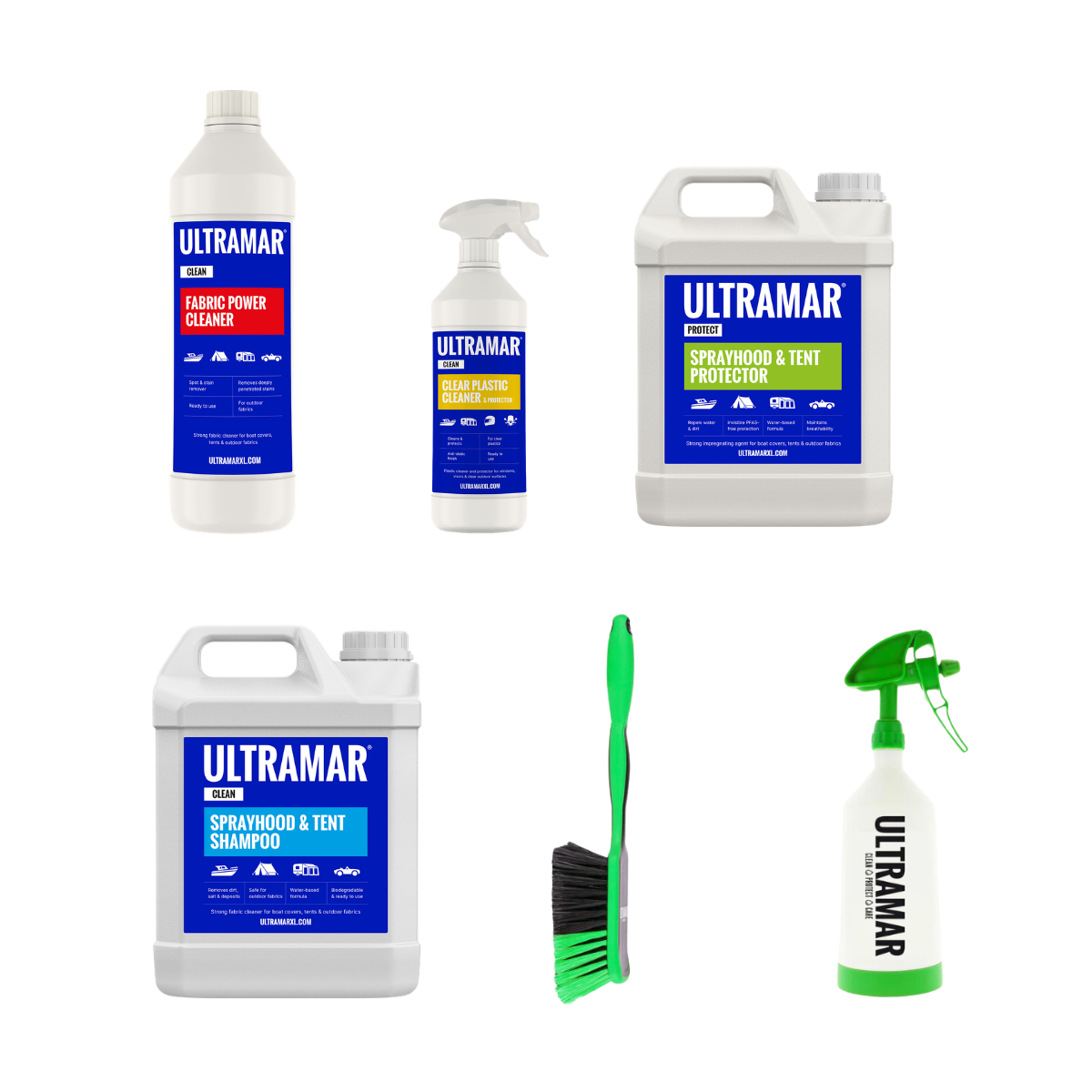
Even with the right habits, condensation can never be completely avoided. That’s why proper maintenance matters. The Ultramar 3-step maintenance process helps protect your tent over time:
- Clean – remove dirt, residue and early mould growth
- Care – keep the fabric supple and in good condition
- Protect – restore water repellency and resistance to moisture
This approach extends the life of your tent and reduces the risk of condensation-related damage.
Frequently asked questions
Is condensation the same as a leak?
No. Condensation forms on the inside of the tent due to moisture in the air. Leaks come from water entering from outside.
Does a waterproof tent prevent condensation?
A waterproof tent keeps rain out, but it does not stop condensation. Ventilation and maintenance are still essential.
Can condensation cause mould?
Yes. Repeated condensation without proper drying greatly increases the risk of mould.
Summary
Condensation in your tent is caused by moisture, temperature differences and poor ventilation. By ventilating properly, keeping wet gear out and maintaining your tent, you create a drier, healthier sleeping environment.
Ultramar
Ultramar helps you keep your tent in top condition. No shortcuts, just a clear maintenance process that works. Less moisture, less damage, and more worry-free nights outdoors.