Impregnating your sofa: when it makes sense — and when it doesn’t
A new sofa looks great. Until the first stain appears. Coffee, wine or sauce can soak into the fabric quickly and become hard to remove. Impregnation can help — but only if you understand what it does and what it doesn’t do. And just as important: what material your sofa is made of.
First things first: what does impregnation mean?
Impregnation means applying a protective layer that makes it harder for dirt and moisture to soak into the fabric. It works a bit like a rain jacket. Water and dirt stay more on the surface, giving you time to blot and clean.
Impregnation does not prevent stains forever. It mainly gives you more time and more control.
Is impregnating a sofa always a good idea?
No. It depends entirely on the material.
Sofas with synthetic fabrics
Is your sofa made from a firm, tightly woven fabric that feels similar to outdoor textiles? In that case, impregnation can make sense. These fabrics behave much like tent fabric or outdoor cushions.
Natural fabrics like cotton or wool
These materials are more sensitive. Impregnation is possible, but it requires extra care and the result is less predictable. Always test on a small, hidden area first.
Leather sofas
Leather needs a different approach. The focus is on feeding and maintaining the material, not on making it water-repellent with a fabric protector. Impregnation as used for textiles is usually not suitable for leather.
Why cleaning always comes first
A common mistake is applying protection over dirt. That doesn’t work.
If dirt or old stains are still in the fabric, you trap them under the protective layer. The result can look patchy, and the protection will not last as long.
That’s why the same logic applies to furniture fabrics as to outdoor fabrics.
Care in 3 clear steps
Ultramar always works with a fixed order. This logic also applies to furniture fabrics that are similar to outdoor materials.
Step 1 – Cleaning
Remove dust, crumbs and surface dirt. Do not use household cleaners. They often leave residues that interfere with later protection.
Step 2 – Treat stubborn stains
Are there deeply embedded or difficult spots? Treat those areas only. Not the entire sofa — just where it’s needed.
Step 3 – Protection
Only when the fabric is clean and completely dry do you apply protection. Protection does not clean. It only helps reduce future contamination.
What impregnation gives you
- Dirt and liquids soak in more slowly
- You get more time to blot spills
- The fabric stays looking good for longer
- Less risk of permanent marks and rings
What impregnation cannot do
- It does not make your sofa indestructible
- It does not remove existing stains
- It does not prevent fading caused by sunlight
- It does not work equally well on every material
Practical tips for home use
- Vacuum your sofa regularly
- Don’t always sit in the same spot
- Keep the sofa out of direct sunlight
- Ensure good ventilation during maintenance
- It’s better to use enough product than too little
Which products fit this approach?
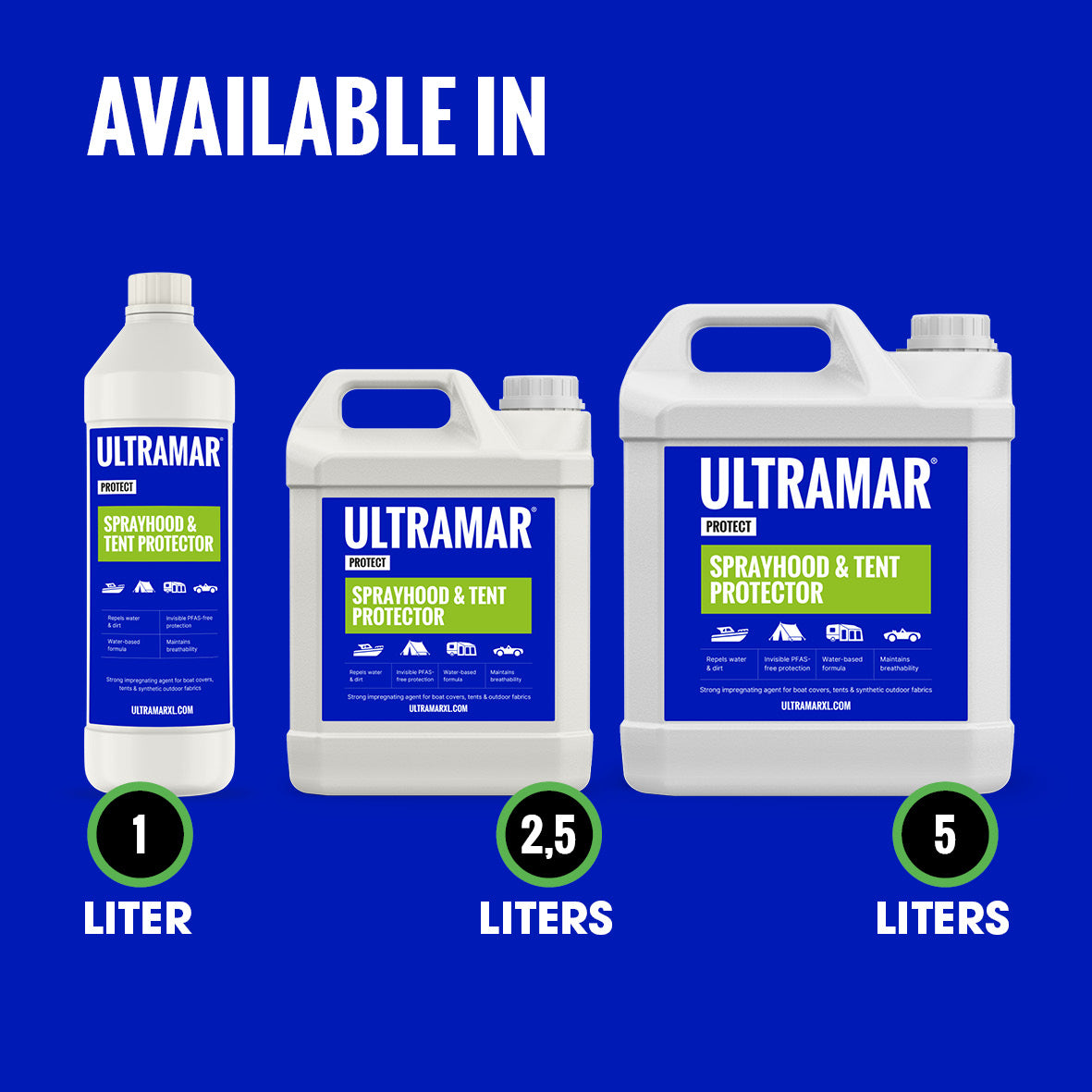
Ultramar develops maintenance products for outdoor fabrics such as boat covers, tents and cushions. These materials are exposed to heavy dirt and moisture, so the products are effective while still being easy and safe to use at home.
Ultramar maintenance products are PFAS-free. This makes them safer for people, pets and the environment, and suitable for use at home — without reducing performance.
If your sofa fabric is similar to outdoor textiles, this maintenance logic is a good match.
Frequently asked questions
Do I need to reapply impregnation every year?
That depends on how the sofa is used. Heavily used seating areas lose protection faster. Light, regular maintenance works better than occasional heavy treatments.
Can I just use a cheap spray?
Many sprays contain mostly water and do very little. They may seem to work briefly, but the effect disappears after a few cleaning cycles.
Does impregnation really work?
Yes — when the right product is used on the right material and the steps are followed in the correct order.
Summary
Impregnating a sofa can be useful, but only if the material is suitable and you approach it correctly. Cleaning always comes first. Protection is not a miracle cure, but it is a smart way to keep your sofa looking good for longer.
Ultramar
Ultramar helps consumers clean, maintain and protect outdoor fabrics themselves. This includes boat covers, tents, convertible roofs, cushions and other outdoor textiles. With PFAS-free maintenance products, clear steps and no specialist knowledge required.
That’s how maintenance stays practical, safe and achievable at home.