If a tent lets water through, the problem is usually not the fabric but the seams. Seams are vulnerable. They are under tension, wear faster, and are often the first place where water gets in. The good news: in many cases you can fix this yourself. With the right care, your tent seams can become reliably water-repellent again.
Why do tent seams start leaking?
At the seams, several elements come together: fabric, stitching thread, and sometimes seam tape. This makes seams more sensitive to wear. These are the most common causes:
- Wear of the seam
Tension during pitching and packing can create small openings. - Worn stitching thread
Over time, the thread loses its sealing effect. - Worn seam tape
On synthetic tents, the tape on the inside of the seam can loosen. - First use of a cotton tent
New cotton tents may let some water through during the first rain. This usually stops after the first full wetting.
Do you need to waterproof seams separately?
In most cases, no. If the stitching is still in good condition, you can treat the seams while impregnating the tent. The impregnation product fills small openings and restores the water-repellent effect around the seam.
Always check the stitching first. Run your fingernail over it. If the thread rubs away easily, the wear is too advanced and repair is needed. If the stitching is still firm, you can continue yourself.
The Ultramar 3-step maintenance process
For a reliable and long-lasting result, always follow the same logical order.
Step 1 – Cleaning
Clean the tent with a suitable tent cleaner. This removes dirt that can block proper protection. Do not use household cleaners.
Step 2 – Stain removal (only if needed)
Are there deeply embedded, stubborn discolorations left after cleaning? Treat those areas locally. This improves the final result, but it is not always necessary.
Step 3 – Protection
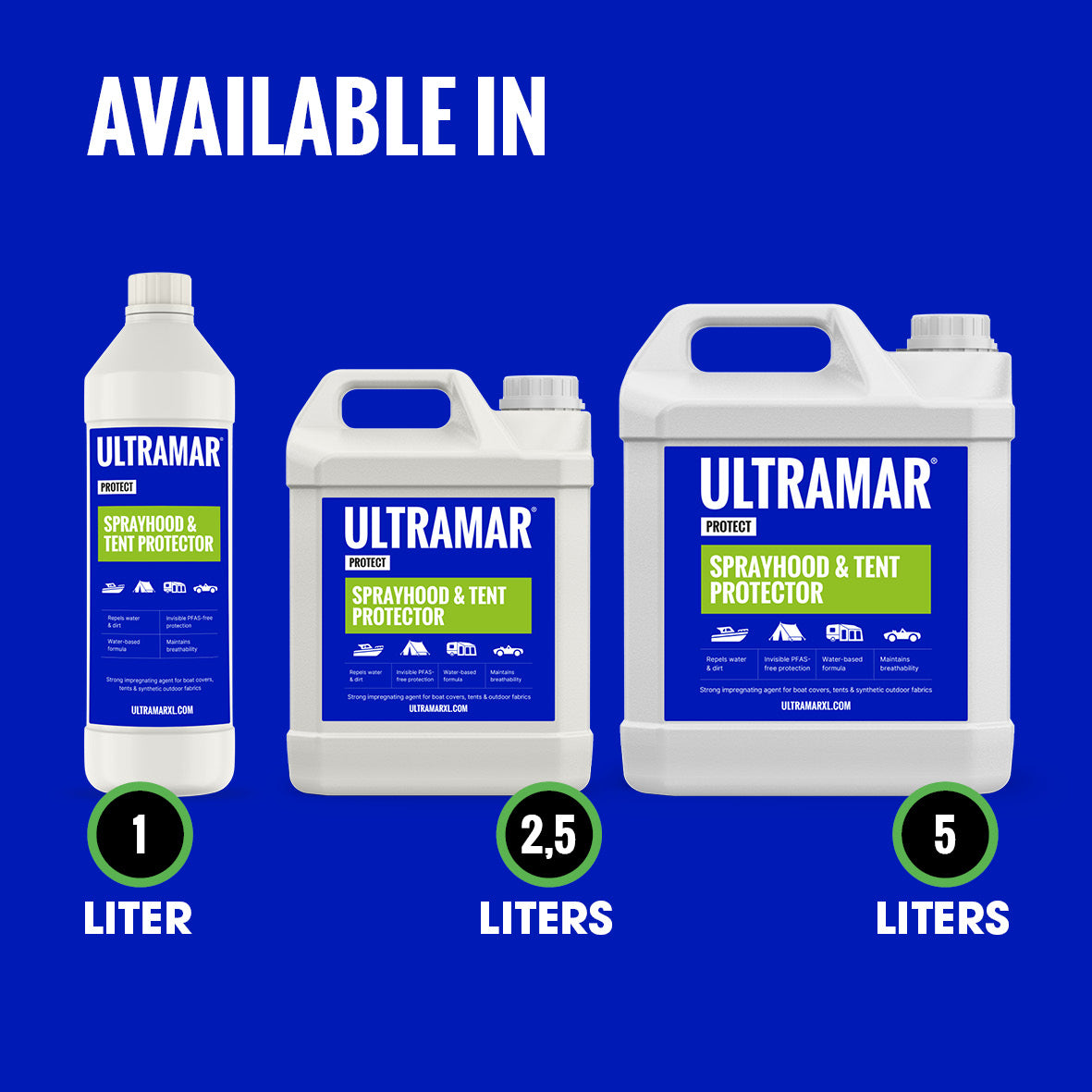
Apply a protection product that matches your tent fabric. Pay extra attention to the seams. Spray them thoroughly so the product can reach small openings. Let everything dry completely.
Which protection suits your tent?
- Cotton or canvas
Use Ultramar Canvas & Cotton Protector. - Synthetic tent fabric
Use a suitable Ultramar protector for synthetic fabrics.
Ultramar maintenance products are PFAS-free. They are safe for use at home and suitable for people, pets, and the environment.
What about seam tape?
With synthetic tents, seam tape on the inside of the seam may be needed if the original tape has clearly come loose. This is mainly a solution for specific areas, such as a leaking groundsheet.
If the seam tape is still intact, re-impregnation is usually sufficient.
What you should avoid
- Do not use special seam sealers
They often leave visible marks and attract dirt. - Do not use green soap
It leaves residues that attract dirt and reduce the effectiveness of later protection. - Do not use too little product
Too little product leads to uneven results, especially on seams.
Practical tips
- Always let the tent dry completely before storing it.
- Reapply protection once a year or after thorough cleaning.
- Have a new cotton tent? Pitch it once and wet it before going on your trip.
Summary
Leaking tent seams are usually caused by wear. By cleaning the tent properly and then protecting it again, you can often restore the water-repellent performance of the seams yourself. Work carefully, use enough product, and follow the correct maintenance process.
Ultramar
Ultramar helps consumers clean, maintain, and protect their tents and other outdoor fabrics themselves. With PFAS-free maintenance products that are easy to use at home and based on a clear, proven 3-step maintenance process.