Mould and green algae on your boat cover: what is it and what can you do about it?
Green algae and dark stains on a boat cover are caused by moisture that stays trapped in the fabric for too long. The good news: in many cases the material itself is not damaged and you can clean it yourself. It does matter which type of contamination you are dealing with, because the approach differs.
What is the difference between green algae and mould on a boat cover?
Green algae appear as a greenish or brownish-green discolouration, most often in spots where water sits on the fabric for a long time — think folds, seams and areas under trees. You can recognise it by its even, flat colour with no distinct texture.
Dark stains with a slightly hazy or powdery edge look different. They tend to penetrate deeper into the fabric and can appear in several colours: black, grey or grey-green. You find them most often in places where the fabric has been damp for a prolonged period, such as after a wet winter or when the cover has been stored wet.
In both cases the rule is the same: the longer the contamination sits, the deeper it works its way in. Starting early makes a real difference.
How do you identify the contamination on your cover?
Examine the cover in good daylight and look for the following:
- Green or brownish-green stains on folds, seams or the underside of the fabric point to algae growth caused by a persistently damp surface.
- Dark, sometimes indistinct stains without a sharp edge, often spread across a larger area, indicate deeper contamination.
- A musty smell, even when the cover feels dry to the touch, is a sign that moisture has been trapped inside for a long time.
Not sure which it is? Try cleaning a small, inconspicuous area first. You will quickly see whether the discolouration responds to water and cleaning.
What causes green algae and dark stains on a boat cover?
The cause is almost always moisture with nowhere to go. A few situations that encourage this:
- Storing the cover wet. If you pack the cover away while the fabric is still damp, that moisture stays trapped — especially in a bag or storage space with little air circulation, which is more than enough to cause staining.
- Standing water on the fabric. A cover that sags or is not tensioned properly holds puddles of water that slowly soak into the fabric.
- Shade and little wind. A cover that gets minimal sun and wind dries out much more slowly. Mooring spots under trees speed up the process because leaves and twigs retain moisture.
- A dirty cover. Dirt on the fabric holds moisture longer than a clean surface. A cover that is not cleaned regularly is therefore more susceptible.
What should you do if your boat cover has been stored wet?
Take the cover out of storage as quickly as possible and let it air-dry. If possible, put it under tension so that air can reach all sides. Avoid drying it in direct, intense sunlight when it is tightly stretched, but an airy spot is always better than putting it back in storage.
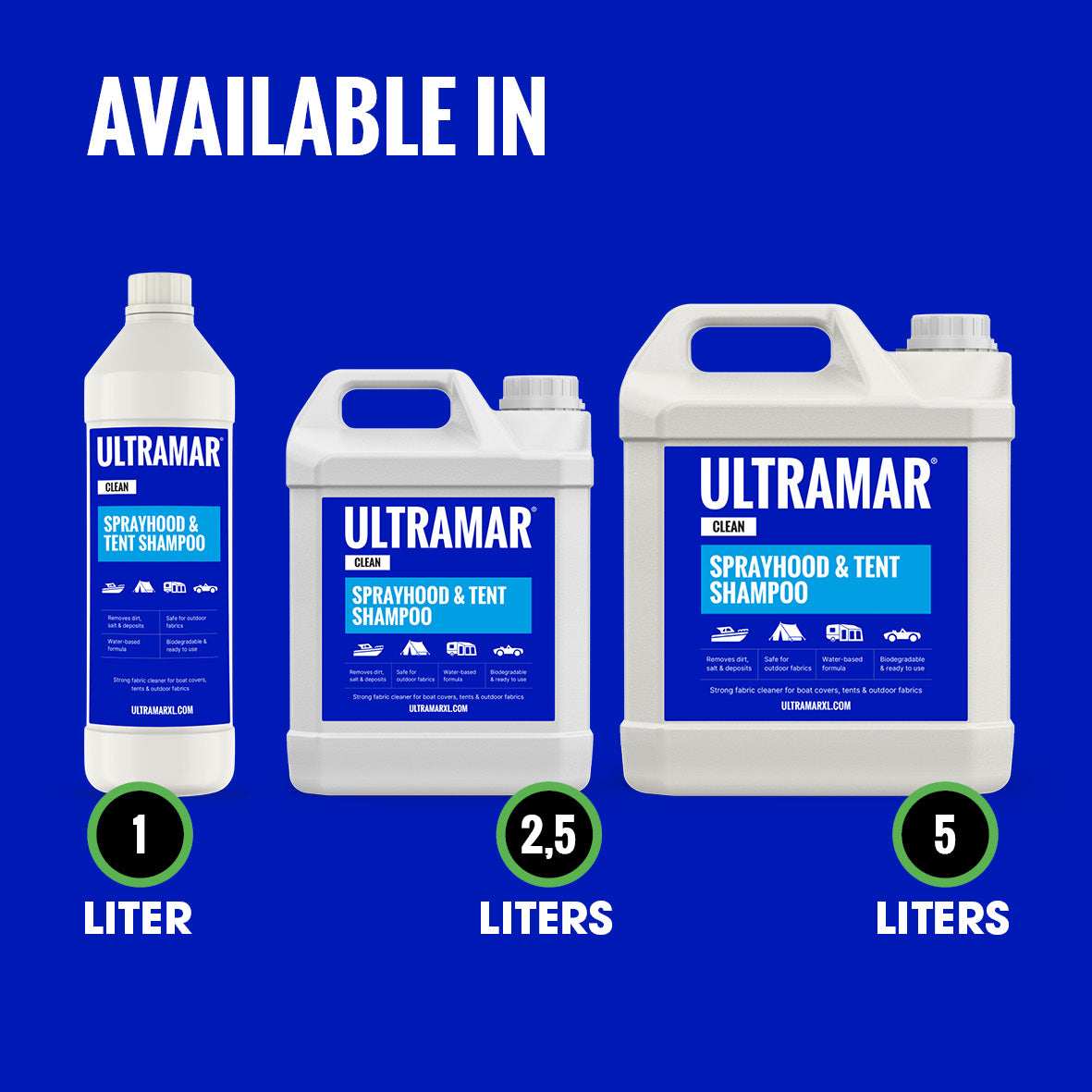
Once the cover is dry, you can assess what contamination remains. Stains that are still visible after drying are best tackled with a cleaner designed for outdoor fabric. Sprayhood & Tent Shampoo is the right first step: it cleans the surface without damaging the fabric.
How do you remove green algae from a boat cover or deck cover?
Always start by cleaning. Rinse the fabric first with clean water to remove loose dirt. Then apply a cleaner suitable for outdoor fabric and work it in with a soft brush. Leave it to dwell for a moment, then rinse thoroughly.
For algae that has penetrated deeper, a second treatment may be needed. Work calmly and systematically, section by section. Do not scrub too hard — it does not help and can roughen the material.
Allow the cover to dry completely before storing it or treating it further. Putting a damp cover away will simply bring the problem straight back.
What should you avoid?
A few approaches that may seem tempting but can damage the fabric or make the problem worse:
- Bleach or aggressive cleaning products. These can break down the coating on synthetic fabrics and worsen discolouration rather than reducing it.
- A pressure washer held too close. The pressure can damage seams and the weave. If you do use a pressure washer, keep your distance and use a wide fan setting.
- Scrubbing with a stiff brush. The harder you scrub, the more you roughen the fibres. A soft brush and patience produce better results.
- Storing the cover wet. This is the most common mistake. Always make sure the cover is completely dry before folding or packing it away.
Frequently asked questions
Can the cover still be saved if the stains have been there for a long time?
That depends on how deep the contamination goes and on the material. In many cases the fabric responds well to a thorough clean, even when stains have been present for some time. Always try on a small, inconspicuous area first.
How do I stop the problem from coming back?
Three things help most: keep the cover clean, let it dry completely before storage, and make sure water runs off the fabric quickly. A cover with good water repellency retains moisture for less time and is easier to maintain. But that is the next step — after cleaning.
Does it matter whether the cover is made of polyester or cotton?
Yes, it matters when choosing a protection product. For cleaning, a mild cleaner for outdoor fabric works well in both cases. When it comes to protection afterwards, you choose based on the material: synthetic fabrics require a different product from cotton or canvas.
Can I put the cover in the washing machine?
We advise against this for boat covers and deck covers. The fabric is often too large and too thick, and the movement inside the drum can put stress on seams and the weave. Cleaning by hand or with a brush gives you more control, and in most cases produces a better result.
A clean cover is the foundation for everything that follows. Take the time to clean it properly, let the fabric dry completely, and only put it away once you are certain no moisture remains inside. That way you keep your boat cover in good condition for longer and prevent the same problem from returning next season.