The plastic windows in a sprayhood or boat cover are often the first to go dull, stiff or scratched. With the right maintenance, they can stay clear and flexible for much longer. This article explains how it works, where things go wrong, and what you can do yourself.
Why do plastic windows become stiff and scratched?
Plastic windows in boat covers are usually made of clear vinyl or PVC. This material is naturally flexible, but loses that flexibility due to:
- UV radiation: slowly breaks down the plasticizers in the material
- Cold temperatures: temporarily stiffen the plastic, especially when folded
- Incorrect cleaning: causes micro-scratches that make the surface cloudy
- Storing dry without protection: accelerates the hardening process
The result: windows you can no longer roll up properly, that turn milky, or that are full of fine scratches. And once damaged, it is often difficult to reverse.
Common mistakes with plastic windows
Much of the damage to plastic windows is caused not by weather, but by incorrect maintenance. These are the most common mistakes:
- Cleaning with all-purpose cleaner or washing-up liquid: these products are often too harsh and dry out the material
- Using a scouring pad or dry cloth: causes immediate scratching on the soft surface
- Folding instead of rolling: sharp creases leave permanent fold lines
- Storing while the plastic is cold: increases the risk of cracking
- Never protecting: without maintenance, the plastic hardens faster than necessary
How to properly maintain plastic windows
Caring for plastic windows follows the same basic logic as outdoor fabric: clean first, then protect. Use products specifically designed for clear plastic.
Step 1: Cleaning
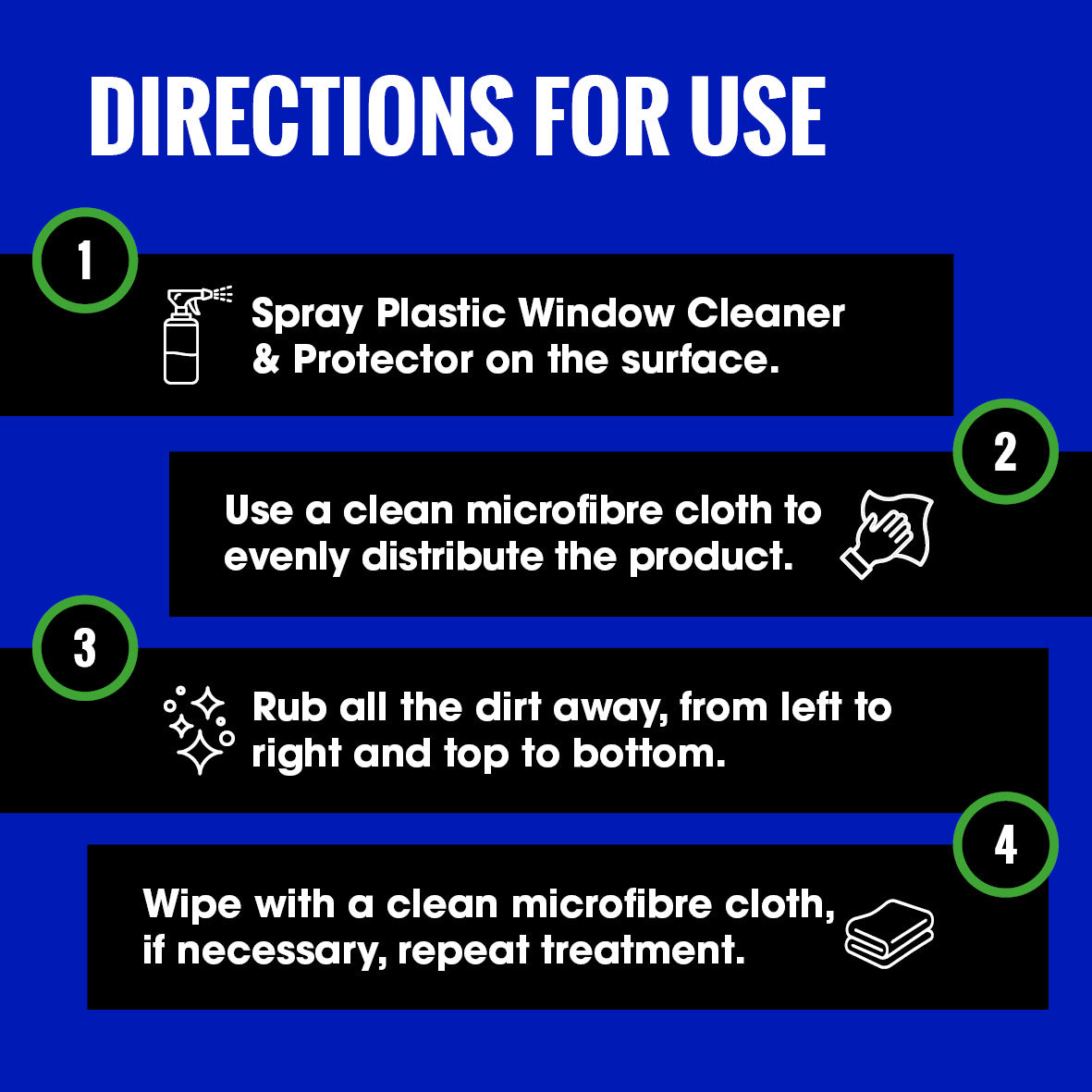
Use a cleaner developed for plastic windows. The Plastic Window Cleaner & Protector from Ultramar is formulated for transparent plastic: it removes dirt and salt residue without damaging the surface.
Tips for cleaning:
- Use a soft, clean microfibre cloth or sponge
- Wet the surface first to rinse away loose sand - sand particles are the biggest cause of scratches
- Work in straight strokes, not circles
- Clean in the shade if possible, to prevent the product from drying too quickly
Step 2: Protecting and keeping flexible
After cleaning, apply a protective layer. That is the difference between plastic that turns dull after one season and plastic that stays clear for several seasons. The Plastic Window Cleaner & Protector forms a thin layer on the surface that helps to:
- Keep the material flexible
- Make fine scratches less visible
- Prevent new dirt from bonding as quickly
- Slow down drying out from sun and wind
Apply the product with a soft cloth and let it absorb. Buff lightly for a clear finish.
How often should you maintain plastic windows?
That depends on where your boat is moored and how much sun the cover gets. As a guideline:
- Boat moored outside in the sun: treat the windows at least two to three times per season
- Boat under a tarpaulin or in a shed: once or twice per season is usually sufficient
- After a long winter storage: treat the windows before rolling them up for the first time
Notice that the plastic feels less flexible when rolling, or see a slight haze? Then it is time for maintenance.
Rolling, not folding
One of the most important habits with plastic windows: roll them up instead of folding. A sharp fold creates a permanent line in the material that you cannot remove. Roll the plastic loosely, ideally with a soft cloth between the layers. Only do this when the material is at room temperature or warmer - cold plastic is more vulnerable.
What do you need?
For maintaining the plastic windows in a boat cover, you need:
- Plastic Window Cleaner & Protector - cleans and protects in one treatment, specifically for clear plastic
- Soft microfibre cloths (at least two: one for cleaning, one for buffing)
Ultramar also offers bundles for complete boat cover care. These are often better value than buying separately. Choose a slightly larger size than the minimum - if you run out mid-treatment, you cannot always finish evenly.
Frequently asked questions
Can I use regular glass cleaner on my plastic windows?
We advise against it. Glass cleaners often contain substances that can damage or dry out plastic. Use a cleaner specifically designed for clear plastic, such as the Plastic Window Cleaner & Protector from Ultramar.
Can scratches in plastic windows be repaired?
Light surface scratches can often be made less visible with a protective product. Deep scratches or wear are often not fully reversible - which is why prevention matters so much.
Can I put my boat cover with plastic windows in the washing machine?
No. Plastic windows do not belong in a washing machine. The friction, folding, and spin cycle damage the material. Clean the windows by hand, on the cover itself or laid flat on a clean surface.
How do I prevent plastic windows from sticking together in storage?
Place a soft, dry cloth between the windows wherever they touch. Make sure they are clean and dry before storing. A protective layer also helps prevent sticking.
Summary
Plastic windows in a boat cover need regular, but simple maintenance. The two most important things you can do:
- Clean them with a suitable product and a soft cloth - never dry, never with abrasives
- Protect them after each cleaning to keep the material flexible and prevent scratches
Do this a few times per season and roll the windows instead of folding them. With those habits, the plastic will stay clear and flexible for longer in most cases.