Preventing mould on your tent: how to store your awning and canopy dry
Mould on your tent, canopy or awning almost always has a single cause: damp fabric that never gets a chance to dry out properly. The good news is that it's entirely preventable. With the right approach to rolling up, drying and storing, you set yourself up for a fresh, mould-free tent next season.
Why does this matter right now?
At the end of camping season, everyone's in a rush to pack up. Sometimes it's raining, sometimes it's getting late and you just want to get home. But a damp awning or canopy that goes straight into the garage is a recipe for stubborn stains and a musty smell — and that smell won't disappear on its own over winter. You won't notice it until you unpack everything the following summer.
The same applies to folding camper tents, and in some ways even more so. The fabric sits close to the caravan and struggles to air out properly if it's folded away wet.
Checklist: things to check before storing
- Is the tent fabric, canopy or awning completely dry? Check the seams, corners and folded edges too.
- Are there any visible stains you can still deal with now?
- Is the fabric still water-repellent? Does rainwater bead up in droplets, or does it soak in?
- Have you checked the attachment points, zips and poles for dirt?
- Do you have a dry, well-ventilated storage space available?
Step by step: how to store your fabric dry
Step 1: Let it dry out completely before storing
This is the most common mistake: rolling up while the fabric is still damp. Always let your canopy, awning or folding camper tent dry out fully before putting it away. Do this in a dry, airy spot out of direct sunlight — prolonged exposure to direct sun can degrade the material.
Once it's hanging up, check the folded edges and seams too. These dry the slowest. Run your hand over them — if they feel cool to the touch, the fabric isn't dry enough yet.
Step 2: Remove dirt and stains
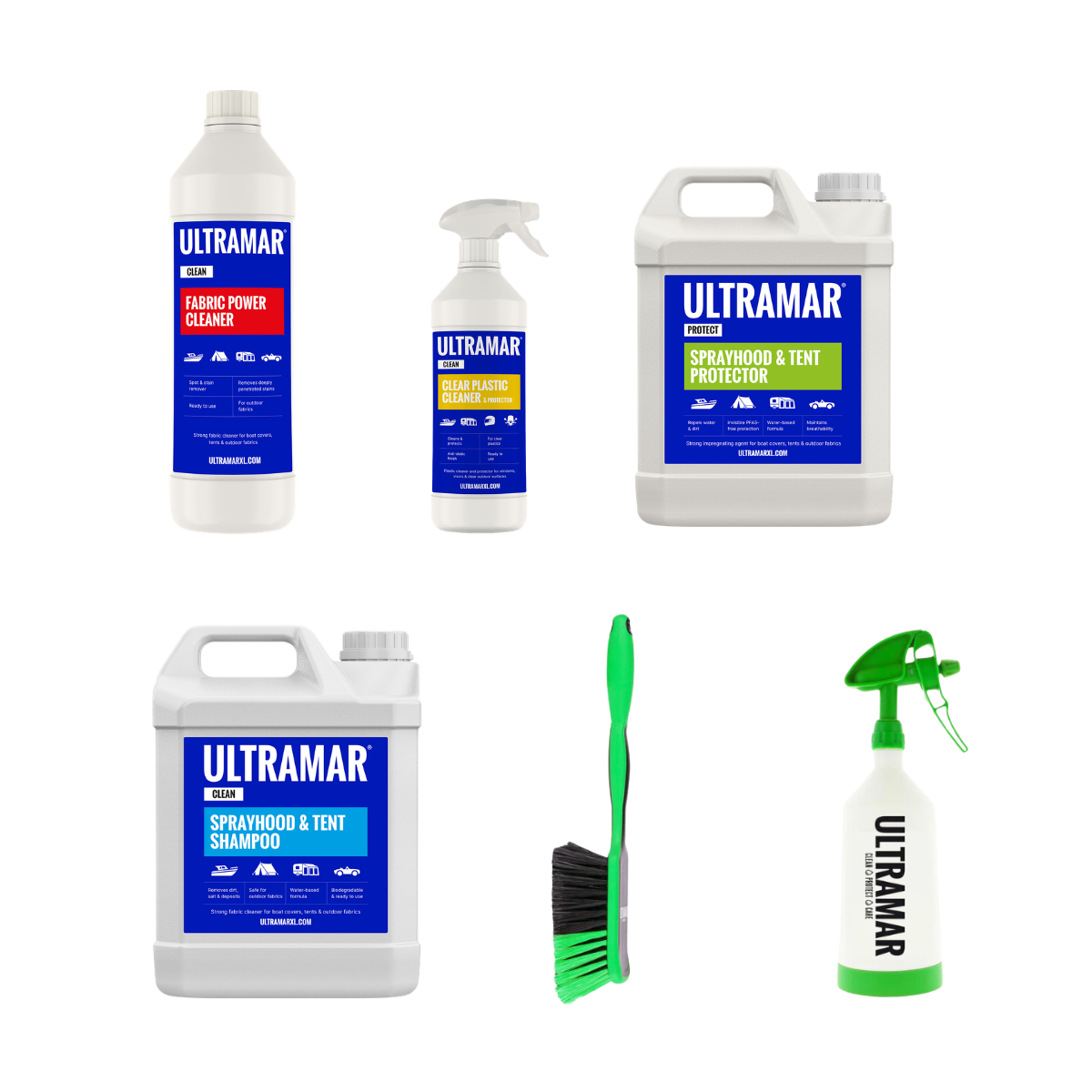
Any dirt you leave now will be harder to shift next year. Brush off loose debris and clean the fabric with a suitable tent shampoo. Rinse thoroughly so no soap residue is left behind, then let everything dry out completely again.
Got stains that brushing and cleaning won't budge? Use a targeted stain remover before you waterproof. Never apply stain remover over the entire surface — treat only the affected area.
Step 3: Check the water repellency and protect if needed
A well-protected fabric repels water and picks up less dirt over time. That means less moisture build-up and fewer storage problems. If water no longer beads up in droplets but soaks into the fabric, the protective coating has probably worn off.
Now is the right time to reapply it. Once the fabric has been cleaned and dried, you can treat it with a waterproofing product to restore water repellency. Which product to use depends on your fabric type — more on that below.
Step 4: Store it the right way
Store your fabric in a dry space with adequate airflow. Don't use a sealed plastic bag — any residual moisture has nowhere to go. A breathable storage bag, a loose roll or a cardboard box with a few air gaps all work much better.
Don't store your folding camper tent in its folded position if the caravan is parked outside in changeable weather. Try to keep the caravan in a dry space, or store the fabric separately indoors.
Which protective product do you need for your fabric?
Outdoor tent fabrics come in two main types, and that determines which waterproofing product you need.
Synthetic fabric (polyester, acrylic): This is the most common material used in modern canopies, awnings and folding camper tents. Use the Sprayhood & Tent Protector for these. It's been developed specifically for synthetic outdoor fabrics and restores water repellency effectively. Ultramar products are PFAS-free.
Cotton or canvas: Classic cotton tents, safari tents or cotton awnings need a different product. Cotton has its own breathable properties that are worth preserving. Use the Canvas & Cotton Protector for these — it provides protection without compromising the fabric's breathability.
Not sure what material your tent or awning is made of? Check the label or contact the manufacturer. If in doubt, synthetic is by far the most common choice in modern products.
What if your awning already smells musty after winter?
A musty smell after winter is a sign the fabric was stored damp and never properly dried out. The good news is that in many cases, you can fix this.
Start by hanging the fabric out fully in a dry, airy spot. A mild smell will often disappear with a good airing. If there are also visible stains or discolouration, cleaning is the next step. Use a mild tent shampoo, rinse thoroughly and let the fabric dry completely before doing anything else.
Once it's dry, you can re-protect the fabric so you're ready to start the season fresh.
Common mistakes when storing your tent
- Rolling up because it's nearly dry: Nearly dry is not dry. Moisture trapped in folded edges is all it takes to cause problems in storage.
- Storing in a sealed plastic bag: Plastic traps moisture. Always use breathable storage.
- Wiping off mould spots and leaving it at that: Stains you don't deal with now will be much harder to remove next year.
- Skipping waterproofing because the fabric still looks fine: Water repellency wears off gradually, often with no visible sign. Check it every season.
- Choosing the wrong protective product: Canvas & Cotton Protector won't perform as intended on synthetic fabric. Always choose based on your material.
FAQ: mould and storage for tents, awnings and folding camper tents
How long does my tent need to dry before I can store it?
It depends on the weather and humidity. Ideally, allow a day or two to dry things out before packing away. Feel the seams and folded edges with your hand — if they feel dry and warm, the fabric is ready to store.
My folding camper tent gets wet from dew. Can I still roll it up?
We'd recommend against it. Dew is enough moisture to cause problems in storage. If possible, drive a short distance first so the fabric airs out as you go — or unfold it again at home and let it dry thoroughly before storing it for winter.
Can I store my awning in its cassette if it's still slightly damp?
We'd advise against it. A cassette has very little airflow. If the fabric isn't completely dry, you're significantly increasing the risk of a musty smell and stubborn stains. Let the awning dry out fully before rolling it in.
How do I know whether my fabric is synthetic or cotton?
Check the sewn-in label or the manufacturer's product specifications. Polyester and acrylic are synthetic. Canvas and cotton are natural fibres. If you're unsure, there's a good chance that a modern canopy or awning is made from synthetic material.
Do I need to waterproof my tent if it still looks fine?
Appearance doesn't always reflect water repellency. Sprinkle a little water onto the fabric. Does it bead up in round droplets? Then the protection is still working. Does the water soak in or does the droplet flatten out? Then it's time to waterproof — even if nothing looks visibly wrong.
A well-maintained tent or awning will last significantly longer. Taking half an hour now to pack everything away dry will save you a lot of work next season. Want to know which product is right for your fabric? Check what your tent fabric is made of and choose the appropriate waterproofing product from there.