Removing stains from tent fabric: from weather stains to sap and rust
Stubborn stains on tent fabric or awning fabric rarely come out with just water and a cloth. That's no reason to write off the fabric, though. With the right approach, you can tackle most stains step by step without damaging the material.
How do you recognise the most common stains on tent fabric?
Not every stain looks the same, and the cause determines the best way to handle it. These are the stains that appear most frequently on tent and awning fabric:
- Weather stains and grey discolouration: caused by prolonged exposure to rain, sun and dirt. The fabric looks dull and dingy.
- Black streaks: often come from metal parts of the tent frame, from dew running down a pole, or from dirt that has built up in a fold.
- Bird droppings: dry quickly and bond firmly to the fabric if you don't act fast.
- Tree sap: sticky, transparent or brownish spots that occur when the tent is pitched under trees.
- Sun cream: greasy, light-coloured stains that penetrate deeper into the fabric weave.
- Rust discolouration: orange-brown stains caused by rusting metal components or pegs that come into contact with the fabric.
What causes these stains?
Most stains on tent fabric result from a combination of exposure to the elements and contact with other materials. Tent fabric left outdoors for extended periods collects airborne dirt, debris from trees and droppings from birds. Metal components rust in damp conditions and leave orange marks on the fabric. Tree sap and sun cream are greasy by nature and bond well to the fabric fibres, making them difficult to soak loose with water alone.
The longer a stain sits, the deeper it penetrates and the more effort it takes to remove. Acting early always helps.
How do I remove stubborn stains from tent or awning fabric?
The process involves two steps. First, you clean the entire fabric; then you target any remaining stains directly. Don't skip the first step, even if you think a single stain is the only problem. A clean surface is the foundation for a good result.
Step 1: clean the entire fabric first
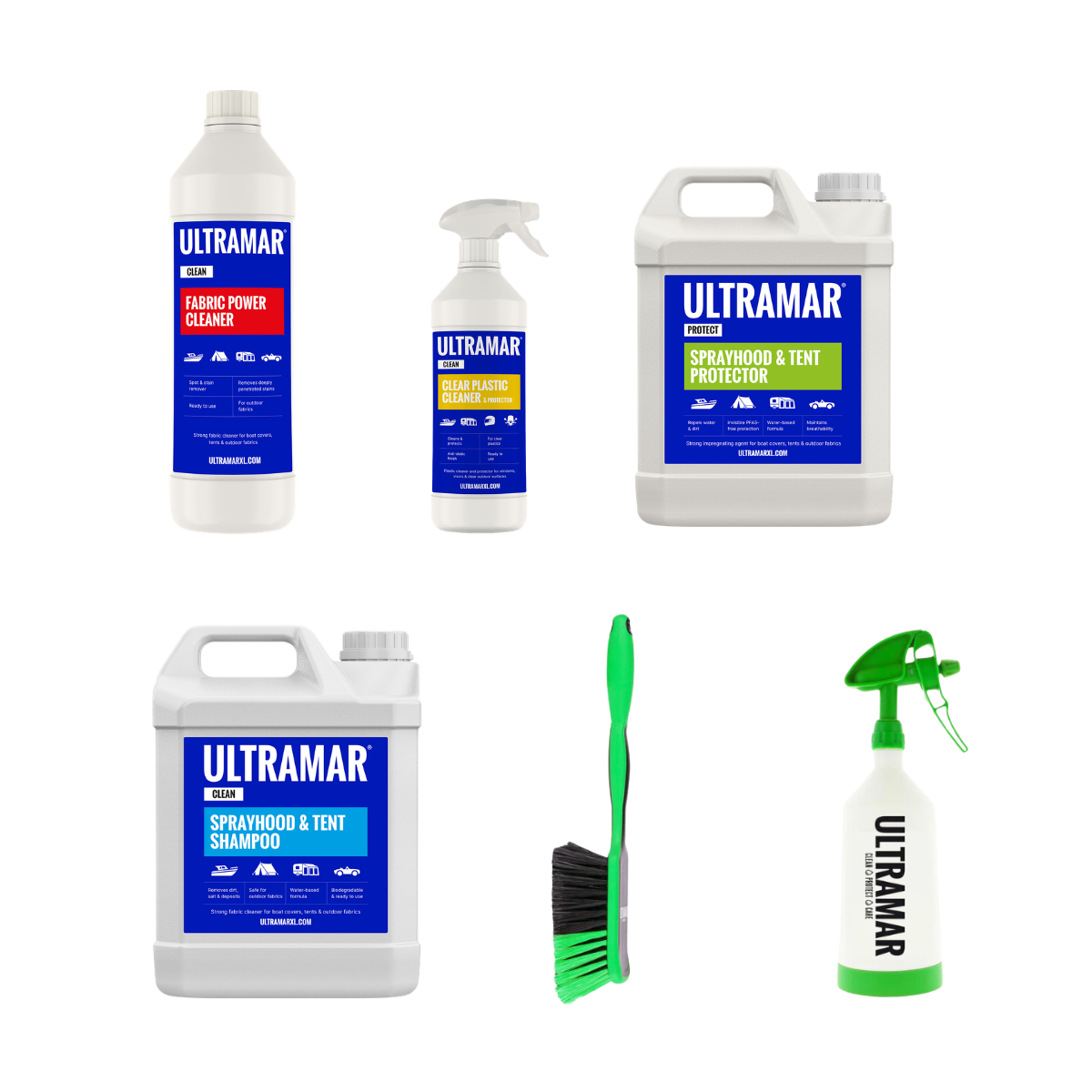
Start with a thorough clean of the tent fabric. Use a mild fabric cleaner suitable for outdoor textiles. A good fabric cleaner works on both synthetic fabrics (polyester, acrylic) and on cotton and canvas. Apply the cleaner to the fabric, allow it to work in briefly, then rinse thoroughly. This removes the surface dirt that would otherwise interfere with effective stain treatment.
Step 2: target remaining stains directly
After cleaning, you'll be able to see which stains remain. Address these with a stain remover designed for outdoor textiles. A stain remover is intended for deep-set stains and stubborn soiling. Apply the product directly to the stain, leave it to soak in for at least fifteen minutes — longer is fine — then rinse thoroughly. Always work only on the stained area, not across the entire fabric.
For rust discolouration and dried bird droppings, you may need to extend the soaking time or repeat the treatment. Be patient: stubborn stains need time.
What should you avoid?
A few common mistakes that can damage the fabric or undermine the results:
- Don't scrub or brush hard. This damages the fibres and breaks down the water-repellent coating. Use a soft brush or cloth instead.
- Don't use bleach or harsh household cleaners. These attack the material and can cause discolouration that cannot be reversed.
- Don't clean in direct sunlight. The product dries too quickly before you can rinse it off.
- Don't start with the stain remover without cleaning first. A stain remover works less effectively on a dirty surface.
- Don't rinse with too little water. Residue from cleaning products can leave the fabric looking dull or cause damage over time.
Frequently asked questions about stains on tent and awning fabric
How do I remove tree sap stains from my awning fabric?
Tree sap is a greasy, stubborn substance that can penetrate deep into the fabric weave. Start with a thorough clean of the fabric. Then apply a stain remover directly to the sap stains and allow it to soak in properly. Don't scrub hard — let the product do the work, then rinse thoroughly. Older sap stains may require a second treatment.
How do I remove bird droppings from tent fabric without damaging it?
First remove the bulk of the droppings by gently spraying the fabric with water and allowing them to soak loose. Then clean the fabric with a suitable fabric cleaner. If a stain remains, target it directly with a stain remover. Don't use a sharp object to scrape off the droppings — this will damage the fabric.
How do I remove black streaks from my awning or tent fabric?
Black streaks often come from metal oxidation or built-up dirt along a seam or pole. A thorough clean will often tackle a large part of the problem. If streaks remain after cleaning, treat them directly with a stain remover. Also check the metal components of the tent or awning for rust afterwards, so the streaks don't return.
What do I do about rust discolouration on tent fabric?
Rust discolouration is one of the trickier stains to deal with. Start by cleaning the fabric thoroughly. Then apply a stain remover to the rust stain and leave it to soak in for as long as possible. Rinse thoroughly afterwards. Bear in mind that old rust stains may not disappear entirely. At the same time, check the metal components — if they continue to rust, the stains will keep coming back.
Can I machine wash tent fabric?
We advise against it for most tent and awning fabrics. Machine washing can damage the water-repellent coating and put stress on the seams. Hand cleaning with a suitable fabric cleaner gives better results and is gentler on the material.
How to prevent stains from coming back
Removing stains is one thing, but preventing them from returning so quickly is just as important. After cleaning and treating the fabric, it's worth checking whether the water repellency is still performing properly. If water no longer beads off the fabric effectively, the protective layer needs to be renewed. In that case, apply a suitable protector to the clean, dry fabric. This is the third and final step in a complete maintenance routine — and the best way to keep the fabric in good condition for the long term.