A small tear or a leaking seam in your tent is frustrating. Some issues you can fix yourself. Others you can’t. What always helps is proper maintenance. That’s how you prevent damage and delay repairs as long as possible.
In this article, you’ll learn what you can do yourself when tent fabric is lightly damaged and how the right maintenance helps your tent last longer.
Why tent fabric gets damaged
Tent fabric is often under tension. Rain, sun, dirt and incorrect storage all put stress on the material. Small holes or tears usually don’t appear overnight. They are often the result of neglected maintenance.
A clean fabric that stays water-repellent is much more durable.
Repairing tent fabric yourself: what is possible
Minor damage can often be fixed yourself, such as:
- small holes or tears in the fabric
- light damage to seams
- a loose keder or a damaged zipper slider
Keep these points in mind:
- don’t wait too long, small damage can quickly become bigger
- always repair both sides of the fabric
- clean and dry the area before repairing
- always take a simple repair kit with you when travelling
Larger tears, structural damage or replacing a full zipper are best handled by a tent maker or sailmaker. That’s often simply the most sensible option.
Maintenance is not repair – but it helps prevent it
Repair fixes damage. Maintenance helps prevent new damage. That’s where Ultramar fits in.
Good maintenance helps your tent fabric to:
- wear out more slowly
- stay flexible
- remain water-repellent
- look better for longer
The Ultramar 3-step maintenance process for tent fabric
Ultramar always works with a fixed order. This order is essential for a reliable and long-lasting result.
Step 1 – Cleaning
Always start with cleaning. This removes dirt that stresses the fabric and gets trapped in the fibres.
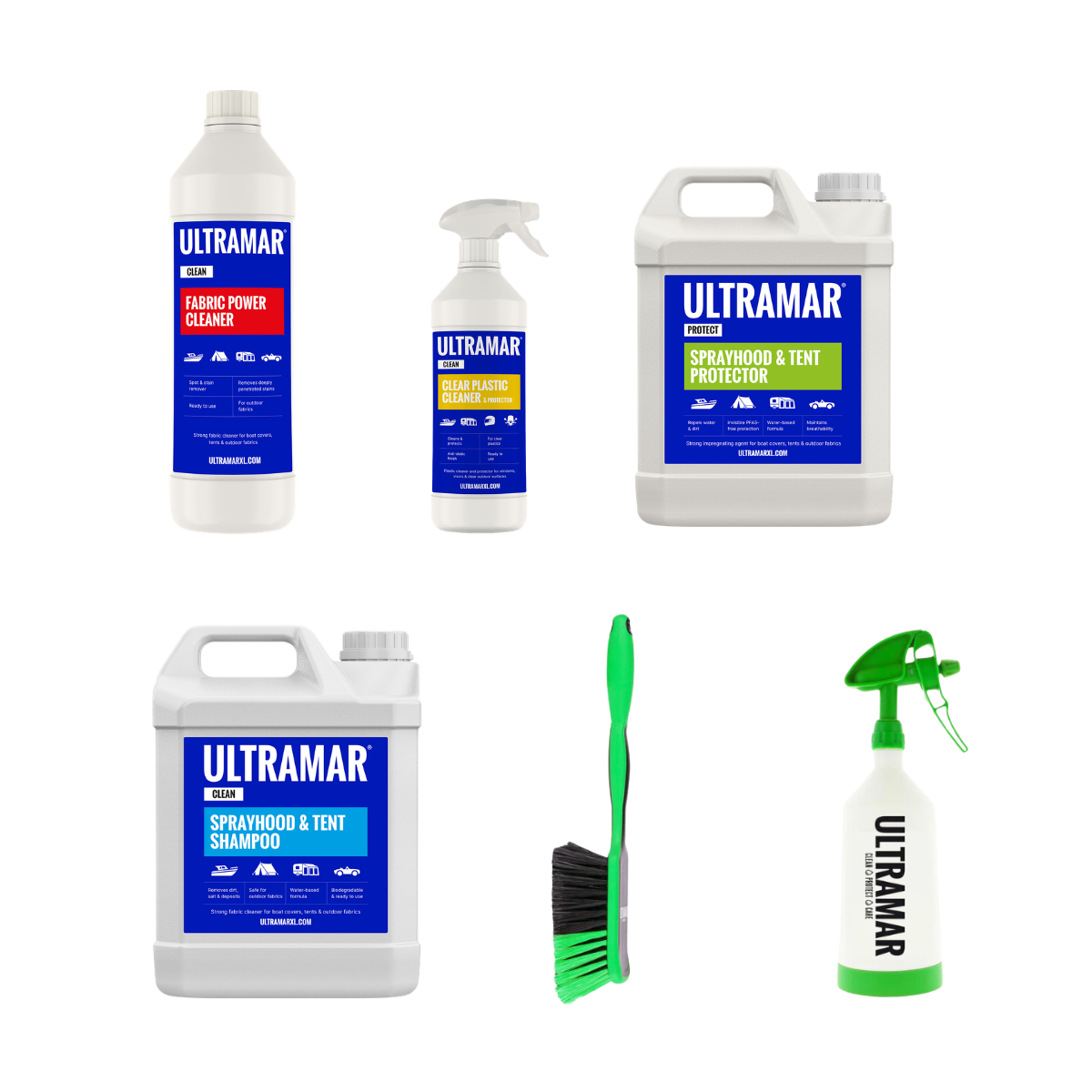
Use a suitable tent cleaner, such as Sprayhood & Tent Shampoo. Household cleaners or aggressive products can damage the fabric and should be avoided.
Step 2 – Treat stubborn contamination
If discoloration or deeply embedded dirt remains after cleaning, treat those areas separately.
Power Cleaner is designed for stubborn contamination and difficult-to-remove discoloration that normal cleaning cannot handle. Use it locally, not over the entire surface.
Step 3 – Protect
After cleaning and allowing the fabric to dry completely, restore the water-repellent properties of the tent fabric.
Choose the right product for your material:
- for cotton or canvas: Canvas & Cotton Protector
- for synthetic tent fabrics: Sprayhood & Tent Protector
This protection helps reduce future water absorption and dirt buildup.
What you should avoid
- do not use a pressure washer on tent fabric
- do not use all-in-one products
- do not apply protection to dirty or wet fabric
- do not use fabric protection on plastic windows
Plastic tent windows: a separate approach
Plastic windows are not fabric. Never treat them with fabric impregnation products.
For windows, use a dedicated product such as Plastic Window Cleaner & Protector. It cleans without streaks and helps keep the surface clear for longer.
What do you need for proper tent maintenance?
For a complete maintenance routine, you usually need:
- a tent cleaner
- a cleaner for stubborn contamination
- a protector suitable for your tent fabric
- a spray bottle or a soft brush
Ultramar offers maintenance bundles that combine these products in a logical way. This is often more cost-effective than buying each product separately.
It’s better to use enough product than too little. Being too economical can lead to uneven results or running out halfway through the job. Choosing a slightly larger pack is useful for touch-ups and future maintenance.
Summary
Minor damage to tent fabric can sometimes be repaired yourself. Larger repairs are best left to a specialist.
What you can always do yourself is proper maintenance. By cleaning regularly, treating stubborn contamination and protecting the fabric afterwards, you significantly extend the lifespan of your tent.
Ultramar
Ultramar helps consumers clean, maintain and protect tent fabrics and other outdoor materials themselves. With PFAS-free maintenance products that are easy to use at home and based on a clear 3-step maintenance process.