Reproofing tent fabric: when is it necessary and how do you do it properly?
If water no longer beads off your tent or awning but soaks into the fabric, it's time for a fresh round of waterproofing. This article explains how to recognise when your fabric needs treatment, which product suits your material, and how to work through the process step by step.
How do you know when your tent fabric needs reproofing?
A properly treated fabric lets water roll off in droplets. If you notice water soaking in and leaving dark patches, the water-repellent layer has done its job and is now exhausted. The fabric itself is still intact, but the protection has worn out.
Watch out for these signs:
- Water no longer beads up but soaks straight into the weave
- The inside of the tent feels damp, even without any damage
- The fabric looks dark and heavy after rain
- Water repellency hasn't returned after cleaning
Waterproofing wears down through use, UV exposure, rain and cleaning. How often you need to reapply depends on how intensively you use the tent and how long it spends outdoors.
What do you do if the fabric still isn't waterproof after cleaning?
Cleaning does not restore water repellency. It removes dirt, but the proofing that provided protection is gone. After cleaning, you always need a fresh protective product to bring the water repellency back.
If the fabric still isn't waterproof even after a previous reproofing, check whether the fabric was clean and dry before you applied the treatment, whether you applied the product evenly, and whether you allowed sufficient drying time. A proofing agent bonds poorly to dirty or wet fabric.
Which product do you choose: polyester, polycotton or cotton?
The right product depends on the material your tent or awning is made from. Ultramar makes a clear distinction here.
Synthetic fabrics (polyester, acrylic, polycotton with a predominantly synthetic fibre content)
Use the Sprayhood & Tent Protector. This product is developed for synthetic outdoor textiles and restores the water repellency of modern tent fabrics and awnings.
Cotton and canvas fabrics (classic cotton tent, safari tent, cotton awning)
Use the Canvas & Cotton Protector. This product is made specifically for cotton and canvas. It protects the fabric while keeping it breathable, which is essential for cotton.
Not sure about the material? Check the label on your tent or look up the manufacturer's product name. Most modern tents and awnings are made from synthetic or polycotton fabric with a high synthetic content. In that case, go with the Sprayhood & Tent Protector.
What do you need?
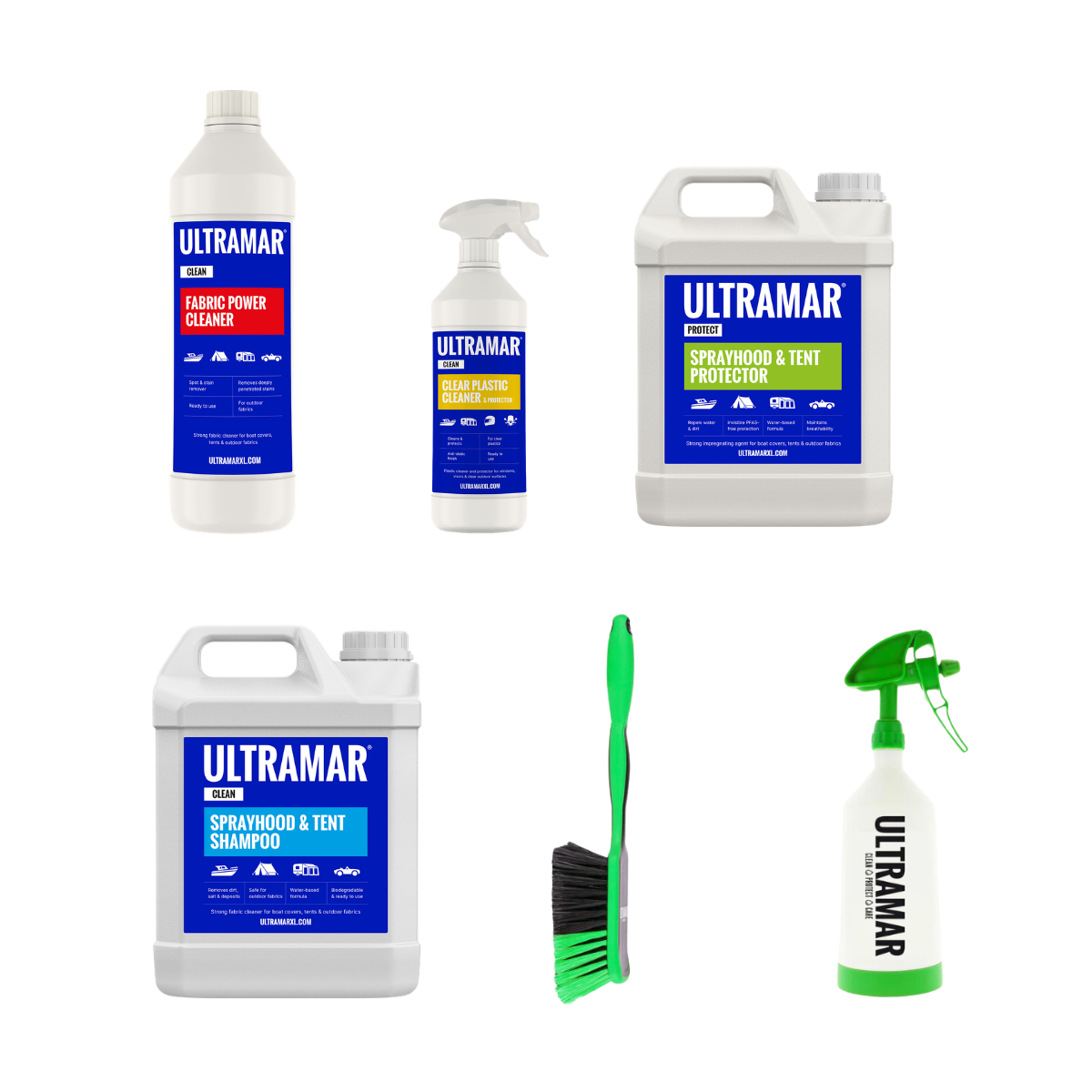
- Sprayhood & Tent Shampoo (cleaning, step 1)
- Fabric Power Cleaner (stain removal, step 2 – only if needed)
- Sprayhood & Tent Protector (synthetic) or Canvas & Cotton Protector (cotton/canvas) (protection, step 3)
- A soft brush
- A spray bottle or garden hose for rinsing
- Dry, calm conditions for the reproofing
Step 1: Clean the fabric thoroughly
Never reproof a dirty fabric. Dirt and old grime prevent the protective product from bonding properly. Always start with cleaning.
Pitch the tent or lay the awning out flat. Wet the fabric with water. Apply the Sprayhood & Tent Shampoo and work it in with a soft brush. Rinse thoroughly with clean water. Make sure no soapy residue remains, as this can cause staining.
Allow the fabric to dry completely before moving on. On a warm, sunny day this happens fairly quickly, but don't force it with a nearby heat source.
Step 2: Remove stubborn stains (only if needed)
Are there stains still visible after cleaning that haven't come out? Apply the Fabric Power Cleaner directly to the affected area. Leave it to soak in for at least fifteen minutes — longer is fine. Rinse thoroughly and allow the fabric to dry again.
Do not apply the Power Cleaner across the entire fabric. It is intended for targeted treatment of stubborn soiling, not as a general-purpose cleaner.
Step 3: Reproof the fabric
The fabric must be completely dry before you begin. Damp fabric absorbs the product less effectively.
Choose a dry, calm day and work outdoors. Pitch the tent or tension the awning so the fabric is held taut. Spray the appropriate protective product evenly across the entire surface. Don't miss any sections, as uneven application results in uneven protection.
For large surfaces, work in sections. Don't apply too much in one spot. A thin, even coat works better than a thick, uneven one.
How long should you wait after cleaning before reproofing?
Wait until the fabric is completely dry. On a sunny day outdoors this usually takes a few hours. In cool or overcast conditions it may take longer. Feel the fabric: if it still feels cool to the touch in shaded areas, it probably isn't fully dry yet. Give it more time.
If you used the Power Cleaner in step 2, rinse the fabric again thoroughly and allow it to dry out completely before applying the proofing treatment.
How long does it take to dry after reproofing?
After applying the protective product, the fabric needs time to dry and the treatment needs time to cure. Leave the fabric to dry outdoors for at least a few hours after reproofing. In ideal conditions — sunshine and low humidity — this goes faster.
Ideally, wait until the following day before using your tent or awning, to ensure the proofing has fully absorbed and the fabric is completely dry.
Is a PFAS-free waterproofing agent also effective in heavy rain?
Ultramar maintenance products are PFAS-free. PFAS-free does not mean less effective. The products are developed for water repellency in outdoor use across varying weather conditions. What determines the result is a combination of the fabric's condition, thorough cleaning beforehand, and correct application.
Bear in mind that no waterproofing treatment lasts forever. After heavy use or a busy camping season, a fresh treatment is often a smart move.
Maintenance: how often should you repeat this?
It depends on your situation. A tent that goes on holiday once a year for a week requires less maintenance than an awning that stays outside all summer. A good rule of thumb: check each spring or autumn whether water still beads off. If it doesn't, it's time for a fresh treatment.
Regular maintenance is far less expensive than replacing your gear early.
Frequently asked questions
Can I reproof without cleaning first?
We advise against it. The protective product won't bond well to a dirty fabric. Always clean first, let the fabric dry, and then apply the proofing treatment.
My tent is made of polycotton. Which product should I choose?
Polycotton is a blend of polyester and cotton. For most modern polycotton tents, the Sprayhood & Tent Protector is the right choice. Not sure? Check the manufacturer's label for the material percentages. If the fabric is predominantly cotton, choose the Canvas & Cotton Protector.
Can I apply the protective product to the clear plastic windows of my tent?
No. Always use the Clear Plastic Cleaner & Protector for clear plastic windows. Fabric waterproofing products are not suitable for plastic and can damage or cloud the material.
What if the water repellency is disappointing after one treatment?
Check whether the fabric was completely clean and dry when you applied the product, and whether you applied it evenly. A second treatment can often help improve the result.
Can I use the protective product in the washing machine?
The Sprayhood & Tent Protector and Canvas & Cotton Protector are designed for manual outdoor application by spray. Do not use them in the washing machine.
Have you cleaned your tent or awning and want to know exactly which product suits your material? The Sprayhood & Tent Protector is the right choice for polyester, acrylic and synthetic tent fabric. For cotton and canvas fabrics, use the Canvas & Cotton Protector. Both products are PFAS-free and easy to apply at home.