Roof tent, groundsheet and pop-top camper maintenance: the complete guide per application
A roof tent on your overland vehicle, a groundsheet under your tent setup, the fabric of your pop-top camper: each of these applications has its own maintenance needs. The fabric is exposed to rain, sun, mud and condensation, and that calls for an approach that fits the situation. In this article you'll find the best maintenance method and the right products for every application.
What materials are involved?
Outdoor fabrics used in roof tents, groundsheets and pop-top campers are almost always synthetic: polyester or a polyester-cotton blend (polycotton). Groundsheets are often made from a heavier-woven polyester, sometimes with a coating on the underside. Pop-top camper fabric is usually a lightweight polyester or polycotton that needs to breathe while still being water-repellent.
The inside of tent fabric deserves extra attention. It picks up dirt from condensation, contact and moisture that runs down the fabric. The material is the same as the outside, but the type of soiling is different.
How do you identify your material?
For most roof tents and pop-top campers, the material is listed in the manual or on a label attached to the fabric. Polycotton feels slightly softer and warmer than pure polyester. Pure polyester is smoother and has a slight sheen. A groundsheet is recognisable by its thickness and the often laminated or coated underside.
Not sure? Assume synthetic polyester. It's by far the most common choice in modern roof tents and pop-top campers.
What does this mean for cleaning?
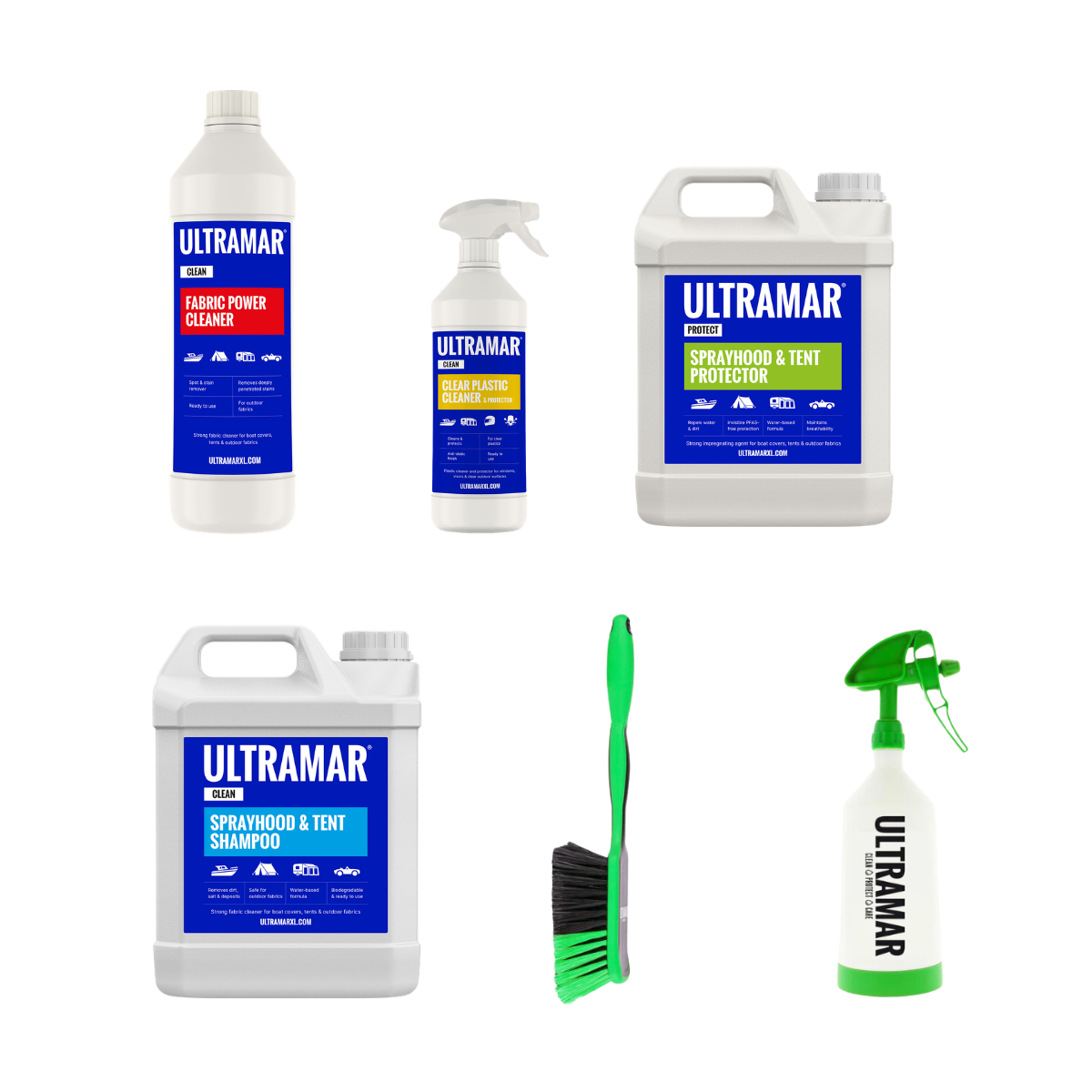
All applications start with the same step: cleaning. Use the Sprayhood & Tent Shampoo on the outside of the fabric. Dilute the shampoo with water, work it in with a soft brush and rinse thoroughly. This removes surface dirt, dust and light build-up that accumulates during use.
The same principle applies to a groundsheet. Lay it flat, clean it with the shampoo and pay extra attention to the edges, where soil and plant material can work their way into the weave.
You can also clean the inside of tent fabric with the Sprayhood & Tent Shampoo. Work gently with a soft cloth or sponge rather than a stiff brush to avoid damaging the fabric. Rinse thoroughly with clean water afterwards.
When do you use the Fabric Power Cleaner?
Sometimes surface cleaning isn't enough. Deep-set stains, stubborn discolouration or ingrained soiling don't always respond to the shampoo alone. In those cases, apply the Fabric Power Cleaner directly to the affected area.
Apply the Power Cleaner to the stain, leave it to penetrate for at least 15 minutes and then work it in with a soft brush. Rinse completely afterwards. Treat only the areas that truly need it — not the entire surface.
The same approach applies to the inside of tent fabric. If you spot stubborn soiling there, you can use the Power Cleaner in exactly the same way.
Specific points of attention per application
Roof tent on an overland vehicle or camper van
A roof tent is exposed to more wind, dust and road grime than a standard ground tent. Especially if you drive regularly with the tent folded away, dirt builds up in the folds and seams. Clean the roof tent thoroughly at least once per season, and more often if you frequently drive on unpaved roads.
Pay close attention to the seams and the lip around the tent when cleaning. Dirt collects there and can seep inside during rain. After cleaning, let the fabric dry completely before folding the tent away. Storing it while damp leads to staining and fabric degradation that becomes increasingly difficult to reverse.
Groundsheet
A groundsheet has two sides, each with its own challenges. The underside lies directly on the ground and takes on mud, moss and moisture. The top side is the floor of your tent and gets soiled through regular use.
Clean the underside after every trip if it has picked up soil or plant debris. The top side can be cleaned more frequently with a lighter touch. Always let the groundsheet dry completely before storing it. Never roll it up wet.
Inside of tent fabric
Condensation is the biggest culprit on the inside of tent fabric. Water that runs down the fabric leaves traces that can discolour over time. Clean the inside thoroughly at the end of the season using the Sprayhood & Tent Shampoo.
Treat stubborn spots on the inside with the Fabric Power Cleaner applied directly to the affected area. Handle the fabric with care and never use a stiff brush on the inside.
Pop-top camper
The tent fabric on a pop-top camper runs along the sides of the folding roof structure. This fabric may spend a long time rolled or folded during transit, allowing dirt to work into the folds. Always clean the fabric in the fully extended position so you can reach every crease.
Pop-top camper fabric is often lighter in weight than roof tent fabric. Work gently and avoid using a pressure washer, as it can damage the weave.
Which product suits which application?
- Roof tent (exterior): Sprayhood & Tent Shampoo for general cleaning. Fabric Power Cleaner for stubborn stains on specific spots.
- Groundsheet (top and underside): Sprayhood & Tent Shampoo to remove surface dirt. Fabric Power Cleaner where soiling has penetrated deep into the weave.
- Inside of tent fabric: Sprayhood & Tent Shampoo as the first step. Fabric Power Cleaner targeted at discolouration or stubborn soiling.
- Pop-top camper (fabric): Sprayhood & Tent Shampoo, applied carefully with a soft brush or sponge. Fabric Power Cleaner only on the spots that genuinely need it.
Frequently asked questions
Can I wash a roof tent in the washing machine?
We advise against it. Roof tent fabric is often too large and too heavy for a domestic washing machine. Machine washing can also compromise the water-resistant properties of the material. Hand cleaning with the Sprayhood & Tent Shampoo delivers better results without the risk.
Do I always need to re-proof after cleaning?
This article focuses on cleaning and stain removal. Whether you then want to re-proof depends on how the fabric responds to water. If water is no longer beading off properly, protection is the logical next step — but that falls outside the scope of this article.
How long should I leave the Fabric Power Cleaner to penetrate?
At least 15 minutes. For stubborn stains, you can leave it longer. Make sure the fabric doesn't dry out while the product is working; in direct sunlight it evaporates more quickly. Work in the shade where possible.
Can I clean the inside and outside on the same day?
Yes, you can. Start with the outside, rinse it thoroughly and then turn or fold the fabric so you can access the inside. Make sure the fabric dries completely before storing or packing it away.
What if my groundsheet has a coated underside?
Clean the coating carefully with the Sprayhood & Tent Shampoo and a soft sponge. Avoid abrasive brushes on the coated side. Check that the coating is still intact after cleaning. Use the Fabric Power Cleaner only on the textile top side, not on the coating.
Want to work out the best way to clean your roof tent or pop-top camper? Consider which step fits your situation: light cleaning with the Sprayhood & Tent Shampoo or targeted treatment with the Fabric Power Cleaner for stubborn spots. Together, these two products cover the majority of maintenance situations in overland and camping use.