Which waterproofing spray for your tent? Polyester, polycotton and cotton explained
Choosing the right waterproofing spray starts with knowing what your tent fabric is made of. For polyester and polycotton, use the Sprayhood & Tent Protector. For fully cotton or canvas tent fabric, use the Canvas & Cotton Protector. Using the wrong product can result in poor protection or reduced breathability. Read on to find out how to identify your tent material and which product is the right match.
What are you trying to achieve, and what is your situation?
You want to waterproof your tent so rain beads off the fabric. Maybe you've noticed the tent is letting water through, or you're getting it ready for a new season. Either way, it starts with one question: what material is my tent actually made of?
Tent fabrics come in three main types: fully polyester, polycotton (a blend of polyester and cotton), and fully cotton or canvas. Each material behaves differently and requires a different approach when waterproofing.
What tent materials are there, and how do you identify yours?
Polyester
Polyester is the most widely used material in modern tents. It's lightweight, dries quickly and holds up well against moisture. Most tunnel tents, dome tents and compact camping tents are made from polyester. Not sure? Check the label or packaging of your tent — polyester is almost always listed.
Polycotton
Polycotton is a blended fabric made from polyester and cotton, typically around 65% polyester and 35% cotton. It breathes better than pure polyester and often feels more substantial. Many folding camper tents, frame tents and larger family tents are made from polycotton. On the label, you'll see terms like polycotton, poly-canvas or TC (Tencate Canvas). Folding camper tents are almost always made from polycotton or canvas.
Cotton and canvas
Fully cotton tent fabric or canvas is less common in modern leisure tents, but you'll find it in classic expedition-style tents, safari tents and some larger folding camper or military tents. Canvas feels heavier than polyester or polycotton and takes longer to dry. The label will say cotton or canvas.
Which waterproofing spray suits which material?
Polyester tent: choose Sprayhood & Tent Protector
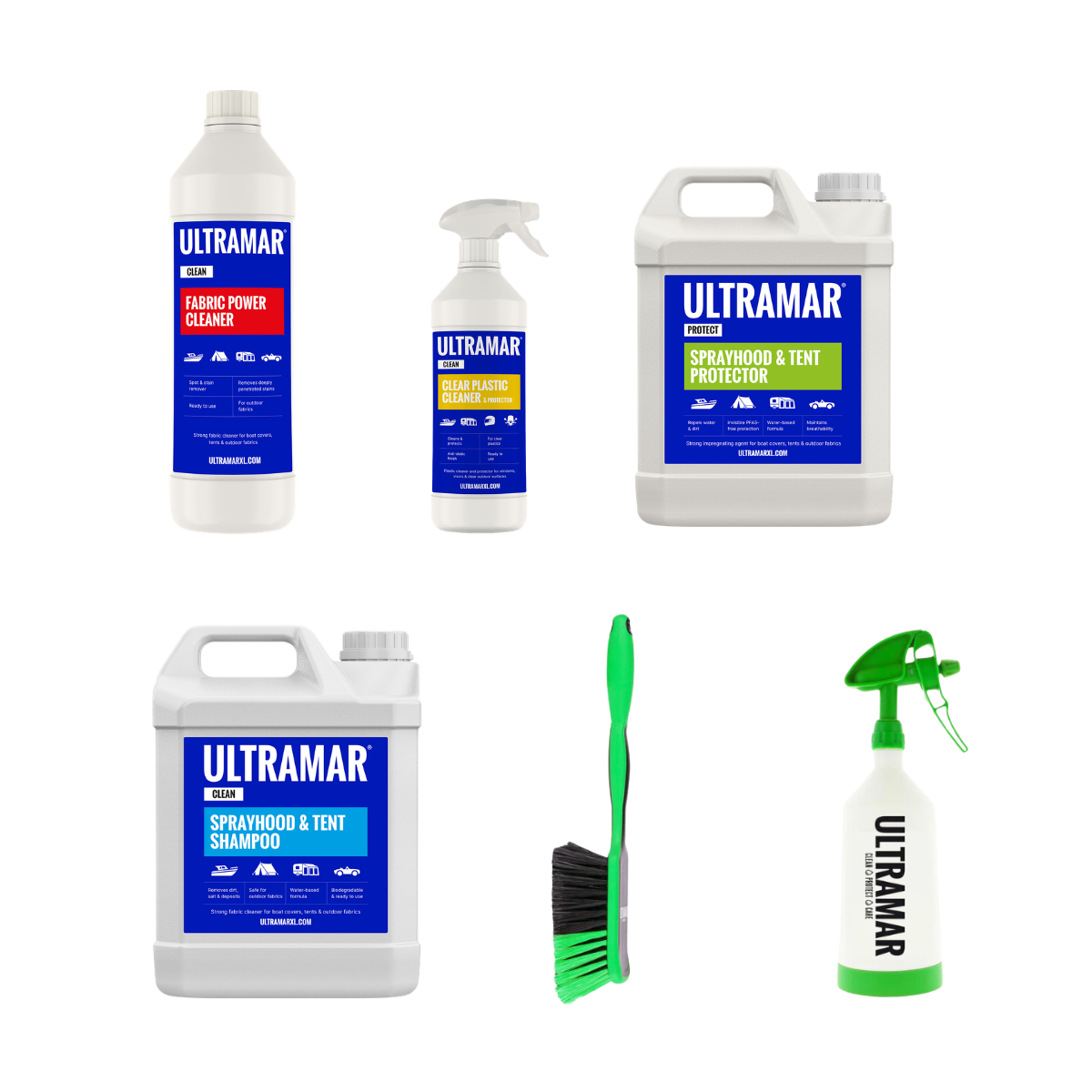
For a polyester tent, use the Sprayhood & Tent Protector. This product is specially developed for synthetic outdoor textiles. It restores water repellency and helps reduce the build-up of new dirt. The Sprayhood & Tent Protector is PFAS-free.
Polycotton tent: also choose Sprayhood & Tent Protector
For a polycotton tent, the Sprayhood & Tent Protector is also the right choice. Because polycotton contains a high proportion of synthetic fibres, the Sprayhood & Tent Protector is the best match for this material. This applies to polycotton folding camper tents as well. The Canvas & Cotton Protector is designed for fully cotton or canvas fabric, not for blended materials.
Cotton or canvas tent: choose Canvas & Cotton Protector
If your tent is made from pure cotton or canvas, use the Canvas & Cotton Protector. This product is specially formulated for natural fibres. It makes the fabric water repellent without compromising cotton's natural breathability — an important consideration, since using the wrong waterproofing spray can limit that quality.
How do you waterproof a folding camper tent?
Folding camper tents are almost always made from polycotton or canvas. In most cases, that means you'll be using the Sprayhood & Tent Protector. Always check the label or product information for your specific folding camper to confirm the material.
Waterproof the tent from the outside only. There is no need — or benefit — to treating the inside. Apply the product to a clean, damp tent by spraying the protector evenly over the entire outer surface, then allow it to dry thoroughly before storing or using the tent.
What is the difference in care between polyester and cotton?
Polyester and polycotton are more forgiving in use: they dry quickly, are less prone to water ingress and are easy to clean. Cotton and canvas tents require a little more attention. They can shrink when wet and must be completely dry before storing, otherwise moisture can cause discolouration. The Canvas & Cotton Protector helps keep the fabric water repellent, but thorough drying always comes first.
Regardless of material, the 3-step principle applies: start by cleaning with the Sprayhood & Tent Shampoo, then treat any stubborn stains with the Fabric Power Cleaner, and only then apply the waterproofing spray. Never apply a protector to a dirty tent — dirt that has already worked its way into the fabric won't be removed by a waterproofing product.
Recommendation by situation
- Polyester tent: Sprayhood & Tent Protector
- Polycotton tent or folding camper tent: Sprayhood & Tent Protector
- Fully cotton or canvas tent: Canvas & Cotton Protector
- Not sure about the material? Check the label. Does it say polyester, polycotton or TC? Go with the Sprayhood & Tent Protector. Does it say cotton or canvas without any polyester? Choose the Canvas & Cotton Protector.
Frequently asked questions
Can I use the Canvas & Cotton Protector on a polycotton tent?
We don't recommend it. The Canvas & Cotton Protector is developed for fully cotton or canvas fabric. For polycotton, the Sprayhood & Tent Protector is a better fit because it's suited to the synthetic component of the material.
Should I waterproof the tent on the inside as well as the outside?
No. Only treat the outside. The waterproofing spray works on the outer layer of the fabric. Treating the inside adds nothing and may affect how the product performs.
How often should I re-waterproof my tent?
It depends on how often you use it and the conditions it's exposed to. A clear sign that it's time for a new treatment is when water no longer beads off the fabric but instead soaks in or seeps through. After a busy season or following a thorough clean is a good moment to re-apply.
Do I need to clean the tent before waterproofing?
Yes. Always apply the protector to a clean tent fabric. Dirt and ingrained dust prevent the waterproofing spray from bonding properly. Clean the tent first with the Sprayhood & Tent Shampoo, let it dry, then apply the protector.
Are the products PFAS-free?
Yes. Ultramar maintenance products, including the Sprayhood & Tent Protector and the Canvas & Cotton Protector, are PFAS-free.
Now that you know what material your tent is made of, you know exactly which product you need. Find the right choice for your tent below and get started straight away.