Your tent leaks. Or more accurately: it feels like it leaks. You wake up with a damp sleeping bag, droplets on the inside, and that clammy feeling that won’t go away. Many people immediately think: “The fabric is ruined” or “The seams are bad.” But often the cause is somewhere else. Quieter. And honestly: more frustrating, because you only notice it once you know what to look for.
The hidden problem: water that stays on the fabric
A tent fabric shouldn’t “hold” water. Rain should bead up and roll off. When that stops happening, water sits on the surface for longer. And when water sits long enough, it starts to find a way in. Not because your tent suddenly became worthless, but because the conditions have changed.
You usually see it in three signs:
- Rain no longer beads but slowly soaks in or spreads out like a wet patch.
- The fabric darkens in places where water lingers.
- You get moisture on the inside in spots where something touches the wall (for example a bag, jacket, or sleeping bag pressed against it).
“But I see droplets inside, so it must be leaking, right?”
Not always. A lot of what people call “leaks” is actually a mix of two things:
- Condensation (moisture from breathing, wet clothes, cooking, or simply a cold night)
- Reduced water repellency, which makes water sit on the outer fabric longer and leaves the material feeling clammy faster
Condensation is normal. But when the outer fabric is less water-repellent, the difference between “normal condensation” and “everything feels wet” becomes much bigger. Then it looks like a leak, while the real issue is how the fabric handles water.
The quiet culprit: dirt you barely notice
Tent fabric gets dirty without looking obviously dirty. Think of:
- dust and sand working into the fibres
- smoke from a campfire or barbecue
- greasy film from hands, cooking vapours, or sunscreen
- airborne pollution settling on the surface
That thin layer makes a big difference. It can make water “cling” instead of rolling off. And it can stop protection from bonding evenly if you try to restore it later. So your tent can still be fine, but the outside no longer behaves the way it used to.
Why old protection doesn’t come back by itself
Many tents start out with a nice water-repellent finish. Over time, it wears down. Not in one weekend, but gradually. Rain, sun, packing and folding, rubbing against poles, transport in the car… it all adds up.
That’s why it’s so tricky: you often only notice after a night where everything turned clammy. Then it feels like it happened “all at once.”
Common misconceptions (that can make it worse)
- “I’ll just blast it with a pressure washer”
That can put unnecessary stress on the fabric and can push dirt deeper in. With outdoor fabric, gentle and targeted cleaning is the smarter approach. - “If I just waterproof it, the problem is solved”
Protection only works well on clean, dry fabric. On dirt, it can turn uneven, leading to patches that repel water and patches that don’t. - “I’ll do everything at once”
Good results come from a logical order. Clean first, then treat stubborn spots where needed, and only then protect.
What actually helps: think maintenance, not panic
A tent is not a throwaway item. That “leaking” feeling is often a maintenance signal. And maintenance is something you can do yourself at home (or at the campsite) without specialist tools.
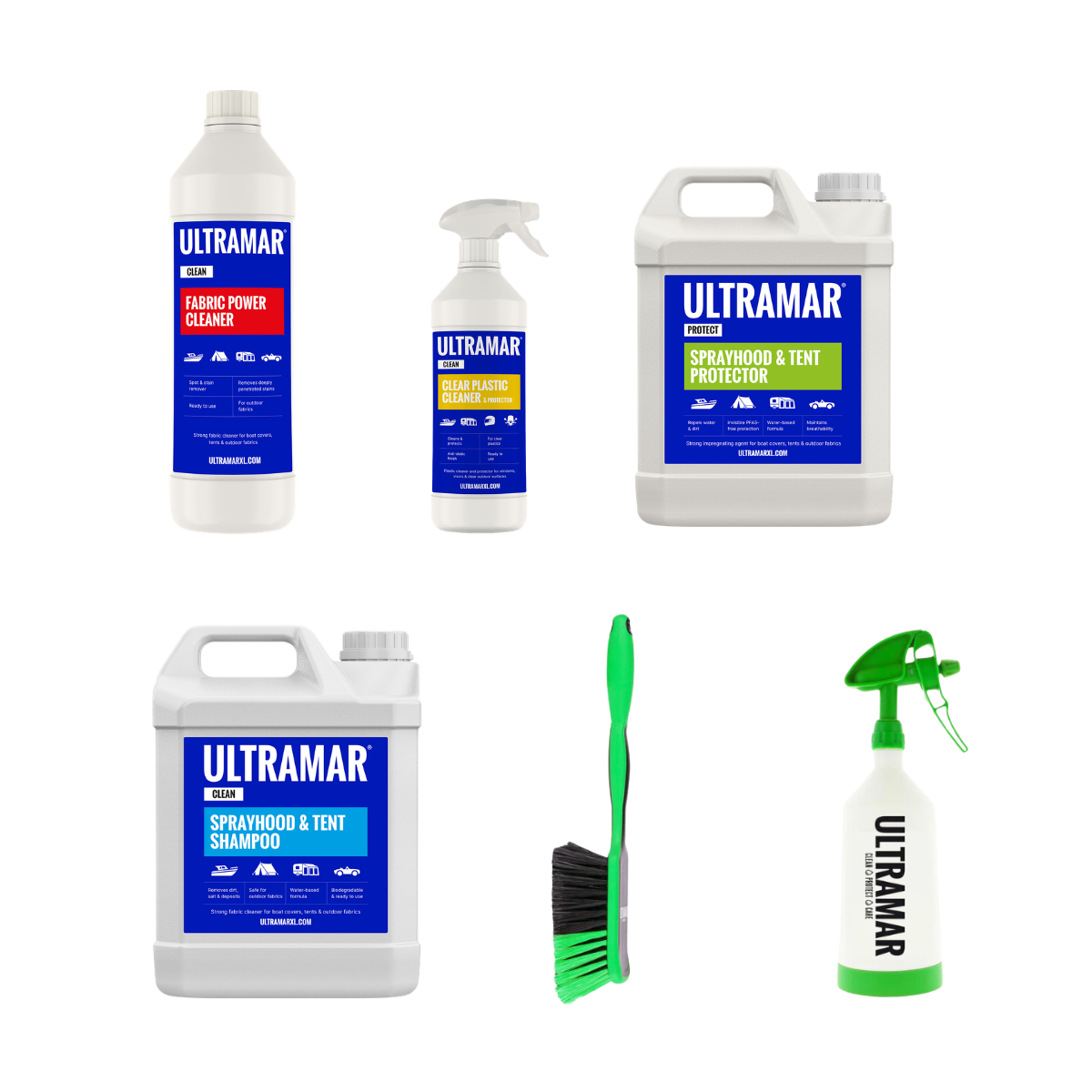
That’s why Ultramar always follows a clear three-step maintenance logic:
- Cleaning – to remove surface dirt and build-up.
- Stain removal – only where needed, for deeply embedded stains and stubborn contamination.
- Protection – to restore water repellency and help prevent dirt from bonding quickly again.
This isn’t a “trick.” It’s why the outcome becomes predictable. If you reverse the steps or skip one, disappointment is much more likely.
If you use Ultramar: what fits what?
If your tent fabric no longer repels water properly, it helps to start by identifying what you’re actually seeing:
- General dirt and a dull look
Start with a cleaner made for outdoor fabric, such as Ultramar Sprayhood & Tent Shampoo. - Marks that remain after cleaning
That’s often deeply embedded stains or stubborn contamination. Treat those areas in a targeted way with a stain remover such as Ultramar Power Cleaner (not as a “cleaner” for the whole tent). - After cleaning, water still doesn’t bead
Then it’s time to protect again. For many tent fabrics (synthetic outdoor fabrics), Ultramar Sprayhood & Tent Protector is a logical choice. For cotton or canvas, use a protector that matches that material, such as Ultramar Canvas & Cotton Protector.
Ultramar maintenance products are PFAS-free. That means: no long-lasting substances you would rather avoid around your home, garden, car, or campsite. PFAS-free is designed as a safer choice for people, pets, and the environment, without automatically being less effective for practical, everyday maintenance.
What does this mean for you?
- Don’t only look for “leaks”—watch what water does on the fabric: does it bead, or does it spread and linger?
- Moisture inside isn’t always damage: it can be condensation, or a sign the outer fabric is holding water.
- Work in steps: clean first, then treat stubborn spots, then protect if water repellency has faded.
- Don’t be too economical with product when protecting: you want even coverage. Too little often creates areas that repel water and areas that don’t.
For current availability, you can check the Ultramar website, Bol.com, or one of the official Ultramar dealers.