Waterproofing a boat canopy: bimini top, inside treatment, and PFAS-free choice step by step
You can waterproof your boat canopy or bimini top yourself, without any special tools or technical knowledge. The process follows three steps: clean first, tackle any stains where needed, then protect with a waterproofing agent. This guide walks you through each step, highlights what to watch out for on the inside, explains how long to allow for drying, and covers why choosing a PFAS-free product is becoming the new standard.
What do you need?
Make sure you have the following items on hand before you start:
- Sprayhood & Tent Shampoo for cleaning
- Fabric Power Cleaner for stubborn stains (only if needed)
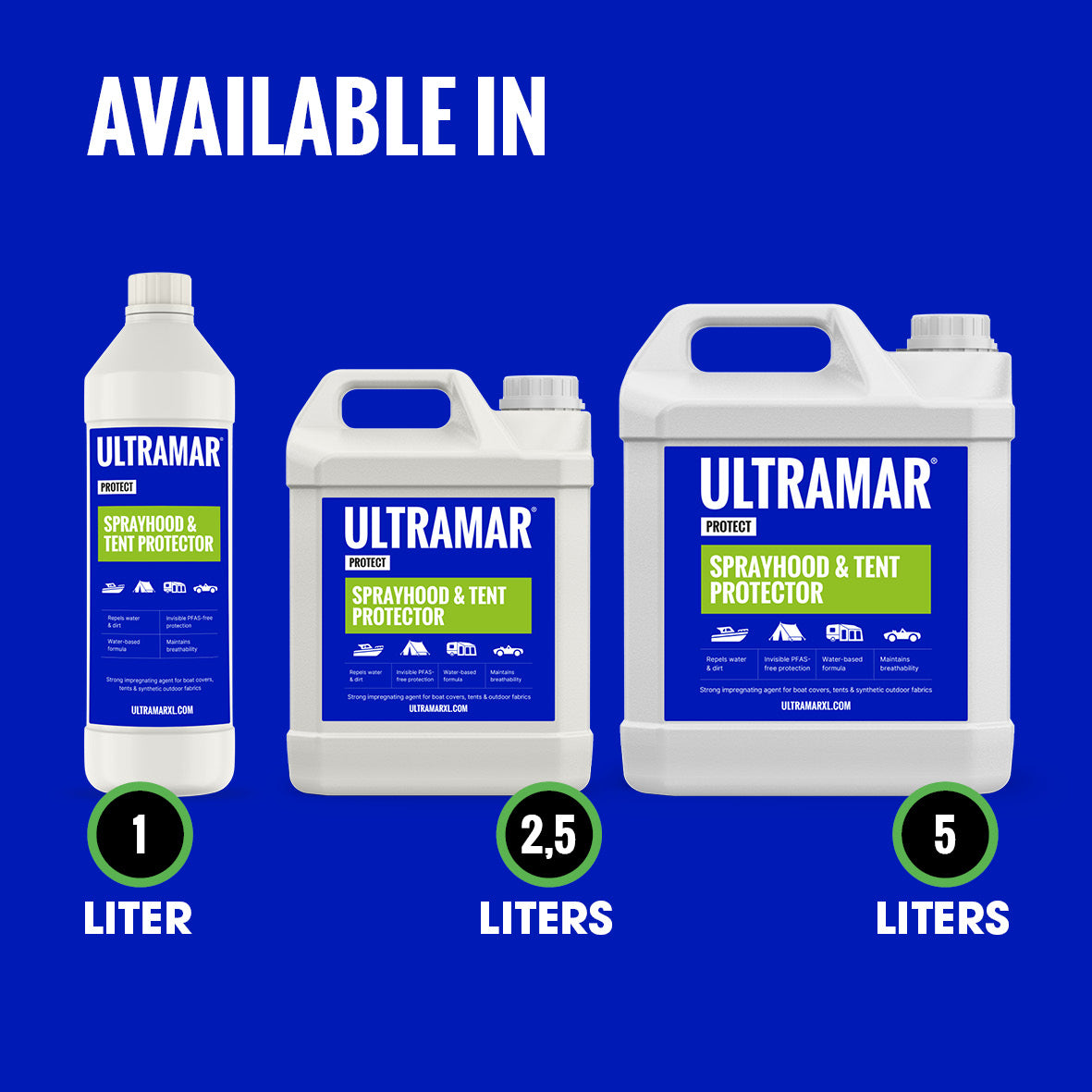
- Sprayhood & Tent Protector as the waterproofing agent
- A soft cleaning brush
- Clean water and a bucket
- A spray bottle for applying the protector
- A dry day, preferably sunny
Step 1: Clean the canopy thoroughly
Waterproofing agents only bond properly to clean fabric. Dirt, salt, and built-up grime will block the product and reduce its effectiveness. Always start with a thorough clean.
Wet the canopy with clean water. Then apply Sprayhood & Tent Shampoo across the entire surface. Work it in with a soft brush using gentle circular motions. Rinse thoroughly with plenty of clean water to make sure no soap residue is left behind.
Pay attention to the inside too. If the canopy is dirty or damp on the inside, clean that as well. Use the same shampoo and a soft brush, then rinse thoroughly. Moisture trapped on the inside can cause problems later, even after waterproofing.
Allow the canopy to dry completely before moving on. This can take a few hours depending on the outside temperature and humidity. Feel the material: if it still feels cool or slightly damp, wait a little longer.
Step 2: Remove stubborn stains (only if needed)
After cleaning, are there still stains or discoloration on the canopy? Tackle those specifically with Fabric Power Cleaner. This is a targeted treatment, not a step you apply across the entire surface as a matter of course.
Apply the Power Cleaner directly to the affected area. Leave the product to work for at least 15 minutes. For heavier soiling, you can leave it on longer. Then work it in gently with a brush and rinse thoroughly with clean water.
Allow the canopy to dry completely again before you start waterproofing. The fabric needs to be dry in order to absorb the protector properly.
Step 3: Waterproof with Sprayhood & Tent Protector
Sprayhood & Tent Protector is a PFAS-free waterproofing agent for synthetic outdoor fabrics such as polyester and acrylic. It restores the water-repellency of the fabric and helps prevent new dirt from bonding as easily.
Spray the product evenly over the dry canopy. Work in sections and make sure you cover the fabric thoroughly without letting the product pool or build up. Make sure you also reach the seams — these are often the first places where water starts to seep through.
Do you want to treat the inside as well? You can, but in most cases it is not necessary. The inside is less exposed to rain and UV. If you do want to treat it, apply a thin coat and allow it to dry fully. Make sure the area is well ventilated if you are working in an enclosed space such as a cabin or a boat shed.
How long does it need to dry?
Allow at least 24 hours of drying time before the canopy is fully exposed to rain again or folded away. In cold or humid conditions, giving it a little longer is a good idea. The water-repellency only reaches its full effectiveness once the product has been completely absorbed and dried.
Want to speed up the process? Heat helps. A warm, sunny day is ideal. Some users briefly warm the fabric with a heat gun on a low setting — this can improve adhesion. Always follow the instructions on the packaging when doing so.
Is waterproofing in a marina safe?
Sprayhood & Tent Protector is PFAS-free. This means it contains no persistent fluorinated substances that accumulate in water or soil. You can use it in a marina, but keep the spray pattern directed at the canopy. Avoid any overspray ending up in the water. Where possible, work on the quayside or in a shed instead.
Common mistakes
- Waterproofing without cleaning first: the product will not bond as well and the results will be disappointing.
- Waterproofing a canopy that is still damp: the protector will absorb unevenly.
- Applying Power Cleaner over the entire surface instead of targeting stains specifically: this is unnecessary and wastes product.
- Folding the canopy away too soon after waterproofing: always wait for the full drying time.
- Using fabric protector on plastic windows or clear panels: use a dedicated product for those, such as Clear Plastic Cleaner & Protector.
FAQ: waterproofing a boat canopy
How do I waterproof my bimini top myself?
Waterproofing a bimini top follows exactly the same process as a boat canopy: start by cleaning with Sprayhood & Tent Shampoo, then tackle any stains with Fabric Power Cleaner if needed, and finish by protecting with Sprayhood & Tent Protector. Make sure the fabric is completely dry before applying the product.
Should I also waterproof the inside of my boat canopy?
That is not generally necessary. The inside is less exposed to the elements. It is, however, a good idea to clean the inside thoroughly as part of step 1. Waterproofing the inside can be helpful in some situations, but for most users it adds little benefit.
Do standard waterproofing products for boat canopies contain PFAS?
Many traditional waterproofing agents contain fluorinated compounds that fall under the PFAS category. Ultramar's Sprayhood & Tent Protector is PFAS-free. You do not have to compromise on the quality of the water repellency.
How often should I waterproof my boat canopy?
This depends on how intensively the canopy is used and how long it is left outside. A good indicator: when water no longer beads off but starts soaking into the fabric, it is time to reapply the protection. With intensive use, that is often once or twice per season.
Can I use a waterproofing product on the plastic window of my canopy?
No, we do not recommend this. Fabric protectors are not suitable for plastic. For plastic windows and clear panels, use Clear Plastic Cleaner & Protector instead.
Ready to get started? Sprayhood & Tent Protector is the go-to product for synthetic boat canopies and bimini tops. PFAS-free, easy to apply yourself, and formulated for materials that need to perform outdoors.