Your tent is there to keep you dry, protected, and comfortable during your trip. Still, many common mistakes happen when it comes to tent maintenance. Not because it is difficult, but because a lot of misunderstandings continue to circulate.
Tent fabric can handle a lot. Sun, rain, wind, and dirt are part of outdoor life. But if you treat it the wrong way or skip important steps, it slowly loses its water-repellent performance and starts to look worn much sooner.
Misunderstanding 1: “A quick rinse is enough”
When your tent looks dirty, you want it clean fast. That often leads to:
- Scrubbing too hard in one spot.
- Using too much water without proper drying.
- Focusing only on visible stains and ignoring the rest of the fabric.
Outdoor fabric is strong, but it is not meant to be treated roughly. Working calmly and evenly usually gives a better and more consistent result.
Misunderstanding 2: “If it’s clean, it’s protected”
Cleaning and protecting are not the same thing. Cleaning removes dirt. It does not automatically restore the water-repellent layer.
Over time, sun, rain, and regular use reduce the fabric’s protective performance. That is normal. If you do not restore protection, moisture can soak in more easily and new dirt sticks faster.
Proper tent maintenance always follows three clear steps:
- Cleaning – removes surface dirt and general contamination.
- Stain removal – targets deeply embedded stains and stubborn contamination.
- Protection – restores water repellency and helps reduce future contamination.
Skipping one of these steps reduces the durability and final result.
Misunderstanding 3: “Strong products solve every stain”
Stubborn marks often make people reach for the strongest solution they can find. But a targeted approach works better.
Always start with normal cleaning. After that, you can clearly see which deeply embedded stains or difficult-to-remove discolorations still need attention. This way, you only treat what is necessary instead of over-treating the entire surface.
Misunderstanding 4: “Every protector works on every tent”
Not all tent fabrics are the same. Some are synthetic, such as polyester or acrylic. Others are natural fabrics like cotton or canvas.
Each material needs the right type of protection. If you ignore the material, the result may be uneven. The first step is simple: check what your tent is made of.
Misunderstanding 5: “Using less product saves money”
Being too economical often leads to uneven coverage. That can create stripes or areas that are less water-repellent.
It is also frustrating to run out of product halfway through the job. Using enough product ensures even coverage and reliable protection. Having a small amount left is useful for touch-ups or the next season.
Misunderstanding 6: “Tent maintenance is only for professionals”
Many people think outdoor fabric care is complicated or only for specialists. In reality, it is mainly about following the right order and using products designed for home use.
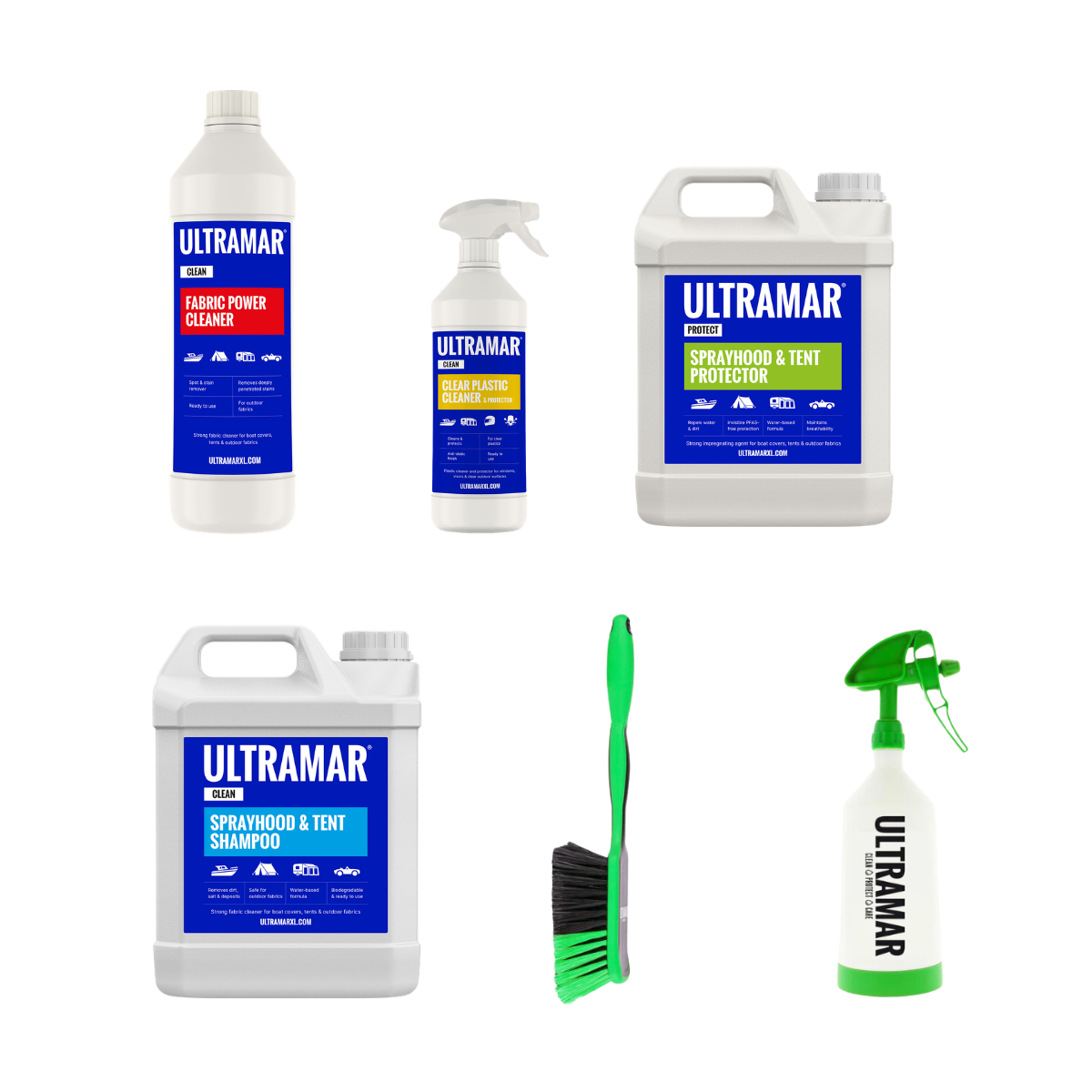
Ultramar is developed for consumers who want to maintain their outdoor fabrics themselves. The products are easy to use and follow a clear three-step system. Ultramar maintenance products are PFAS-free. This makes them safer for people, pets, and the environment, without reducing performance or durability.
Common camping habits that age your tent faster
- Packing the tent while it is still damp.
- Postponing maintenance until “after the season.”
- Only treating visible areas.
- Applying protection to fabric that is still dirty or wet.
You do not have to do everything perfectly. But if you follow the three steps — clean, remove stains, protect — and choose products that match your fabric, your tent will stay reliable and look better for longer.
What does this mean for you?
Think of tent maintenance as a clear process, not a quick fix. Identify your material, work carefully, and restore water repellency after cleaning. That way, you start every camping season with a tent you can trust.