A boat cover is made to be outdoors. Wind, sun and rain are part of normal use. But there is one combination that almost every boat cover struggles with over time: moisture + standstill. Not because you are doing something “wrong”, but because the conditions work against the fabric.
When you understand what is happening, you can prevent many problems. You will also recognise sooner when it is time for maintenance, instead of waiting until the damage becomes clearly visible.
Why standstill plays such a big role
When you are out on the water, everything moves. The cover sits tighter, there is more airflow, and moisture has less chance to stay in one place. During standstill, the opposite happens:
- Water remains longer on “low points”.
- Dew and condensation stay longer in and on the fabric.
- Dirt settles more easily because it is not rinsed away or dried out.
- The fabric becomes heavier and may start to sag.
Even without rain, standstill can still mean moisture. Think of cool nights with morning dew, or a cover that heats up during the day and cools down quickly in the evening.
What moisture does to your boat cover
Moisture itself is not the problem. It becomes an issue when it remains present for a long time. Then you often see effects like these:
- Dirt lines where water repeatedly stays and dries.
- Dull areas caused by a buildup of dirt and residue.
- Discolouration due to long-term weather exposure and ingrained contamination.
- Reduced water repellency: water absorbs faster or spreads as a thin film.
It is important to realise that protection on fabric is not permanent. Weather, friction and contamination slowly reduce water-repellent performance. When water stays in the fabric more often, this process speeds up.
The quiet influences: shade, trees and poor water run-off
Some mooring spots are simply tougher on boat covers than others. Not because your boat is “wrongly” placed, but because the local conditions are different.
- Shade means slower drying.
- Trees cause extra contamination that settles into damp fabric.
- Poor water run-off (sagging) almost always leads to standing water.
- Sheltered marinas often have less wind, so natural drying is reduced.
The result is usually not dramatic straight away. It builds up over time. First small edges, then larger marks, and after a season the cover can suddenly look much worse.
Common misunderstandings
“If I only protect it, it will stay fine”
Protection works best on a clean, dry surface. Applying protection over built-up contamination traps that dirt in the fabric. This leads to uneven results and a cover that looks tired more quickly.
“A quick hard rinse is the fastest solution”
Spraying hard may seem effective, but it is often too aggressive for outdoor fabric. It can stress seams and material and push dirt deeper into the fabric. Gentle cleaning is usually safer and more effective.
“A boat cover should just be able to handle it”
That is true, but even strong outdoor fabrics need maintenance. Without care, every material gradually loses water repellency and becomes more sensitive to contamination.
How to recognise early warning signs
You do not have to wait until a boat cover looks “bad”. Watch for these early signals:
- Water beads less and spreads more easily.
- Damp patches remain visible longer after dew or rain.
- Lines appear along recurring water paths.
- The fabric looks duller or dirtier than usual.
If you notice this, it is usually a good moment to plan maintenance. The fabric will be easier to clean and the cover will stay in good condition for longer.
Maintenance that fits how boat covers are really used
Boat covers often remain in the same position for weeks or months, especially during periods of limited use or long stays in the marina. That is why maintenance works best as a clear sequence, not as a single quick fix.
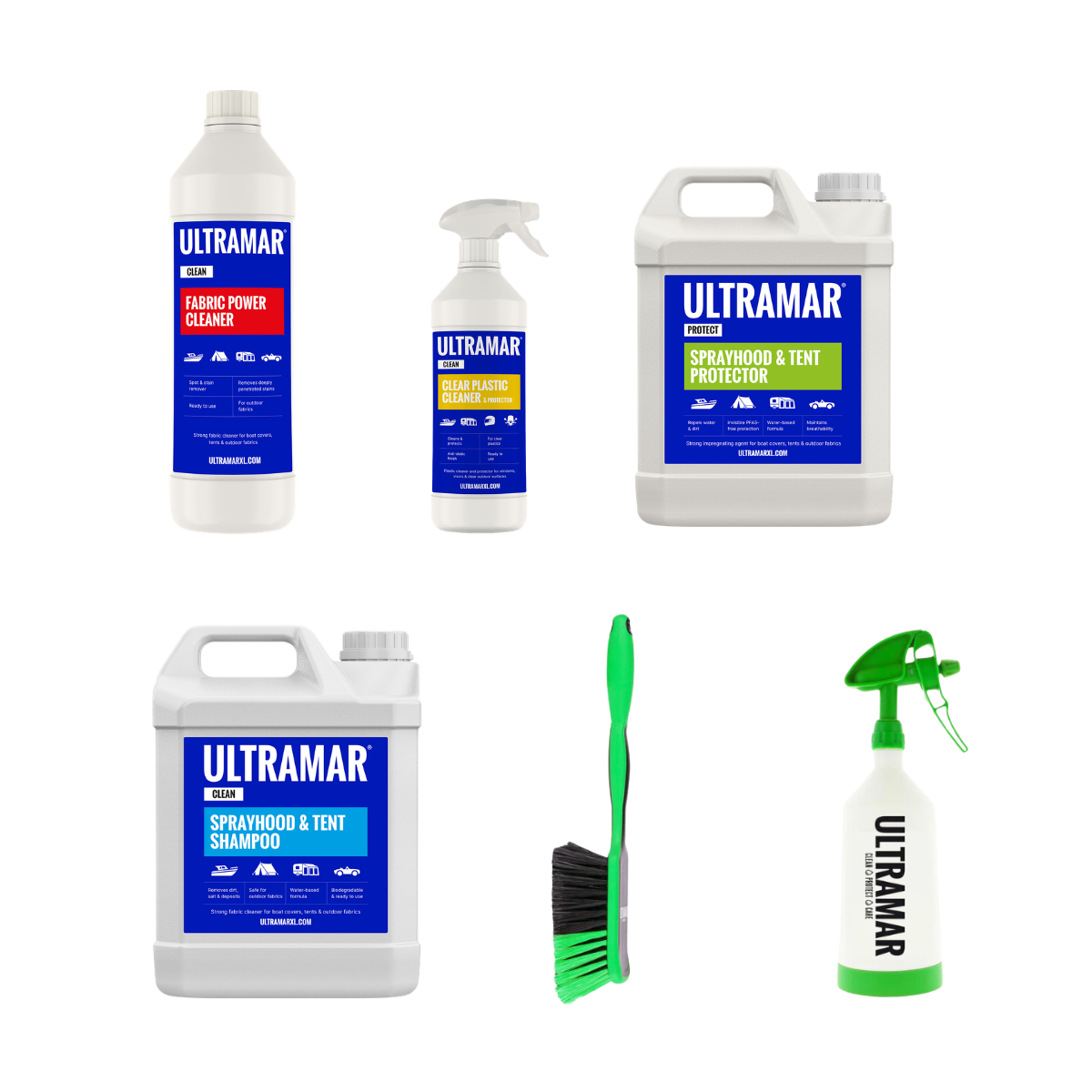
Ultramar follows a proven three-step approach:
- Cleaning – removes loose dirt and general contamination.
- Stain removal – for deeply embedded stains, stubborn contamination and difficult-to-remove discolouration that remains after cleaning.
- Protection – restores water repellency and helps reduce future contamination.
Ultramar maintenance products are PFAS-free. This is safer for people, pets and the environment, and suitable for use at home. PFAS-free does not mean less effective, but a conscious choice for reliable protection without persistent substances.
The right protector depends on the material: synthetic boat covers require different protection than cotton or canvas. Transparent plastic windows should always be maintained separately and never treated with fabric protection products.
What does this mean for you?
- See moisture and standstill as a normal part of the boating season and periods of limited use.
- Check a few times per season how water behaves on your cover.
- Deal with early contamination in time; it saves effort and delivers a better result.
- Work in steps: clean first, treat stubborn stains next, and protect only on clean, dry fabric.
For current availability, you can check the Ultramar website, Bol.com or one of the official Ultramar dealers.