A convertible roof is made to live outdoors. But “outdoors” is never just one thing. It is rain, sun, wind, dust, temperature changes, and sometimes weeks of standing still. And it is the mix that decides how your roof looks after a season — and how it behaves when you want to drive with the top down again.
When you understand what is happening, maintenance feels less like a chore and more like common sense. Not to make the roof “new”, but to keep it clean, water-repellent, and looking good for longer.
Rain: water always finds the weak spot
Rain itself is not the main problem. The real issue is what rain carries with it, and what gets left behind when everything dries.
- Dirty runoff flows over the fabric and can leave a dull, grey film as it dries.
- Moisture that lingers on folds and seams can create visible tide marks and discoloration sooner.
- When water stops beading, it stays on the roof longer. That gives dirt more time to stick, and cleaning becomes harder.
A roof that has lost its water-repellent effect often seems to get worse “all of a sudden”. In reality, it is gradual: water beads a little less each time, and after every shower a little more stays behind.
Sun: the quiet wear-and-tear machine
Sun can feel harmless, but over time it is one of the biggest reasons a convertible roof starts to look tired.
- Fading: colours become duller, especially on the parts that are always on top.
- A drier, flatter look: the surface can start to look matte and worn.
- Dirt shows faster: a roof that looks dull often holds onto grime more easily — you simply notice it sooner.
The tricky thing about sun is that you only see the effect once it has already happened. That is why it helps to think ahead, not only react when the roof looks dirty.
Standing still: the roof does not move, but the weather does
Many convertibles spend a big part of the year parked. And that is exactly when the roof can take the most punishment.
- Dirt builds up: dust and outdoor deposits sit in place and gradually settle in.
- Folds stay folds: crease lines and edges can develop more noticeable marks over time.
- Water sits longer: especially if the car is parked slightly uneven, or drainage is not ideal.
So even if you hardly drive, the roof can still look “older” faster — simply because dirt and moisture have more time to cling to the fabric.
Why your convertible roof can look dirty even when you barely use the car
A convertible roof is textile. And textile behaves differently from paintwork or glass. It has texture, and that texture can trap dirt. Sometimes you see it straight away as a darker haze. Sometimes you only notice it when the roof gets wet and the colour changes.
A common assumption is that rinsing is enough. For loose surface dirt, it can help. But if contamination sits deeper in the fabric, rinsing will not remove it. It may look better briefly, but the discoloration often returns quickly.
The three steps that always come back in proper maintenance
Whether you want to treat one area or refresh the whole roof, good maintenance follows the same logic. Not as a “trick”, but because that is how outdoor fabric works.
- 1) Cleaning – remove loose dirt and general contamination. This is the base. Without it, problems stack up.
- 2) Stain removal – only when needed. For deeply embedded stains, stubborn contamination, or difficult-to-remove discoloration that remains after normal cleaning.
- 3) Protection – restore the water-repellent effect. Protection makes future cleaning easier, but it does not clean on its own.
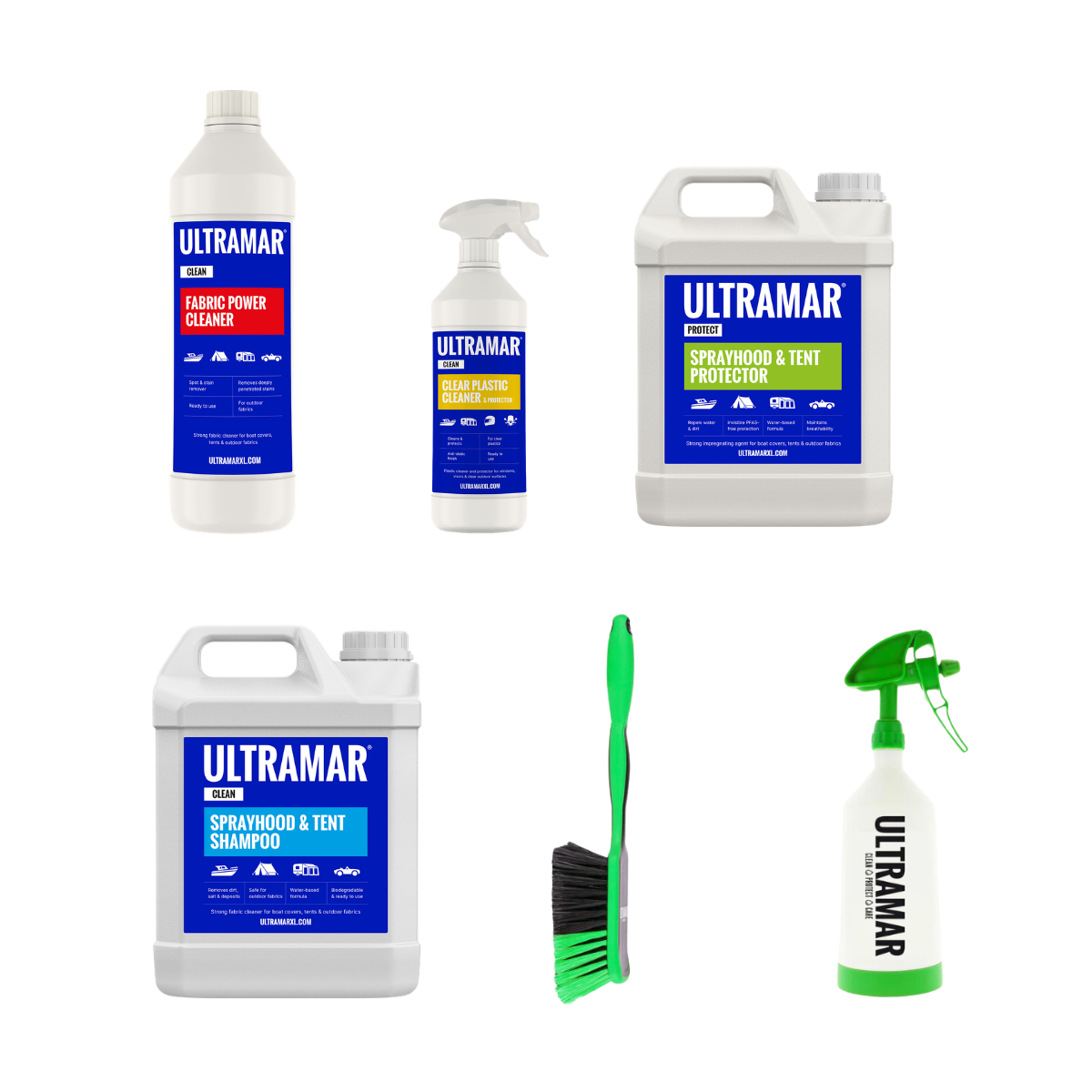
This is also the logic behind Ultramar: maintenance products for consumers, designed for home use, with a clear order of steps. Ultramar maintenance products are PFAS-free, which makes them a safer choice for people, pets, and the environment — without being weaker or less effective in everyday use.
Common misunderstandings
- “I protect first, then it stays clean.” Protection works best on a clean, dry roof. Protecting over dirt leads to uneven results.
- “A hard blast with water is quicker.” With outdoor fabric, speed is less important than control. Spraying too hard can push dirt deeper and put extra strain on seams.
- “All stains are the same.” Some marks disappear with normal cleaning. Others sit deeper and need targeted stain removal.
- “It is still waterproof, so I do not need to do anything.” Water-repellent is not the same as “watertight”. When water stops beading, it stays longer — and maintenance becomes harder over time.
What does this mean for you?
Take a look at your roof after a rain shower. Does the water bead and run off nicely? Or does it sit and slowly soak in? Also watch for matte areas, light discoloration, and marks along seams or crease lines. These are often the first signs that rain, sun, and standing still are leaving their mark.
If you clean in time, tackle stubborn contamination only where needed, and then protect again, the fabric stays cleaner and more water-repellent for longer. And every next cleaning job becomes noticeably easier.