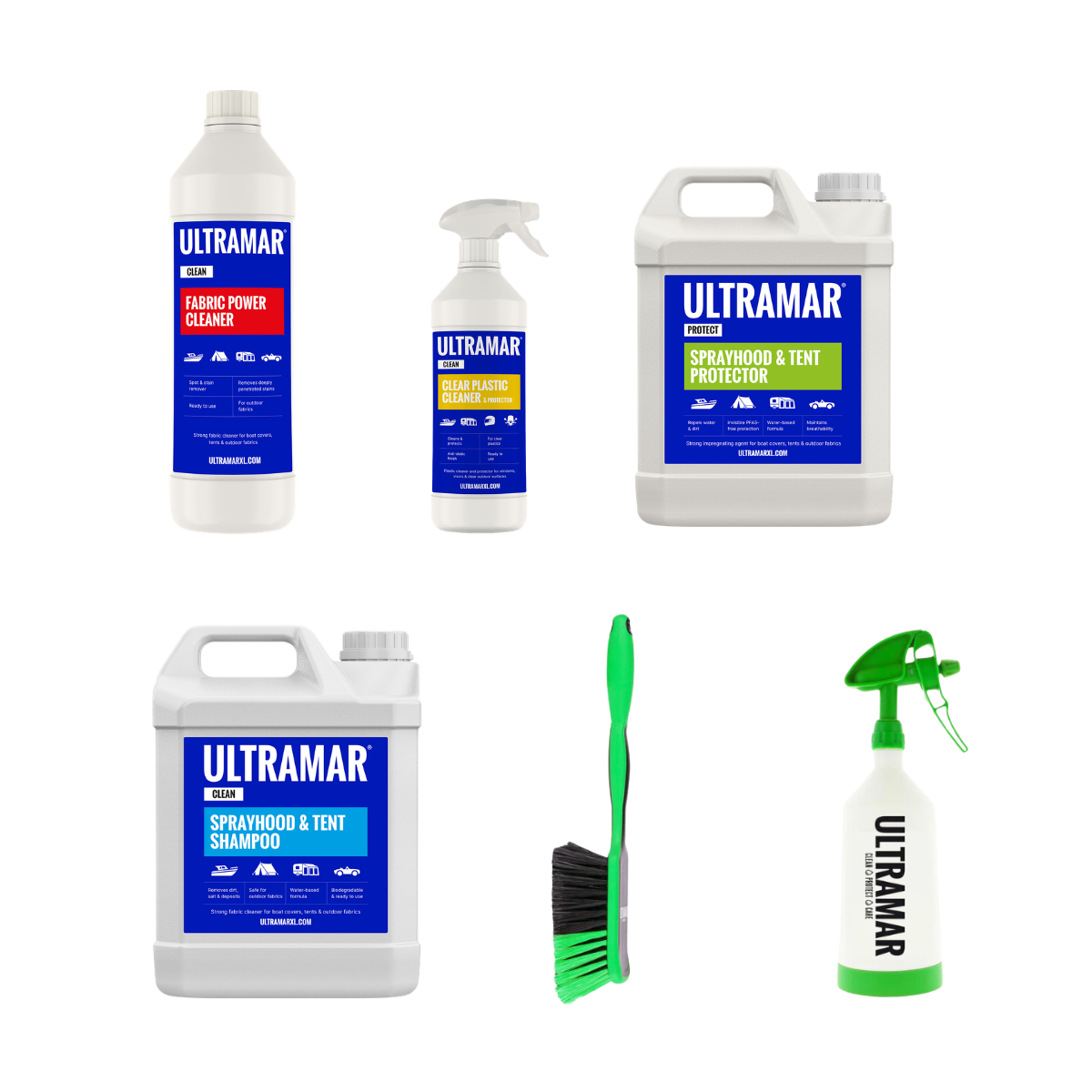
A boat cover looks tough, but it is more sensitive than you might expect. Many problems are not caused by weather or wear, but by well-meant cleaning attempts. Products that work fine around the house are often unsuitable for outdoor fabric. Below you can read what you should avoid using on a boat cover — and why.
1. All-purpose cleaners and household products
An all-purpose cleaner, dish soap or degreaser may seem convenient. It smells fresh and cleans quickly. For a boat cover, however, this is usually a poor choice.
- They are not made for outdoor fabric
- They often leave residues in the material
- They reduce the water-repellent performance
The result: the cover may look clean, but it gets wet and dirty more quickly.
2. The pressure washer
Many people use one to clean “quickly and easily”. On a boat cover, a pressure washer often causes more harm than good.
- The fabric fibres are forced open
- Seams and stitching can be damaged
- Dirt is pushed deeper into the fabric
What looks clean can actually be the start of faster wear.
3. Hard brushes and scouring pads
When dirt does not come off easily, it is tempting to scrub harder. That is understandable, but risky.
- The surface of the fabric can be damaged
- The cover becomes rougher and attracts dirt more easily
- The lifespan is shortened
A boat cover does not need aggressive scrubbing to become clean.
4. Applying protection to a dirty cover
Protecting always sounds like a good idea. But applying a protective product to a dirty cover has the opposite effect.
- Dirt becomes fixed in the fabric
- Stains remain visible
- The protection works unevenly
Protection is always the final step, never the first.
5. Products that promise “all-in-one” results
Cleaning, stain removal and protection in one step sounds attractive. In practice, this rarely works well for outdoor fabric.
- Cleaning is often insufficient
- Deeply embedded dirt remains
- The protective effect does not last as long
A boat cover needs a clear order, not shortcuts.
6. Using the wrong product for the wrong material
Not every boat cover is the same. Synthetic fabrics and natural fabrics react differently to maintenance.
- What works for canvas is not automatically suitable for synthetic fabric
- Products for plastic windows should never be used on fabric
Good maintenance starts with knowing which material you are treating.
Why this matters
Replacing a boat cover is expensive. Many problems do not appear all at once, but develop gradually through incorrect use. By avoiding unsuitable products, the fabric stays looking good, strong and water-repellent for longer.
What does this mean for you?
Choose products that are specifically intended for outdoor fabric and for use at home. Always work in a logical order: clean first, deal with stubborn contamination next, and only then apply protection. This gives you control, confidence and results that last.