It’s usually time to protect your tent again when the fabric no longer makes water bead up and roll off. If rain starts soaking into the cloth, the tent stays wet for longer, or it gets dirty faster, the water-repellent layer is wearing off and a new protective treatment makes sense.
Direct answer: 6 clear signs
- Water no longer beads: drops soak in instead of sitting on top and rolling off.
- The fabric stays damp for a long time: after rain or morning dew it takes much longer to dry.
- Your tent gets dirty faster: dust and grime stick more easily and are harder to remove.
- Dark wet patches remain visible: especially on the roof or near edges and high-runoff areas.
- After cleaning, the effect is gone: you notice less water repellency after a wash.
- Heavy use and weather: lots of sun, wind, rain, and friction (transport, rubbing, branches) make protection fade faster.
Why tent protection fades over time
Tent fabric takes a beating. Sunlight, rain, dirt, and friction work on the surface every trip. Cleaning also wears down the water-repellent layer little by little. That’s normal. Protection is maintenance: you reapply it when you notice the fabric is no longer performing the way it should.
How often should you re-protect your tent?
There isn’t one fixed schedule that fits every tent. It depends on how often you camp, the weather you camp in, how you store the tent, and how you clean it. Frequent use, strong sun, wet conditions, and lots of rubbing usually mean you’ll need to protect sooner.
A practical habit: check at the start of the season and after a few wet weekends. If you’re unsure, do the simple “bead test” below.
The quick check: the “bead test”
- Make sure the tent fabric is dry.
- Sprinkle a little water on a few areas (roof, sides, and edges).
- Watch what happens: if water beads clearly, protection is still okay. If water soaks in, it’s time to protect again.
Important: protection only works on a clean, dry tent
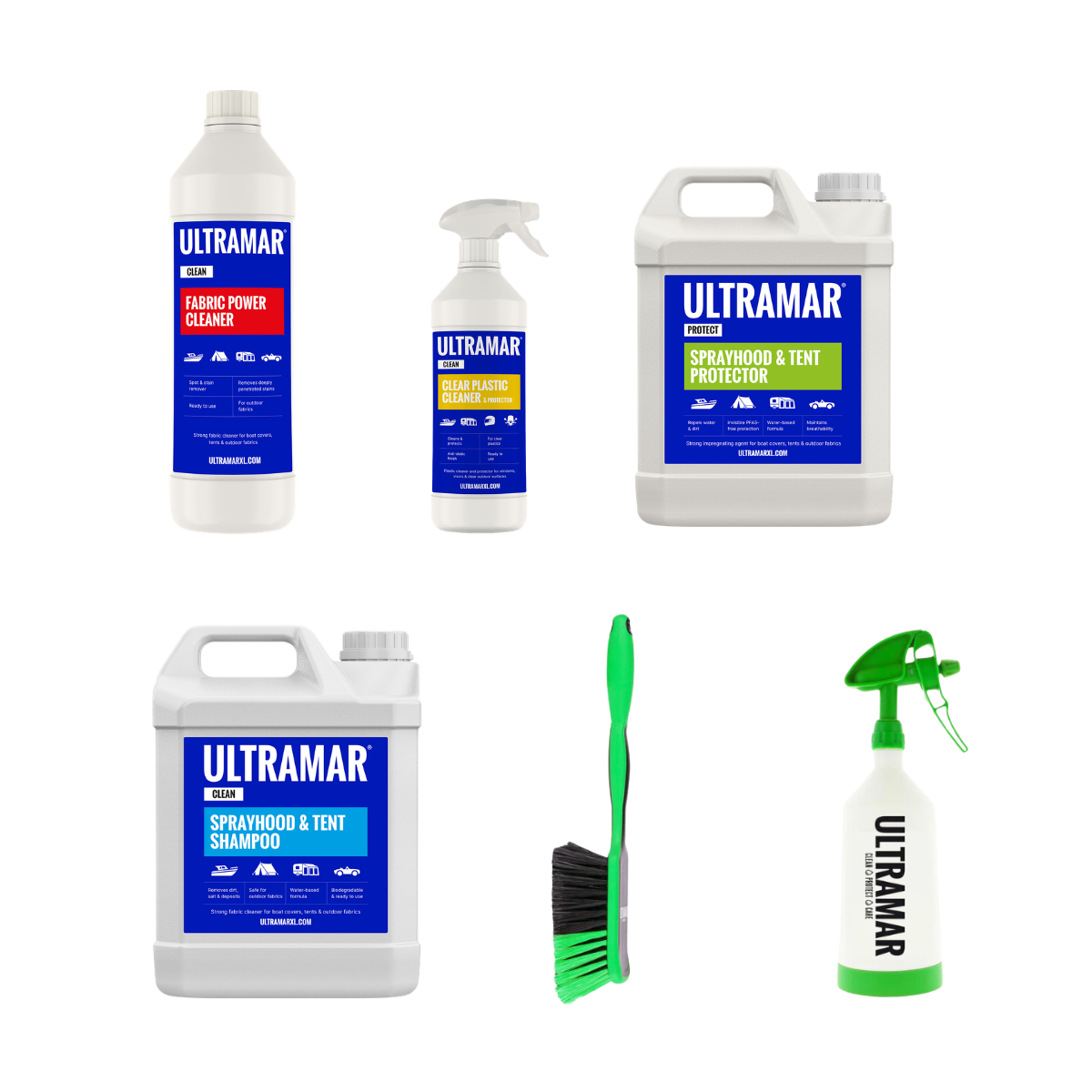
If you protect over dirt, you basically lock that dirt in. New grime will stick faster and the finish can look patchy. That’s why Ultramar always follows a proven 3-step maintenance process: clean first, then protect. Step 2 is only for areas with stubborn marks that remain after cleaning.
The Ultramar 3-step maintenance process for tent fabric
Step 1 – Cleaning
Cleaning removes surface dirt and general contamination. This is the base for an even result.
- Product: Ultramar Sprayhood & Tent Shampoo
- Why: clean fabric absorbs protection more evenly and stays looking better for longer.
Step 2 – Stain removal (only if needed)
If, after cleaning, you still see clear patches that won’t come out, this is step 2. It’s a targeted treatment, not something you use over the whole tent.
- Product: Ultramar Power Cleaner
- Suitable for: deeply embedded stains, stubborn contamination, difficult-to-remove discoloration.
- Use it like this: only on the spots that need extra help, after step 1.
Step 3 – Protection
Protection restores water repellency and helps new dirt stick less quickly. Only apply it when the fabric is truly clean and completely dry.
- For synthetic tent fabrics (often polyester): Ultramar Sprayhood & Tent Protector
- For cotton/canvas or fabrics with lots of natural fibers: Ultramar Canvas & Cotton Protector
Practical tips: what to do and what to avoid
Do
- Test a small area first if you’re unsure about the fabric or colour fastness.
- Choose a dry day or a place where the tent can dry calmly without interruption.
- Use enough product for even coverage. Being too economical often leads to patchy protection and weaker results.
- Focus on high-exposure areas like the roof, corners, and edges where water runs off.
Don’t
- Don’t protect over dirt. Protection is not a cleaner.
- Don’t use a pressure washer on tent fabric. It can stress the fabric and seams.
- Don’t use household cleaners as a substitute for step 1. Results can be unpredictable.
- Don’t apply on damp fabric. Protection won’t bond as well.
What do you need?
What you need depends on the condition of your tent and the fabric type.
- For almost every tent: Ultramar Sprayhood & Tent Shampoo (step 1)
- Only for stubborn areas: Ultramar Power Cleaner (step 2)
- For protection: Ultramar Sprayhood & Tent Protector (synthetic) or Ultramar Canvas & Cotton Protector (natural-fiber heavy) (step 3)
If you want to do everything properly in one go, Ultramar also offers maintenance bundles that combine the right products. Bundles often have a price advantage compared to buying products separately. Choose a slightly larger size rather than the bare minimum: running out mid-job is inconvenient, and using too little can reduce the result. Having extra is useful for touch-ups and future maintenance.
FAQ
Can I just protect my tent again without cleaning it?
It’s better not to. Protection works best on clean, dry fabric. If you skip cleaning, dirt can get sealed in and coverage is often less even.
My tent is clean, but water only beads a little. Should I protect it already?
If water no longer beads clearly and starts soaking in faster, it’s sensible to protect again. That helps the tent dry faster and makes new dirt stick less easily.
Do I always need Power Cleaner?
No. Power Cleaner is step 2 and only for deeply embedded stains, stubborn contamination, or difficult-to-remove discoloration that remains after step 1.
Which protector should I choose?
Choose based on the material: for synthetic tent fabric (often polyester), use Ultramar Sprayhood & Tent Protector. For cotton/canvas or fabrics with lots of natural fibres, use Ultramar Canvas & Cotton Protector.
Does protection also help against dirt?
Yes. Protection restores water repellency and helps reduce how quickly new grime sticks. But it doesn’t replace cleaning.
Quick decision guide: when to protect again
- Does water soak into the fabric? Then it’s time.
- Does the tent stay wet longer or get dirty faster? Then re-protection is a smart next step.
- Not sure? Do the bead test in a few spots.
Ultramar
Ultramar helps you clean, maintain, and protect tent fabric and other outdoor fabrics yourself. Ultramar maintenance products are PFAS-free, safe and practical for home use, and based on a proven 3-step maintenance process: Cleaning, Stain Removal, and Protection.
For current prices and availability, you can check the Ultramar website, Bol.com, or one of the official Ultramar dealers.