You want your boat cover to look good. Fair. But in real life, maintenance often takes more time, more effort, and more frustration than you expected. Not because you’re doing it “wrong”, but because boat covers go through a lot — and because a few common misunderstandings keep turning a simple job into repeated work.
Here’s why it often becomes harder than it has to be — and how to make it feel simple again. No technical talk. No drama.
1) You see dirt, but you miss the layer underneath
A boat cover can look “just dirty”. Quick rinse, quick scrub, done. The problem is: a lot of contamination isn’t sitting loosely on top. It builds up layer by layer. Think of:
- dirt that works its way into the fabric
- stains that gradually set deeper
- a dull, grey film that stays even after cleaning
If you keep washing over that, you end up repeating the same work. It feels like you’re doing a lot, but the result stays “almost”. That costs time.
2) You expect one step to do everything
This is one of the biggest time-wasters: you hope one cleaning session will also remove stains and make the fabric water-repellent again. It sounds efficient, but it often works against you.
Outdoor fabric care usually has three separate goals:
- Cleaning (remove loose dirt and general contamination)
- Stain removal (treat deeply embedded stains and stubborn contamination where needed)
- Protection (restore water repellency and make new dirt less likely to stick)
If you mix those steps up or try to combine them, you often create double work. You clean today, again next week — and it still gets dirty or absorbs water faster than you want.
3) You start too late (and then you have to catch up)
Many people only begin when the cover clearly needs attention. That’s understandable — you’ve got better things to do. But “too late” often means more built-up contamination, more discoloration, and more spots that won’t shift with normal cleaning.
Result: you spend longer, you repeat more often, and it’s harder to get an even finish.
4) You work too big, when “smaller thinking” is faster
A boat cover is a large surface. That makes it tempting to want everything “perfect” in one go. But with large areas, you save time by breaking it down:
- start with general cleaning
- then treat only the areas that still need extra help
- only after that, apply protection evenly across the whole fabric
If you try to “do stains everywhere” from the start, you use more time and more product than needed.
5) You underestimate what protection does for you
Protection can sound like an optional extra. Something you’ll do later. But this step often decides how much time you’ll spend next season.
When an outdoor fabric loses its water repellency, moisture soaks in faster. Dirt sticks more easily. And in wet weather you’re more likely to see darker, damp patches that linger. That means: more cleaning, more scrubbing, more starting over.
So protection isn’t “more work”. It’s often less work later.
6) You use too little product (and end up doing it again)
This happens more than you’d think. You try to be economical, spread it too thin, or aim to “make one bottle last”. With a boat cover, that can backfire.
- Too little product can lead to an uneven result.
- You miss the areas that need extra attention (seams, corners, high-wear spots).
- You end up doing touch-ups — and touch-ups take time.
Having a bit extra is also useful for quick touch-ups and future maintenance.
7) You don’t have a simple routine, so you keep re-thinking it
If you have to decide every time “What comes first?” or “Why does this keep coming back?”, you lose time. Not only in the work itself, but in doubt, delay, and restarting.
A simple, fixed logic helps:
- Cleaning for the basic job
- Stain removal for what’s still visible after cleaning
- Protection to keep results for longer
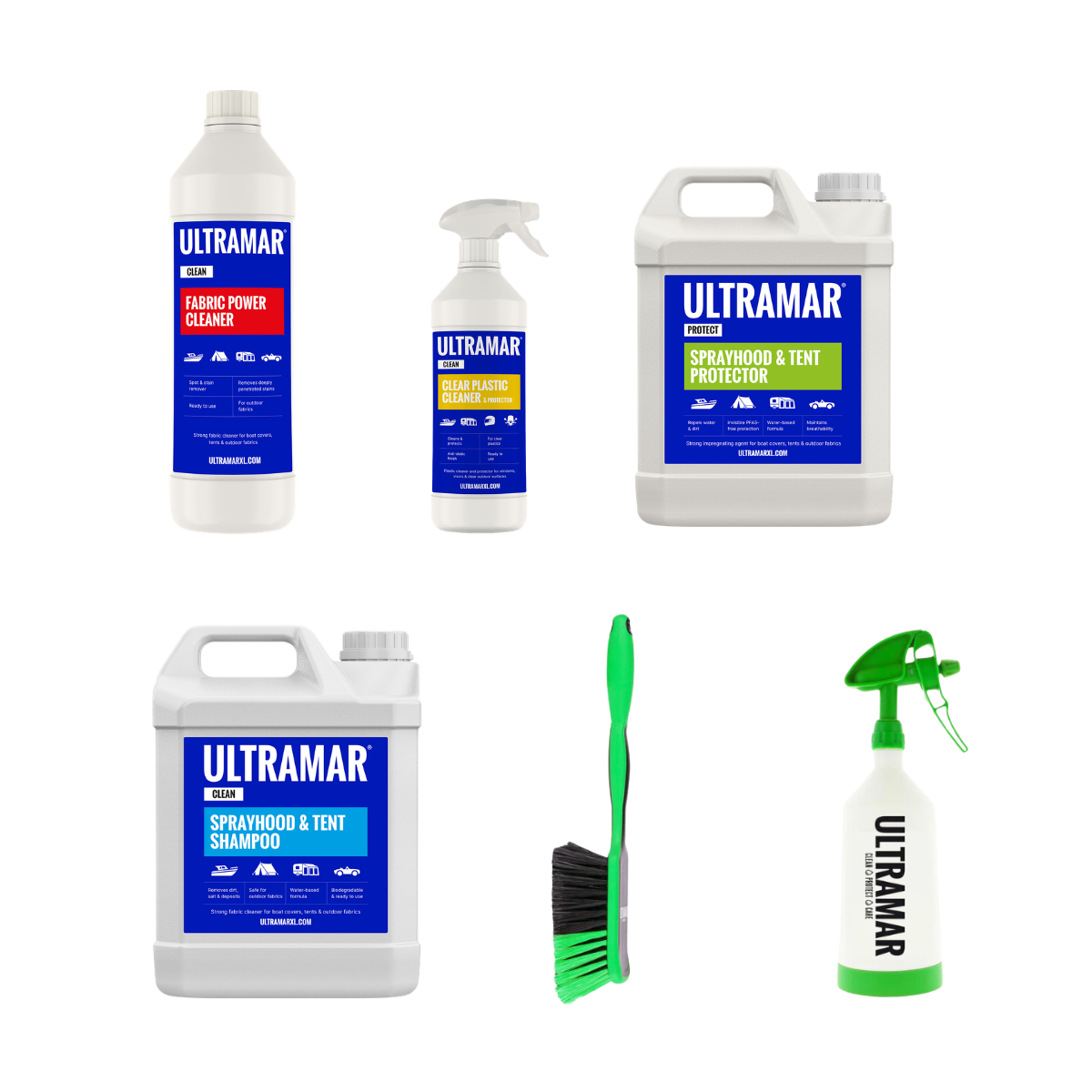
That’s exactly the approach Ultramar stands for: helping consumers clean, maintain, and protect outdoor fabrics themselves, using clear steps and PFAS-free maintenance products that are easy to use at home.
Where things go wrong most often
- Trying to do everything “in one round”.
- Starting too late, so the job becomes catch-up work.
- Treating stains like normal cleaning instead of targeting them.
- Skipping protection, so you’re back to square one sooner.
- Using too little product, leading to extra touch-ups later.
What does this mean for you?
If boat cover maintenance feels like it takes forever, it’s usually not about you. It’s about expectations. Think smaller, think in steps: clean first, then handle the stubborn areas, then protect so it stays cleaner and more water-repellent for longer.
That way, maintenance doesn’t feel like an endless chore. It becomes something you do now and then — and you actually benefit from it afterwards.