Your boat cover can look perfectly fine on the outside. No visible stains, no strange marks, no “dirty” appearance. And yet you suddenly notice that water no longer beads nicely, that the fabric feels wet more quickly, or that new dirt seems to stick faster. That feels odd, but it is very normal for outdoor fabric.
The key point is this: clean is not the same as protected. With boat covers, wear and contamination often become visible only at a late stage, because much of it happens inside the fibres or because the protective layer slowly disappears.
A boat cover is tested every day (even when you are not boating)
A boat cover lives outdoors. That means it goes through much more than you can see at first glance:
- Rain and drying water leave behind small residues that build up in the fabric.
- Sunlight dries out materials and can slowly reduce water-repellent performance.
- Wind pushes dust and fine dirt into seams, zippers and the weave.
- Condensation causes moisture from the inside, even when it looks dry outside.
- Rubbing and folding (during covering or storage) wear down the surface exactly where you least expect it.
The result: your cover can still look “neat”, but its performance gradually declines.
The biggest misconception: “It’s still clean, so I don’t need to do anything”
Many boat owners wait until a cover looks visibly dirty. That makes sense — no one wants unnecessary work. But maintenance often comes too late that way.
When a cover loses its water-repellent properties, this is what happens:
- Water stays on the fabric longer or soaks in more quickly.
- Dirt sticks more easily and becomes harder to remove.
- The fabric can feel “heavier” after rain and dries more slowly.
- Dull areas or a tired look appear, even without obvious stains.
Because this happens gradually, you get used to it. Until one day you realise: it no longer works like it used to.
Why you only notice it when it is already advanced
Outdoor fabric is made to withstand a lot. That is a good thing, but it also makes problems less visible. There are a few reasons for this:
- Contamination often sits inside the fibres, not just on the surface.
- The colour masks light build-up or a thin layer of dirt.
- Water behaviour changes subtly: it beads a bit less, but still seems “acceptable”.
- You usually view the cover from a distance, not with the fabric in your hands.
A simple check helps: do not only look at how it appears, but at what it does. Water that beads up and runs off is very different from water that lingers or slowly soaks in.
The quiet difference between “cleaning” and “maintaining”
Maintaining a boat cover actually consists of three separate steps, each with its own purpose:
- Cleaning: removing surface dirt and general contamination. This is the base step and makes the fabric look fresh again and ready for further treatment.
- Removing stains: treating only the areas where dirt has penetrated deeper into the fabric, such as stubborn stains or difficult discoloration. This step is targeted and only done where needed.
- Protecting: restoring the water-repellent performance of the fabric and helping prevent new dirt from bonding quickly. This keeps the boat cover looking good for longer and makes future maintenance easier.
Many people do the first step now and then, but skip stain removal and protection. The cover may still look “okay”, but it slowly becomes less practical and less pleasant to use.
Common mistakes that actually hide problems
- Just a quick rinse: it looks fresh, but embedded dirt and dull areas remain.
- Waiting too long with maintenance: the deeper the contamination, the more work it becomes.
- Protecting a cover that is not truly clean: this traps contamination and often leads to uneven results.
- Thinking protection also cleans: protection is not a cleaning step.
Good maintenance is not about “scrubbing harder”. It is about taking the right steps in the right order.
Where Ultramar fits in naturally (without hassle)
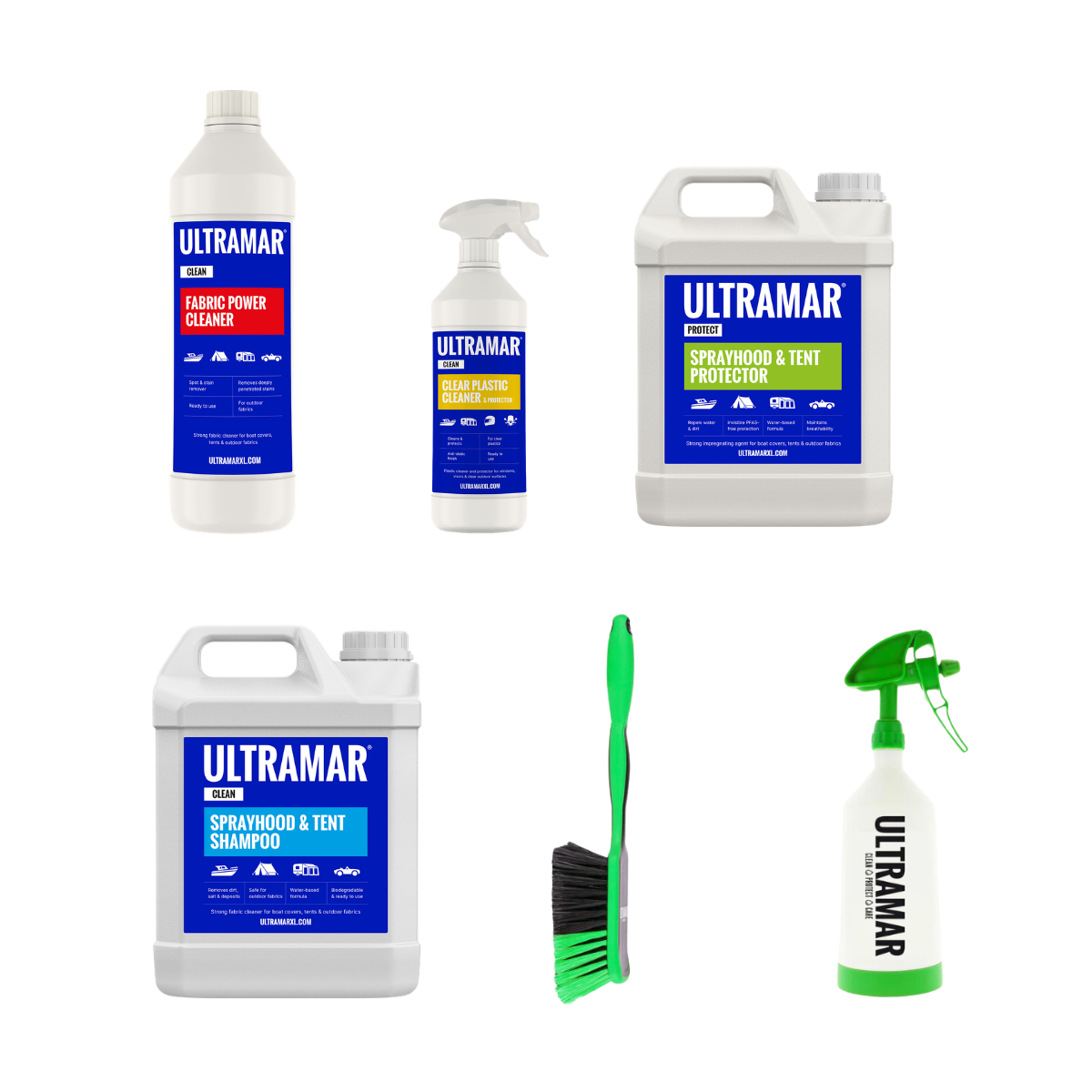
If you want to maintain your boat cover yourself, it helps to follow a system designed for outdoor fabric and for home use. That is exactly what Ultramar focuses on: helping consumers clean, remove stains where needed, and then protect their fabric themselves.
Ultramar maintenance products are PFAS-free. This means a choice that is better suited for use around home, harbour, garden and campsite, without compromising on reliable and long-lasting protection.
And importantly: this is not a “professionals-only” approach. Specialists use it because it works — not because specialist knowledge is required. You can easily do it yourself with clear steps.
What should you pay attention to?
- Do not look only at appearance, but at water behaviour: does it still bead up and run off?
- See maintenance as a cycle: cleaning, removing stains (only where needed), and protecting.
- Protection works best on a clean, dry cover.
- Do not wait until it is “really dirty”: early maintenance is easier and usually gives more even results.
If you want to do it properly, using a maintenance bundle that combines cleaning, stain removal and protection is often practical. It is usually more cost-effective than buying products separately and helps prevent running out halfway through treatment. Having a little extra product is also useful for touch-ups and future maintenance.