The fabric of your boat cover, tent, convertible roof or awning is exposed every day. Rain, sun, dirt and air pollution all take their toll. Many people assume that new fabric is well protected by the manufacturer. In practice, that protection is often not enough.
This applies to all outdoor fabrics
This is not just about boat covers. The same applies to:
- tents
- convertible roofs
- awnings and parasols
- boat cushions and garden cushions
- cover sheets and shade sails
Anything used outdoors loses protection over time. Often faster than you expect.
Is your fabric really still protected?
New fabric is usually treated at the factory. That is true. But today, that protection is often less strong than it used to be. Regulations have become stricter, and manufacturers are allowed to use less. The result: the fabric looks new, but the protection fades quickly.
There is another important factor as well. Sunlight.
What sunlight does to your fabric
UV radiation breaks down the protective layer of outdoor fabrics. This can happen surprisingly fast. Practical testing shows that protection can decrease significantly after a relatively short period of intense sunlight.
That is why fabric often shows these signs after just one season:
- dirt sticks more easily
- cleaning becomes more difficult
- water repellency decreases
- discoloration and weather marks appear, often on the inside
Prevention works better than fixing problems later
Waiting until the fabric looks bad is already too late. Adding extra protection beforehand saves a lot of work later. Think about shoes: they are often sprayed with extra protection in the shop, even though they are already treated. That feels normal.
Outdoor fabric is exposed to much heavier conditions than shoes. Extra protection is simply sensible.
The Ultramar 3-step maintenance process
Ultramar always works with a fixed order. This is essential for a reliable and long-lasting result.
Step 1 – Cleaning
You always start by removing loose dirt and general contamination. Only clean fabric can be protected properly.
Step 2 – Stain removal
If stubborn discoloration or deeply embedded contamination remains after cleaning, treat those areas specifically. Not the entire fabric, only the problem spots.
Step 3 – Protection
Once the fabric is clean and dry, you restore its water-repellent properties. This helps reduce new contamination and extends the life of the fabric.
Important practical tips
- Protect not only the outside, but also the inside of the fabric.
- Repeat protection at least once a year.
- Do not use household cleaners on outdoor fabrics.
- Protection only works on clean, dry material.
- Use enough product for even coverage.
What products do you need?
Ultramar offers maintenance products developed specifically for home use. They are PFAS-free and easy to apply.
- Sprayhood & Tent Shampoo for cleaning
- Power Cleaner for deeply embedded contamination and difficult discoloration
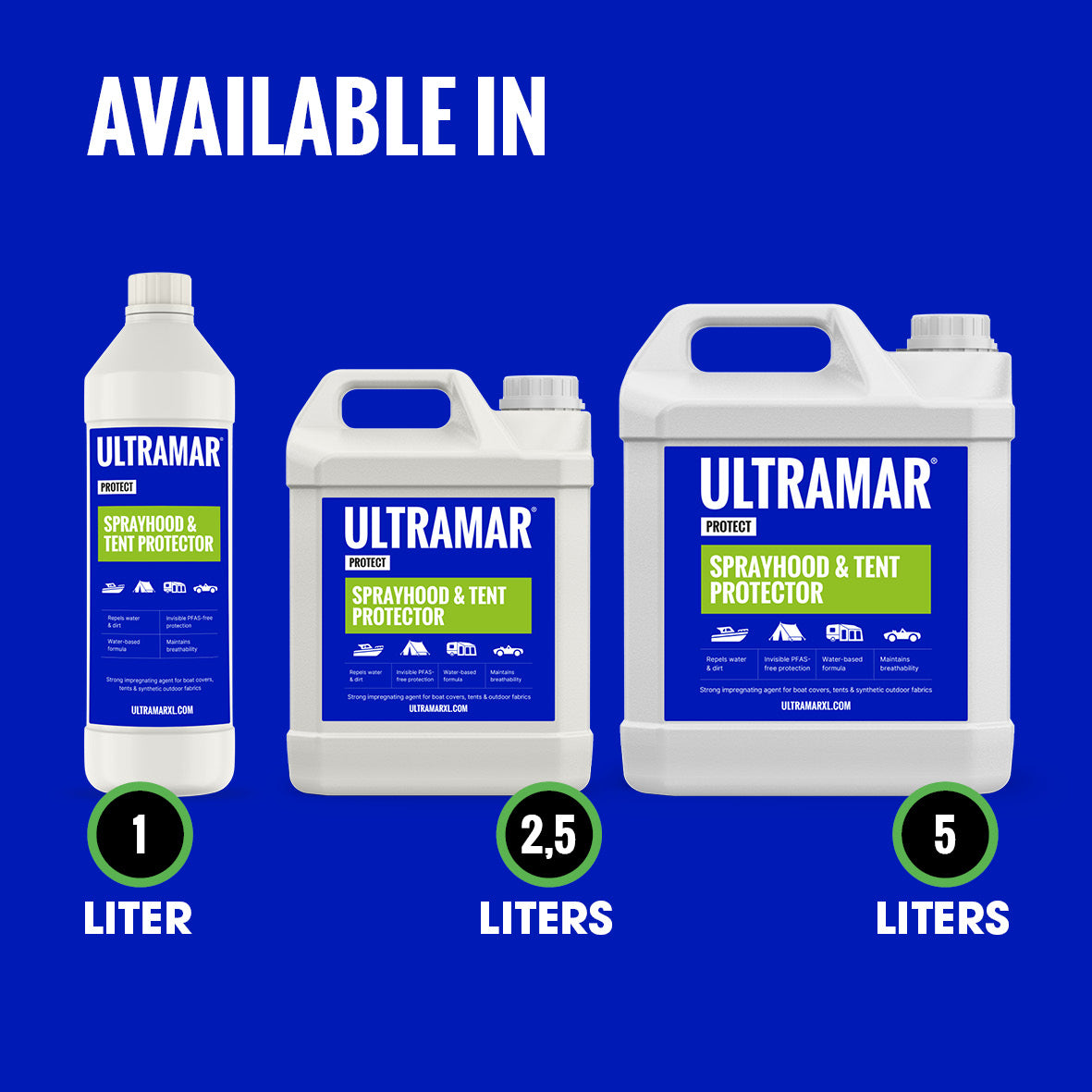
- Sprayhood & Tent Protector for synthetic fabrics
- Canvas & Cotton Protector for cotton and canvas
If you want the best overall result, maintenance bundles are a practical choice. They combine the correct steps and are often more cost-effective than buying products separately. It is better to have slightly more product than too little. That makes application easier and ensures consistent results. Leftover product is useful for touch-ups or future maintenance.
In short
New outdoor fabric is not automatically protected for long-term outdoor use. Sunlight and weather exposure break down protection faster than most people expect. By cleaning and reapplying protection regularly, you prevent problems and keep your fabric looking good and functional for longer.
Ultramar
Ultramar helps consumers clean, maintain and protect boat covers, tents, convertible roofs, awnings and other outdoor fabrics themselves. Using PFAS-free maintenance products that are easy to use at home and based on a proven three-step maintenance process.