You pitch your tent, it starts raining, and you think: “No worries. The fabric is water-repellent.”
That sounds reasonable. But in real life, water repellency is not a fixed feature that stays the same forever. It is something your tent fabric can have for a while — and it can also lose through normal use.
Water-repellent is not the same as “waterproof”
A lot of confusion starts with the words. Water-repellent means water tends to sit on the surface as drops and roll off more easily. The fabric absorbs less moisture on the outside and stays more comfortable in day-to-day use.
But water-repellent does not mean your tent will stay perfectly dry in every situation. Think of long periods of rain, wind pushing water against the fabric, or areas where the fabric is pulled tight and water keeps pressing on it. That is when the condition of the fabric really matters.
Why a new tent often feels “better”
A new tent often feels like it can handle anything. That is usually because the fabric starts out with strong protection. Rain beads nicely and you assume it will stay that way for years.
The catch is that this protection takes small hits over time. Not because of one big mistake, but because of lots of small, normal things adding up.
What slowly reduces water repellency
- Dirt buildup: Dust, soot, sand, and everyday grime can form a thin layer. Water stops beading well and starts soaking in faster.
- Friction: Folding, packing, rubbing against poles, lines, or luggage. Creases and contact points often wear first.
- Weather and sun: Sun, rain, and temperature changes put stress on any outdoor fabric. Over time, you can see it in how water behaves on the surface.
- Cleaning the wrong way: Scrubbing too hard, using unsuitable cleaners, or using too much water pressure can weaken the protective layer. The fabric may look clean, but it can lose performance sooner.
- Storing while still damp: That puts extra strain on the material and often leads to stubborn contamination and discoloration that is harder to remove later.
The moment you notice it
Most people only notice once it has been happening for a while. For example when:
- rain no longer forms beads, but lies “flat” on the fabric
- the fabric darkens quickly because it absorbs moisture
- the tent stays clammy for longer, even after a dry day
- certain spots always show problems first (seams, folds, low points, tight corners)
This does not automatically mean your tent is failing. It is usually a sign that the fabric needs proper care.
A common mistake: “I’ll just spray protection on it again”
When water stops beading, the first thought is often: “I need to protect it again.” That can be true — but only if the fabric is truly clean first.
Protection is not a cleaner. If you apply protection over dirt, you can lock that dirt in. The result is often patchy performance, more visible marks, and protection that does not last as long.
Why fabric care works best in separate steps
With tent fabric, a simple order usually gives the most reliable result:
- Cleaning to remove surface dirt and general contamination.
- Stain removal for deeply embedded stains, stubborn contamination, or difficult-to-remove discoloration.
- Protection to restore water repellency and help keep the fabric easier to maintain.
If you mix steps or skip one, you may not notice right away. But after a few rainy days or your next trip, the difference becomes clear.
Where Ultramar fits in (if you want a clear system)
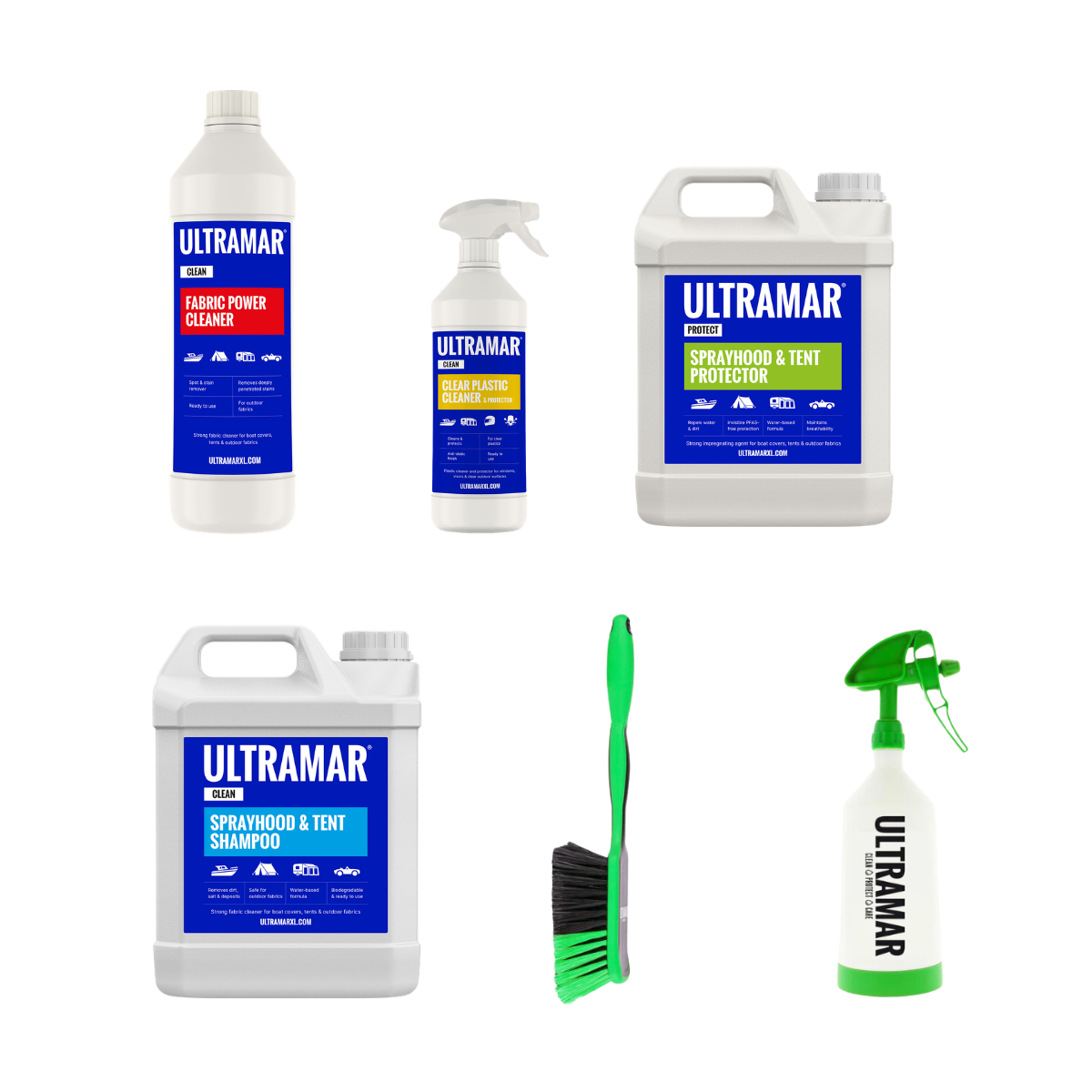
Ultramar is made for people who want to clean, maintain, and protect tents and other outdoor fabrics themselves — at home, without specialist knowledge or professional equipment.
Ultramar maintenance products are PFAS-free. That means they are a safer choice for people, pets, and the environment, and suitable for home use — without being a “weaker” option.
And one important detail: a stain remover is meant for deeply embedded stains, stubborn contamination, and difficult-to-remove discoloration — not as a quick wash for the entire tent.
Why this builds confidence (without needing perfection)
The reassuring part is this: your tent is not “done” just because water repellency has dropped. In many cases, it is a maintenance issue you can address in time. Like an outdoor jacket that stops beading after a few seasons — the material is still there, but the protection needs attention.
Once you understand what causes the change, you look at your tent differently. Not as something that suddenly “fails,” but as an outdoor fabric you can keep functional longer with a few logical steps.
What does this mean for you?
- Don’t only look for “leaks.” Pay attention to how water behaves on the surface.
- If you want to protect again, make sure the fabric is truly clean and fully dry first.
- Treat stubborn spots in a targeted way, not as full-surface cleaning.
- Maintenance does not have to be a big project. It is mostly about timing and doing things in the right order.
For current prices and availability, you can check the Ultramar website, Bol.com, or an official Ultramar dealer.