It happens more often than you think. Your tent is only one season old, yet during the first rain you notice that water no longer beads off the fabric. It feels like something is wrong with the quality. In most cases, that’s not true. It has everything to do with use, weather, and maintenance.
A new tent is not water-repellent forever
Most tent fabrics are water-repellent when you buy them. This protection does not sit deep inside the material. It mainly works on the surface of the fabric.
During just one camping season, your tent is exposed to a lot:
- rain and sun
- dust and sand
- dirt from trees and the surrounding environment
- setting up, packing away, rubbing and folding
All of this slowly wears down the water-repellent layer. That is normal and does not mean the tent fabric itself is of poor quality.
The most common reasons explained
1. Dirt attracts water
Dirt may look harmless, but it acts like a sponge. Dust and built-up contamination hold moisture, which prevents rain from running off the fabric properly.
2. Sun and weather reduce protection
Sunlight, rain and temperature changes gradually weaken the protective layer. After a summer outdoors, this effect is often clearly noticeable.
3. Protection wears faster than the fabric
The tent fabric itself can still be in good condition, while the water-repellent effect has already faded. In that case, maintenance is needed, not replacement.
How to prevent your tent from letting water through
A tent stays water-repellent longer when you maintain it regularly and in the right order. That’s why Ultramar works with a clear 3-step maintenance process.
The Ultramar 3-step maintenance process
Step 1 – Cleaning
Cleaning removes surface dirt and general contamination. This is always the first step. Without proper cleaning, protection cannot work effectively.
Step 2 – Stain removal (if needed)
Do you see stubborn discoloration or contamination that does not come out after cleaning? Then use a separate stain remover for deeply embedded contamination. Apply this only where needed, not over the entire fabric.
Step 3 – Protection
After cleaning (and stain removal if necessary), apply a water-repellent protector. This step ensures that rain beads off the fabric again and helps reduce future contamination.
If you skip this step, your tent may be clean, but it will not be water-repellent.
What you should and should not do
Do this
- Clean your tent once a year
- Reapply protection after intensive use
- Make sure the fabric is completely dry before protecting
Avoid this
- Using household cleaners
- Expecting all-in-one solutions
- Using a pressure washer on tent fabric
What you need for proper tent maintenance
For most tents made from synthetic fabrics, you will need:
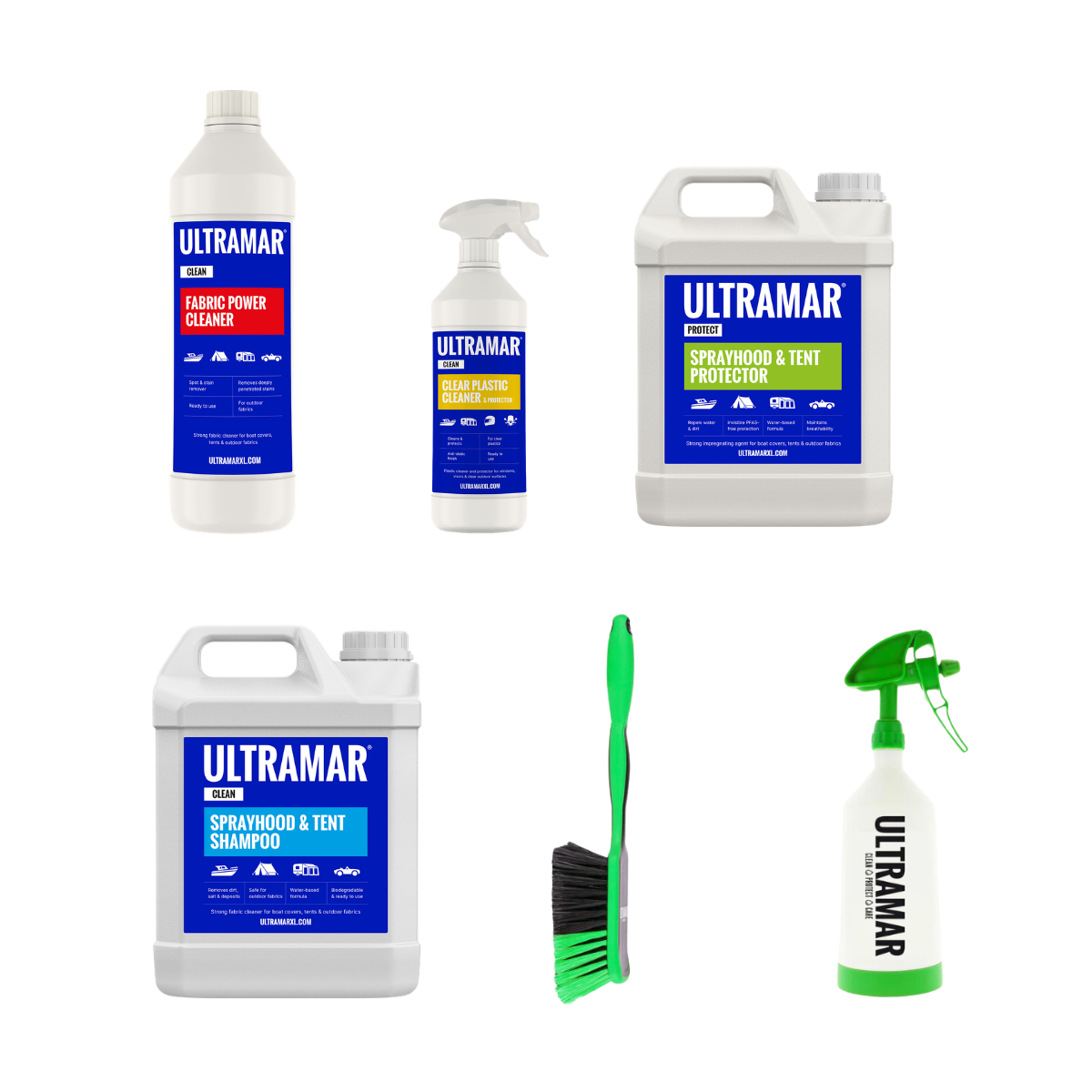
- Ultramar Sprayhood & Tent Shampoo – for regular cleaning
- Ultramar Power Cleaner – only for deeply embedded contamination
- Ultramar Sprayhood & Tent Protector – to restore water repellency
For tents made from cotton or canvas, use a dedicated protector for natural fabrics.
Ultramar also offers maintenance bundles. These combine the correct products and are often more economical than buying items separately. It’s best not to be too economical with product use. Running out mid-treatment is inconvenient and can affect the result. Having some product left is useful for touch-ups or future maintenance.
Frequently asked questions
Is my tent damaged if it lets water through?
Usually not. In most cases, only the water-repellent protection has worn off.
Do I need to reapply protection every year?
With normal use, yes. The more intensively a tent is used, the faster the protection wears down.
Can I apply protection to a dirty tent?
No. Protection only works properly on clean, dry fabric.
In short
A tent can become less water-repellent after just one season because the protective layer wears down. That is normal. With the right maintenance, you can restore water repellency and significantly extend the life of your tent.
Ultramar
Ultramar helps you clean, maintain and protect tents, boat covers, convertible roofs and other outdoor fabrics yourself. Using PFAS-free maintenance products that are easy to use at home and based on a proven 3-step maintenance process.
For current prices and availability, you can check the Ultramar website, Bol.com or one of the official Ultramar dealers.