Winterizing Your Boat Cover: How to Do It Right
A boat cover that makes it through winter in good shape starts with the right preparation in autumn. Cleaning it properly before storage, folding it with care, and keeping it dry can prevent a surprising amount of cracking, discolouration, and other damage. If you leave the cover on the boat, different rules apply. This article walks you through everything, step by step.
Why Is Winterizing Your Boat Cover So Important?
Boat covers are exposed to sun, rain, salt, and dirt throughout the season — all of which gradually break down the material. Storing a dirty cover, or leaving it in place without precautions when temperatures drop below freezing, only increases the risk of damage. A proper winter service takes an afternoon, but can significantly extend the life of your cover.
Checklist: What to Go Through Before Storage
- Is the cover clean and dry?
- Are the zippers free of sand and salt?
- Are the plastic windows clear and undamaged?
- Are you taking the cover off or leaving it on the boat?
- Do you have a dry, dark storage space?
- Is the protective coating still active (does water bead off the fabric)?
Step 1: Clean the Boat Cover Thoroughly
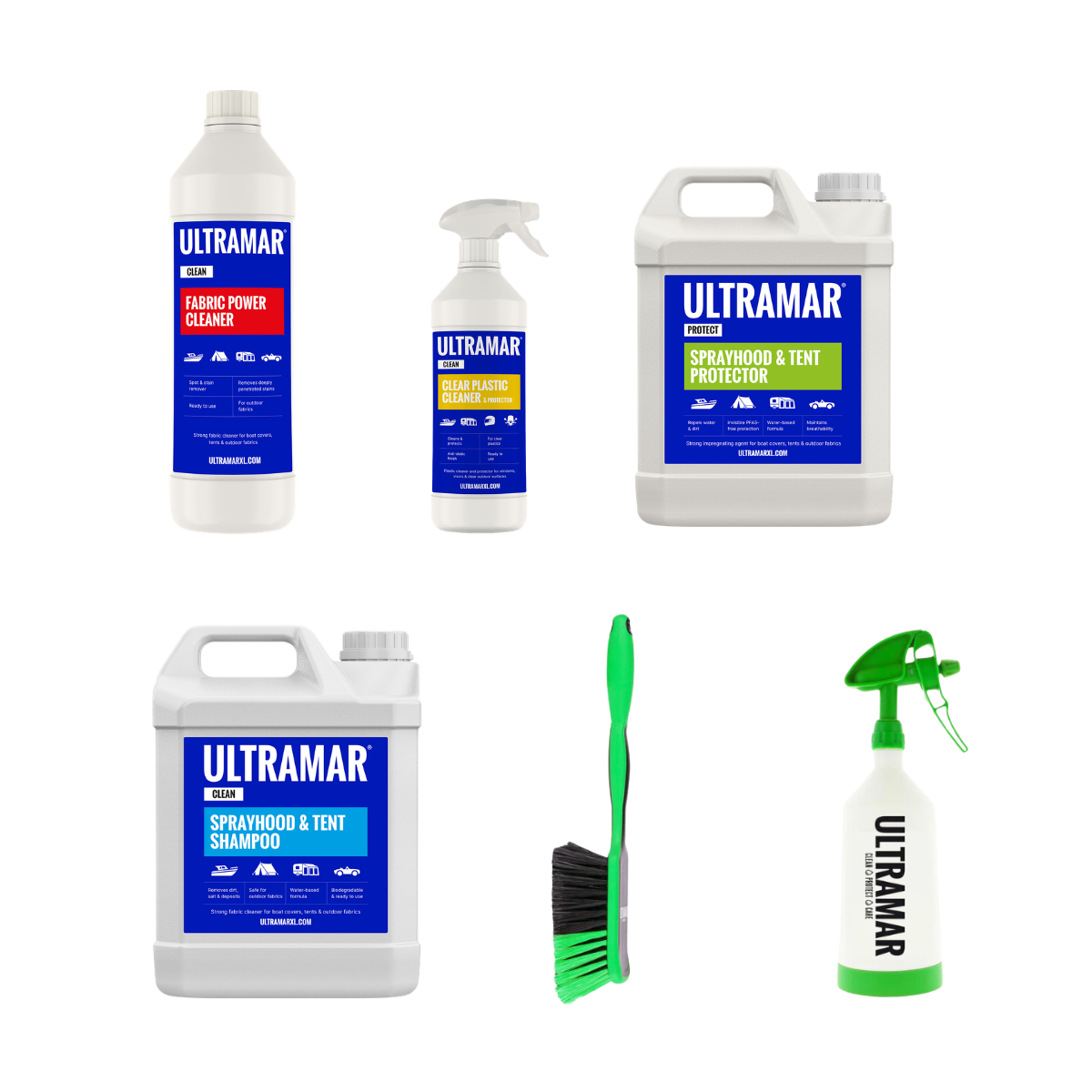
Never store a dirty cover. Dirt left sitting on the fabric over winter works its way deeper into the weave and becomes much harder to remove later. Start by rinsing the cover with cold water to shift any loose debris. Then use Sprayhood & Tent Shampoo to clean the fabric properly. Work with a soft brush in the direction of the weave, and rinse thoroughly.
Got stains that won't shift after washing? Treat those directly with Fabric Power Cleaner before moving on. Let it soak in for at least fifteen minutes, then rinse off.
Make sure the cover is completely dry before storing or applying any protection. Storing it damp increases the risk of staining and material degradation.
Step 2: Inspect and Treat the Plastic Windows
The plastic windows in a boat cover become vulnerable in cold weather. If they're already showing signs of ageing, they can turn brittle in frost. Check each window for hairline cracks, haze, or discolouration. If a window has gone dull, Clear Plastic Cleaner & Protector can clean the material and apply a protective layer. This product is specifically formulated for plastic windows — never use a fabric waterproofer on them.
Step 3: Protect the Fabric Before Storage
Once the cover is clean and dry, this is the right moment to restore the protective coating. Sprayhood & Tent Protector is suitable for synthetic boat covers made from polyester or acrylic. It helps the fabric repel water and dirt again, even while the cover sits in storage over winter. Apply it to a dry cover and allow it to cure before folding or rolling.
How to Store Your Boat Cover Without Causing Damage
The best way to store a boat cover is loosely rolled or folded in a dry, dark space. Avoid creating sharp creases in the same spot repeatedly — this weakens the material over time. Use a breathable storage bag or an old sheet rather than an airtight plastic bag. Moisture trapped inside can cause staining.
Always store the cover away from sharp objects. A small cut in the fabric is easy to spot in summer, but in storage you won't notice it until you pull the cover out again.
Can I Leave the Boat Cover On During Winter?
You can, but it requires extra attention. A cover left on the boat is exposed to freezing temperatures, wind, and the weight of accumulated snow or ice. Make sure the cover is properly tensioned so that water and snow can't pool in any slack areas. Keeping standing water out of the folds prevents it from freezing and putting stress on the fabric.
Check the cover regularly during periods of frost. Never try to pull or fold a frozen cover: the material is stiff and far more likely to tear.
Should I Remove My Bimini Top Before Winter Storage?
In most cases, removing a bimini top is the safest option for winter. Biminis are often designed for seasonal use, not for prolonged exposure to frost and snow load. The frames and fabric respond differently to extended cold than a fixed sprayhood.
Take the bimini top off, clean it the same way as your boat cover, and store it somewhere dry. Also check the folding points in the frame for rust or small cracks — both tend to worsen in cold conditions.
How Do I Prevent My Boat Cover from Tearing in Low Temperatures?
Synthetic fabric stiffens in freezing temperatures. The greatest risk of tearing is at the zippers, corners, and any areas where the cover sits under tension. Keep zippers half-open during winter, or use a zipper protector, to prevent the metal from seizing up with ice. If ice has formed on the cover, let it melt naturally rather than forcing it off.
A well-treated cover repels water more effectively, which means less water accumulates and less freezes in place. That's why protecting the fabric before winter matters — not after.
Storage Do's and Don'ts
- Always store dry — never damp
- Roll or fold loosely; avoid permanent sharp creases
- Use a breathable bag or cloth, not plastic
- Store away from direct sunlight
- Check on the cover mid-winter if you're able to
- Store zippers closed or half-open, depending on the type
FAQ
Can I just hose down my boat cover before storing it?
That will remove loose dirt, but not ingrained grime or salt residue. In most cases, going over the cover with a cleaning product is necessary for proper winter storage.
Does the cover need to be dry before I store it?
Yes. A damp cover can develop stains during storage. Let it dry out completely — including the seams and zippers — before putting it away.
Can I use a fabric waterproofer on the plastic windows?
No. Plastic windows need their own dedicated product: Clear Plastic Cleaner & Protector. Fabric waterproofers are not suitable for plastic and can damage the material.
How do I know if the protective coating on my boat cover is still working?
Sprinkle a little water on the fabric. If it beads up and runs off, the coating is still active. If the water soaks in and leaves dark patches, it's time to re-treat.
Can I just unfold a frozen cover?
We wouldn't recommend it. Frozen synthetic fabric is stiff, and forcing it to move can cause it to tear. Let the cover warm up to room temperature first.
A well-prepared cover goes into winter as an investment in next season. Clean it, check the windows, protect the fabric, and store it dry — and come spring, you'll unpack it exactly as you left it.