A boat cover is outside all season long. Sun, rain, wind, spray, bird droppings, harbour dust, leaves. It all builds up slowly. Most people only really notice when the fabric starts to look dull, shows stains, or when water no longer beads up and instead stays on the surface.
The first reaction is usually: “I’ll clean it quickly and that should fix it.” That makes sense. But outdoor fabric works a little differently.
Why a boat cover ages faster than you expect
Outdoor fabric is made to handle tough conditions, but it does need maintenance. Not because it is fragile, but because dirt and weather settle into the fabric over time. This happens in layers:
- Surface dirt: dust, salt, soot, bird droppings, and general build-up from use and weather.
- Deeper contamination: areas that remain visible as stains or discoloration after normal cleaning.
- Loss of water repellency: the fabric may look clean but still absorbs water or stays wet for a long time.
These three layers cannot be solved with one single “miracle” product. That is why outdoor fabrics often look tired again shortly after a quick clean.
The biggest misconception: “Clean means protected”
A clean boat cover feels good, but clean does not automatically mean protected. Over time, water repellency wears down due to sun exposure and use. When water no longer beads up, it stays on the fabric longer. That makes it harder to keep the cover looking good, even if you clean it regularly.
This is why you may notice this pattern: you clean the cover, it looks better, and yet it quickly turns dull again. Not because you did something wrong, but because a step is missing.
Why “all-in-one” solutions often disappoint
For boat covers, an all-in-one product sounds convenient. In reality, different goals clash:
- Cleaning is meant to remove general dirt.
- Stain removal focuses on stubborn, deeply embedded marks.
- Protection only works properly on clean, dry fabric.
When these steps are combined or skipped, results usually do not last. It may look better for a short time, but the effect fades quickly.
The logical approach you see again and again
Whether it is a boat cover, bimini, sprayhood or tent fabric, maintenance almost always follows the same order:
- Cleaning – removes general dirt.
- Targeted stain removal – deals with contamination that remains after cleaning.
- Protection – restores water repellency and helps reduce future dirt build-up.
This is not a professional trick. It is simple, logical maintenance that you can do yourself, without specialist knowledge or tools.
What this means for the lifespan of your cover
A boat cover is more than just fabric. It adds comfort and protects your boat. A well-maintained cover:
- looks tidy for longer
- is more pleasant to use
- often lasts longer because it is less stressed by moisture and dirt
The good news is that you do not need to be an expert. What matters most is a maintenance approach that makes sense.
And where does Ultramar fit in?
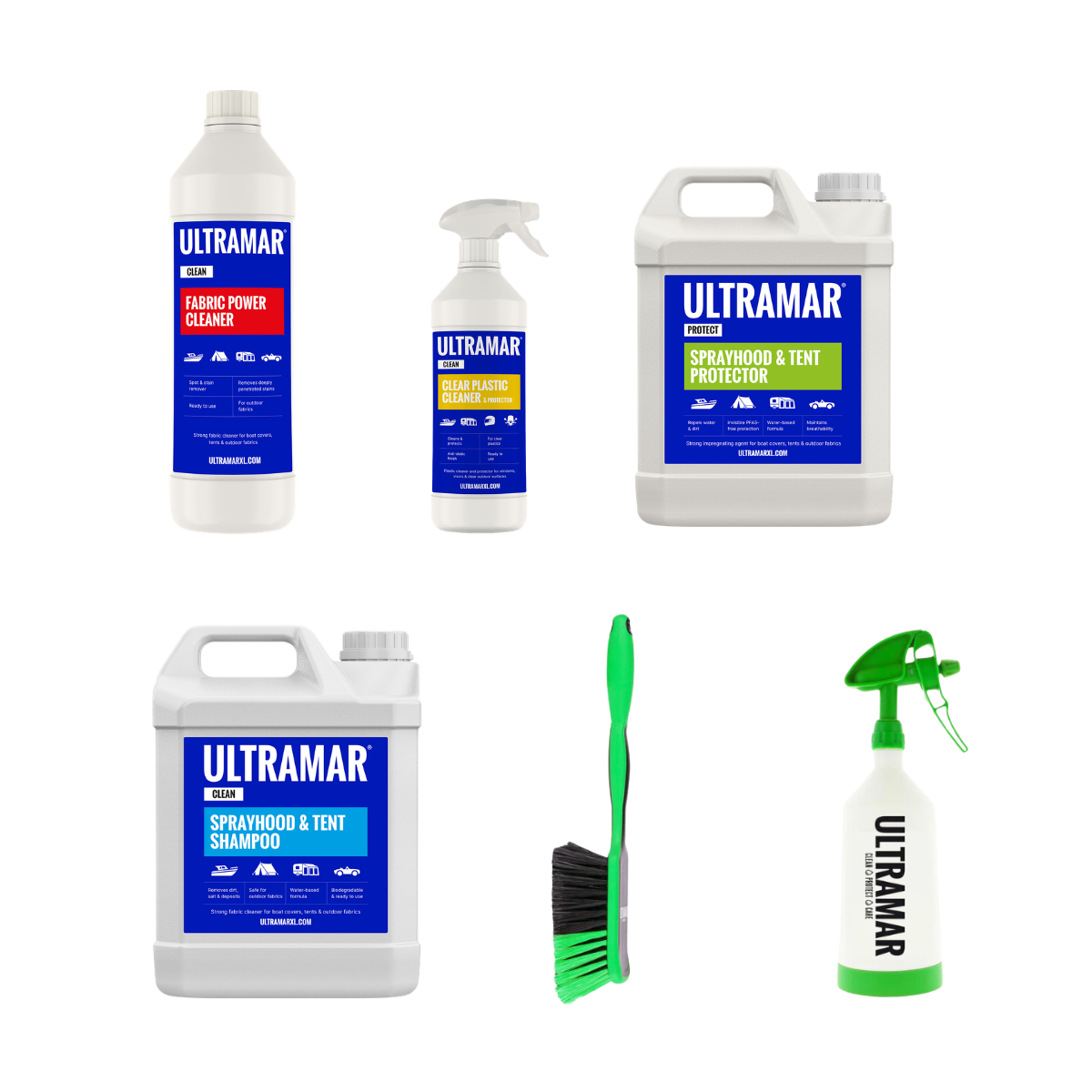
Ultramar helps you clean, maintain and protect outdoor fabric yourself, using products designed for home use. Ultramar maintenance products are PFAS-free. That makes them a safer choice for people, pets and the environment, without compromising on practical performance.
Ultramar follows the same clear order that works for outdoor fabric: first cleaning, then tackling stubborn stains where needed, and finally applying protection to bring back water repellency.
What should you pay attention to?
- Do not be misled by appearances. Clean and protected are not the same thing.
- Treat stains separately. Powerful stain removal is meant for difficult spots, not for everyday cleaning.
- Protection only works on clean, dry fabric. That is the difference between a short-term improvement and a longer-lasting result.
If you decide to get started later, it helps to know what type of fabric your cover is made from (synthetic or cotton/canvas). That determines which type of protection is most suitable.