Cotton tent fabric care: approach, products and order
Cotton tent fabric is a beautiful material. It breathes, feels natural, and with proper maintenance has a long service life. But cotton behaves differently from synthetic tent fabric. It requires a different approach when cleaning and protecting. In this article you will find out exactly why that is, what you should and should not do, and which products are suitable for cotton.
Why cotton is different from synthetic tent fabric
Cotton is a natural fibre. The material absorbs moisture rather than repelling it. This absorbency causes the fibres to swell in rain, and that is what makes the fabric water-resistant. It is a clever, natural system.
But that same property also makes cotton more vulnerable:
- Dirt and stains penetrate deeper into the fibre
- The fabric dries more slowly than synthetic material
- Prolonged moisture can cause stubborn discolouration
- Water-resistant properties decrease more quickly without maintenance
Cotton does not need more maintenance, but it does need the right maintenance at the right time.
How to recognise that cotton tent fabric needs attention
A few signals you can easily recognise:
- Water soaks into the fabric rather than beading off
- You notice dark stains or discolouration that do not wash out
- The fabric feels stiff or dirty
- After storage the fabric smells musty or looks dull
If you notice one or more of these signs, it is a good time to clean and re-protect the fabric.
The Ultramar 3-step plan for cotton tent fabric
Maintaining cotton tent fabric follows the same proven three-step process as other outdoor textiles. With cotton it is especially important to follow the steps in the right order and not to skip any step.
Step 1: Clean
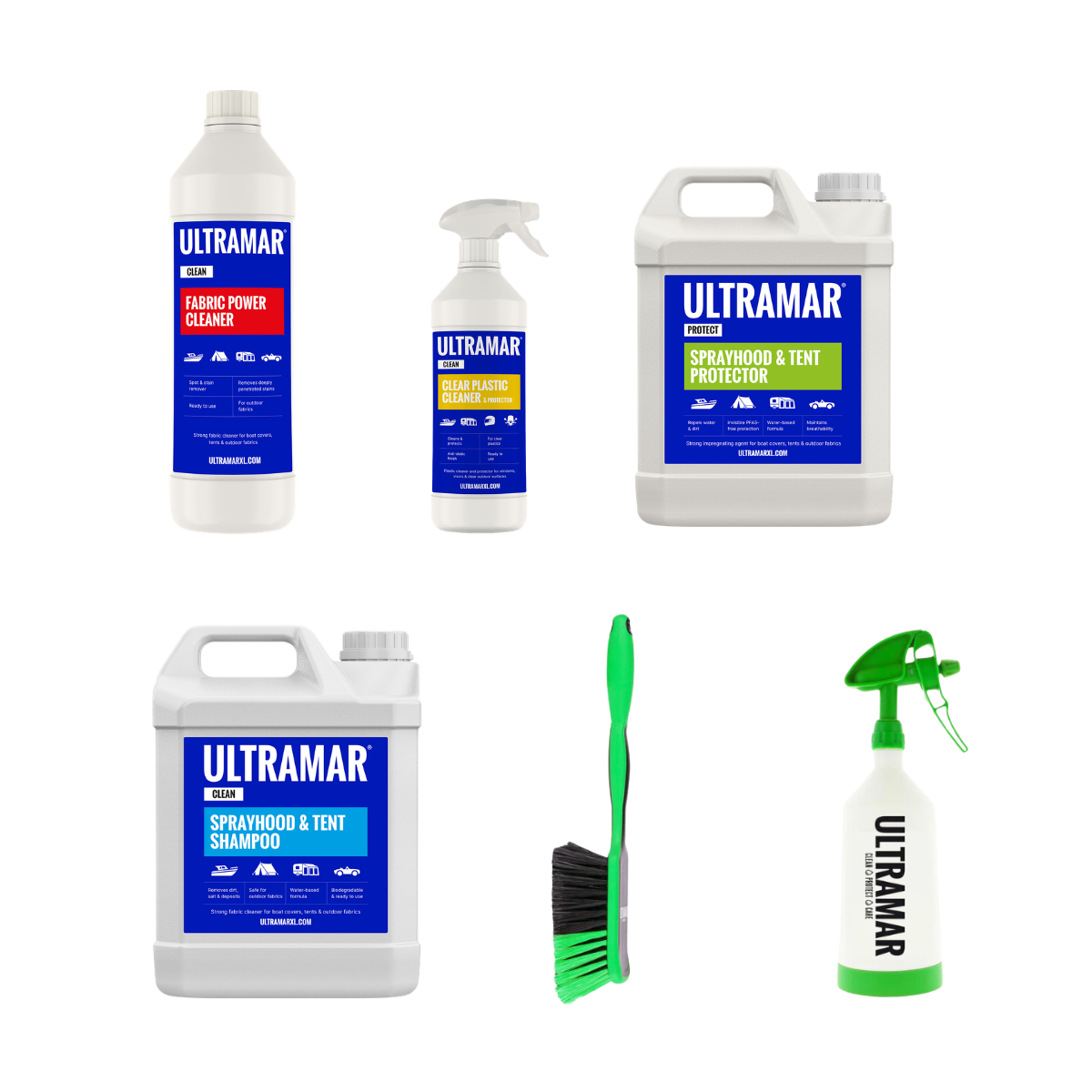
Start by removing surface dirt, dust and deposits. Use Ultramar Sprayhood & Tent Shampoo for this. This cleaner is developed for outdoor textiles and does not damage cotton fibres.
Why this step matters: if you leave dirt and go straight to waterproofing, you seal the dirt in. You are then protecting the dirt rather than the fabric.
Tips for cleaning cotton:
- Work in the shade where possible; direct sunlight can dry the fabric too quickly
- Use a soft brush and work in circular motions
- Rinse thoroughly with clean water
- Do not use a pressure washer; it damages the fibres
Step 2: Remove stains (if needed)
After cleaning, stubborn stains or deep discolouration may still be visible. This occurs more often with cotton than with synthetic fabric, precisely because the fibre absorbs moisture.
For heavy soiling of this kind, use Ultramar Fabric Power Cleaner. This is a targeted stain remover for deep-seated contamination. Apply it to the stain, allow it to work in, then rinse off.
Note: use Fabric Power Cleaner only where needed. It is not a product for treating the entire tent, but a targeted solution for areas that do not come clean with shampoo alone.
Step 3: Protect
This is the step where cotton really differs from synthetic fabric. For cotton or canvas tent fabric, use Ultramar Canvas & Cotton Protector. This product is specifically formulated for natural fibres and helps restore water-repellent performance.
Why a separate product for cotton? Because cotton reacts differently to protective agents than acrylic or polyester. The wrong product can impair the breathability of the fabric or soak in unevenly.
Tips for waterproofing cotton:
- Make sure the fabric is completely dry before you start: moisture in the fibre blocks absorption
- Apply the product evenly with sufficient coverage
- Do not be too sparing; with cotton the product partly soaks into the fibre, so you need more than you might expect
- Allow the fabric to dry for at least 24 hours before packing or storing it
Common mistakes with cotton tent fabric
- Packing away too soon after rain. Cotton dries more slowly. Only fold it when it is completely dry.
- Using household cleaning products. Washing-up liquid, soft soap or bleach can damage the fibres and reduce water-repellent performance.
- Waterproofing a damp fabric. The product will not bond properly and the result will be patchy or incomplete.
- Protecting without cleaning first. Dirt then sits beneath the protective layer, which leads to discolouration over time.
- Using an impregnation product for synthetic fabric on cotton. This can disrupt the breathable properties of the fabric.
When should you re-waterproof?
How often you need to re-protect cotton tent fabric depends on a few factors:
- How often you use the tent
- How you store the tent (dry and ventilated is better)
- How much rain and sun the fabric is exposed to
A good rule of thumb: when water no longer beads on the surface but soaks in instead, it is time to treat again. With intensive use, that may be once or twice per season. With occasional use, once a year is often sufficient.
What do you need?
For complete maintenance of cotton tent fabric you need:
- Sprayhood & Tent Shampoo for cleaning
- Fabric Power Cleaner for stubborn stains, if needed
- Canvas & Cotton Protector for protection and water-repellency
Ultramar offers maintenance bundles that combine these products. This is often better value than buying separately, and you have everything to hand straight away.
Choose a slightly larger pack size rather than the minimum. Cotton fabric absorbs product, so you will use more than with synthetic material. With a larger quantity you can also touch up small areas later without having to reorder.
Frequently asked questions
Can I use regular tent shampoo on cotton?
Yes, Ultramar Sprayhood & Tent Shampoo is suitable for both synthetic and cotton tent fabric. The mild cleaner does not damage natural fibres.
What is the difference between Sprayhood & Tent Protector and Canvas & Cotton Protector?
Sprayhood & Tent Protector is developed for synthetic materials such as acrylic and polyester. Canvas & Cotton Protector is specifically formulated for natural fibres. For cotton, always choose the Canvas & Cotton variant.
Can I put cotton tent fabric in the washing machine?
This is not recommended in most cases. A washing machine can disrupt the tension of the fabric and degrade the water-repellent treatment more quickly. Wash cotton by hand, on a flat surface or while the tent is pitched.
How long does cotton tent fabric need to dry after waterproofing?
Allow at least 24 hours of drying time, depending on temperature and humidity. Only store the fabric once it feels completely dry, including on the inside.
Summary
Cotton tent fabric is durable and natural, but requires targeted attention. The fibres absorb moisture and dirt, which means you need to work with the right products and in the right order. Clean the fabric first, treat any stains separately, then apply a protective layer suited to cotton. Do not use household products or those intended for synthetic fabric. Always store it dry.
With the right maintenance, cotton tent fabric stays water-repellent, fresh and in good condition, season after season.
About Ultramar
Ultramar develops maintenance products for outdoor textiles: from tents and boat covers to convertible roofs and awnings. All products are suitable for home use, easy to apply and PFAS-free.