Stains in your polyester tent? How to use Power Cleaner for stubborn contamination
Stubborn stains in polyester tent fabric often cannot be fully removed with regular shampoo. Power Cleaner is a stain remover specifically developed for deeply embedded contamination in outdoor fabrics. This article explains when to use Power Cleaner, how to apply it to polyester, and what to watch out for.
Why do stubborn stains form in polyester tent fabric?
Polyester is a durable and popular tent material. But its tight weave means stains can become lodged deep in the fibres. Common causes include:
- Dark discolouration from prolonged moisture and standing water
- Yellow or brown stains after storage in a damp space
- Stubborn dirt marks from mud, tree resin or bird droppings
- Discolouration around seams and folds where dirt accumulates
These stains often penetrate below the surface. Simply wiping or scrubbing with water will not solve the problem. That is where a targeted stain remover comes in.
The Ultramar 3-step plan for tent maintenance
Ultramar works with a fixed maintenance sequence. The structure matters: each step has its own role and works best when the order is followed.
Step 1: Clean with Sprayhood & Tent Shampoo
Start with a general clean of the tent fabric. Sprayhood & Tent Shampoo removes surface dirt, dust and light deposits. This is necessary to allow Power Cleaner to work properly in step 2. Applying a stain remover to a dirty surface prevents the product from penetrating the stain effectively.
Tip: Work in the shade where possible. Direct sunlight can cause the product to dry out too quickly before it has had time to work.
Step 2: Remove stains with Power Cleaner
After cleaning and drying, apply Power Cleaner to areas where discolouration or deep contamination is still visible. This product is developed for stubborn, embedded stains that shampoo cannot remove.
How to use Power Cleaner on polyester tent fabric:
- Make sure the fabric is clean and completely dry after step 1
- Apply Power Cleaner undiluted directly to the stain
- Allow the product to soak in - follow the contact time on the packaging
- Rinse the fabric thoroughly with clean water
- Repeat if necessary for heavy contamination
Important: Test Power Cleaner on a small, inconspicuous area of the fabric first. Polyester generally responds well, but it is wise to check - especially on coloured tents or coated fabrics.
Step 3: Protect with Sprayhood & Tent Protector
After cleaning and stain removal, the fabric is clean but unprotected. The water-repellent layer of your tent has been reduced by the cleaning process. Sprayhood & Tent Protector restores that protection.
Wait until the fabric is completely dry before applying protection. Moisture in the fabric prevents the product from bonding properly. A dry, calm day gives the best results.
Common mistakes when removing stains from tent fabric
- Applying Power Cleaner without cleaning first. A layer of surface dirt prevents the product from reaching the stain.
- Not allowing enough contact time. Deeply embedded stains need time. Do not skip the soaking step.
- Using too little product. With stubborn contamination, the stain must be fully covered. Applying too sparingly often gives an uneven result.
- Using a pressure washer. This damages the weave and coating of polyester tent fabric. Use a garden hose or a bucket of water instead.
- Storing the tent wet after treatment. Trapped moisture causes discolouration again. Allow the fabric to dry completely before rolling or folding the tent.
How to recognise when your tent needs maintenance
You do not have to wait until stains become clearly visible. Watch for these signs:
- Water no longer beads off but soaks into the fabric
- Dark edges appear along seams or folds
- The fabric feels sticky or greasy
- Dirt marks remain visible after a camping weekend, even after rinsing
The sooner you act, the easier stains are to remove. Old, embedded contamination often requires several treatments.
What do you need?
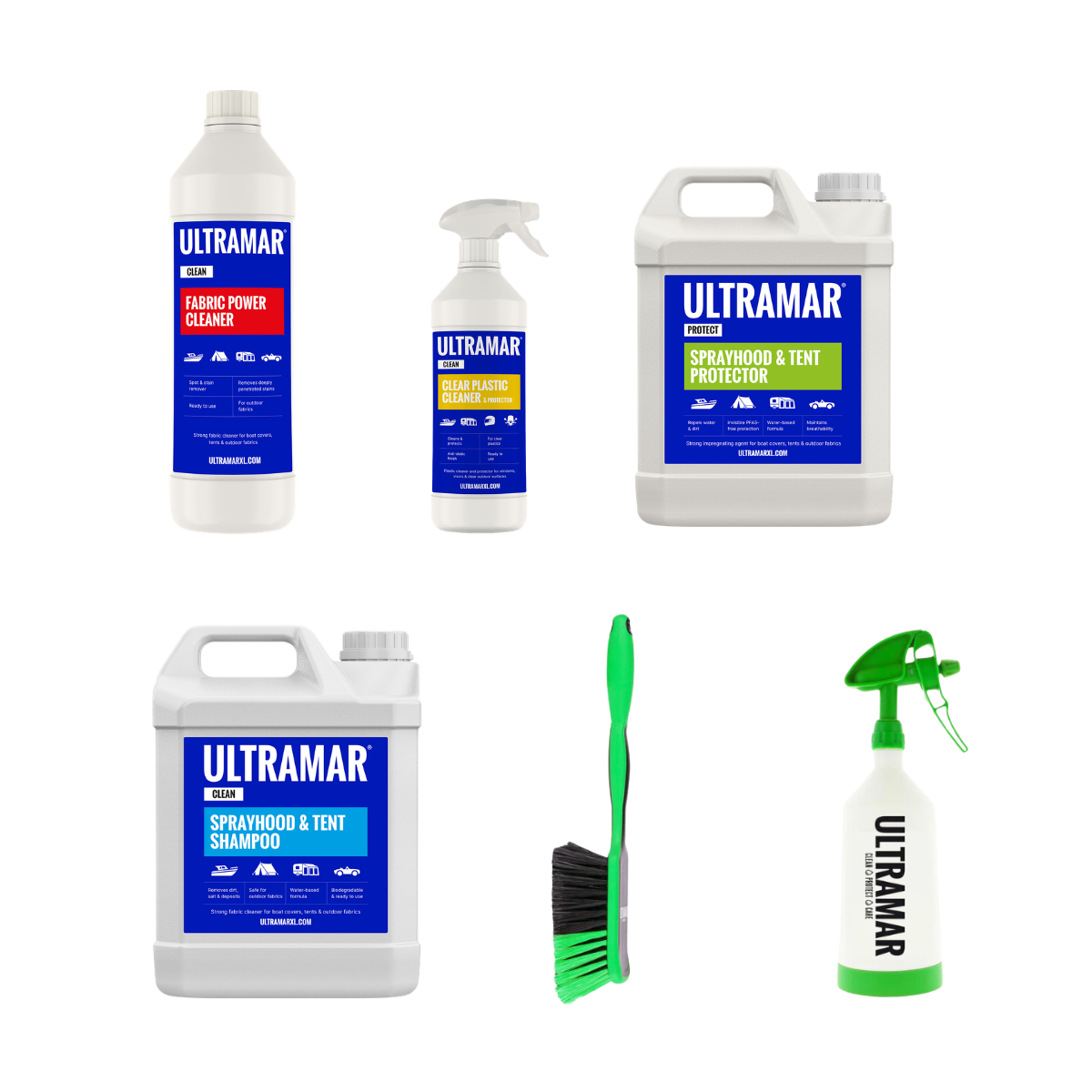
For a complete maintenance session on a polyester tent, you will need:
- Sprayhood & Tent Shampoo - for the initial clean
- Power Cleaner - for stubborn stains and deep contamination
- Sprayhood & Tent Protector - to restore water repellency
Ultramar offers maintenance bundles that combine these products. This is often better value than buying them separately, and you have everything you need in one go.
A note on quantity: Choose a slightly larger size rather than the bare minimum. A tent has a large surface area - especially if you also treat the underside or awning. Running out of product halfway through is inconvenient and leads to an uneven result. Any leftover product keeps well for the next seasonal treatment or for spot touch-ups.
Frequently asked questions
Does Power Cleaner work on all colours of polyester?
In most cases, yes. Test the product on an inconspicuous area first, especially with brightly coloured or dark tents. That way you can check how the fabric responds before treating a larger area.
Can I skip step 2 if I have no visible stains?
Yes. Power Cleaner is intended for stubborn contamination. If your tent is only dusty or lightly soiled, cleaning with shampoo followed by protection is sufficient.
How often should I treat my tent?
This depends on usage, storage and weather conditions. With intensive use or prolonged outdoor storage, one to two times per season is a good guideline. For a tent stored dry and used a few weeks a year, once a year is often enough.
Is Power Cleaner suitable for other tent materials?
Power Cleaner can also be used on acrylic and other synthetic tent fabrics. For cotton or canvas tents, there are some additional considerations - check the product information or contact Ultramar.
Summary
Stubborn stains in polyester tent fabric can be removed with the right approach and products. Use Power Cleaner as part of the Ultramar 3-step plan: clean first, then remove stains, then protect. That way your tent gets clean again and the fabric stays in good condition for longer.
All Ultramar maintenance products are PFAS-free, safe for home use and easy to apply without specialist knowledge or professional equipment.